


Organise your own game with family and friends: How to play blackjack at home

Contents:
- Is playing blackjack at home legal? Understanding social gambling
- Essential supplies: What you need for a home game
- Blackjack rules for home play: A step-by-step guide
- Card Values
- The Deal
- How to deal blackjack at home: The dealer’s role
- Advanced player options: Hit, stand, split, or double
- How to play blackjack at home with only 2 players
- Betting at home: Real money vs. symbolic stakes
- FAQs
- What is the best number of players for a home game?
- How many decks should I use?
- What happens in a tie (Push)?
- Can you play blackjack without a dealer?
Blackjack is the undisputed star of the casino floor, but its true magic lies in its versatility. Because of its simple rules and high-octane excitement, it has become a staple for home game nights.
Whether you’re looking to practice your strategy, teach the family, or host a high-stakes “Casino Night,” organizing a game at home requires a blend of skill, hospitality, and clear rules. Here is everything you need to know to bring the Vegas strip to your living room.
Is playing blackjack at home legal? Understanding social gambling
A common concern for hosts is the legality of home games. In most Western countries, including the United States and the United Kingdom, blackjack is perfectly legal for recreational purposes under “Social Gambling” laws.
- The Golden Rule: The host (the “house”) must not take a “rake” or profit from the betting process.
- Regional Variations: In states like Nevada, Pennsylvania, or New Jersey, playing for real money is generally permitted in private environments, provided no entry fee is charged. For a safe and friendly experience, many hosts choose symbolic stakes—where chips represent bragging rights or small prizes rather than cash.
Essential supplies: What you need for a home game
You don’t need a professional pit to have a great time, but the right tools elevate the experience:
- The Basics: At least two decks of cards (shuffled together) and a set of casino chips with assigned values.
- The Professional Setup: If you want to impress your guests, consider a felt layout mat, a card shoe (for dealing multiple decks), and a discard tray.
- Atmosphere: A successful host provides snacks, drinks, and a comfortable seating arrangement to keep the energy high.
Blackjack rules for home play: A step-by-step guide
The objective is simple: Beat the dealer by reaching 21 points, or getting closer to it than the dealer, without going over (busting).
Card Values
- Numbered Cards: Face value (2-10).
- Face Cards (J, Q, K): 10 points.
- Aces: 1 or 11 points, depending on what helps the hand most.
The Deal
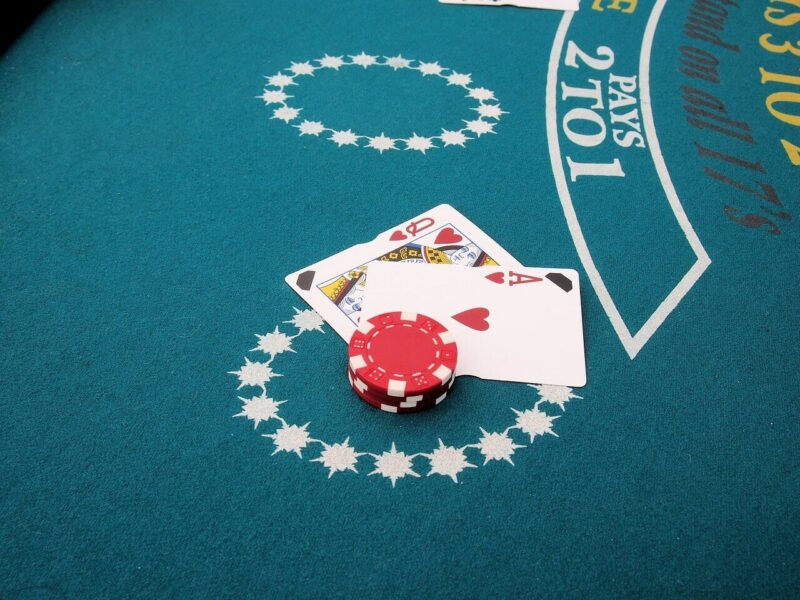
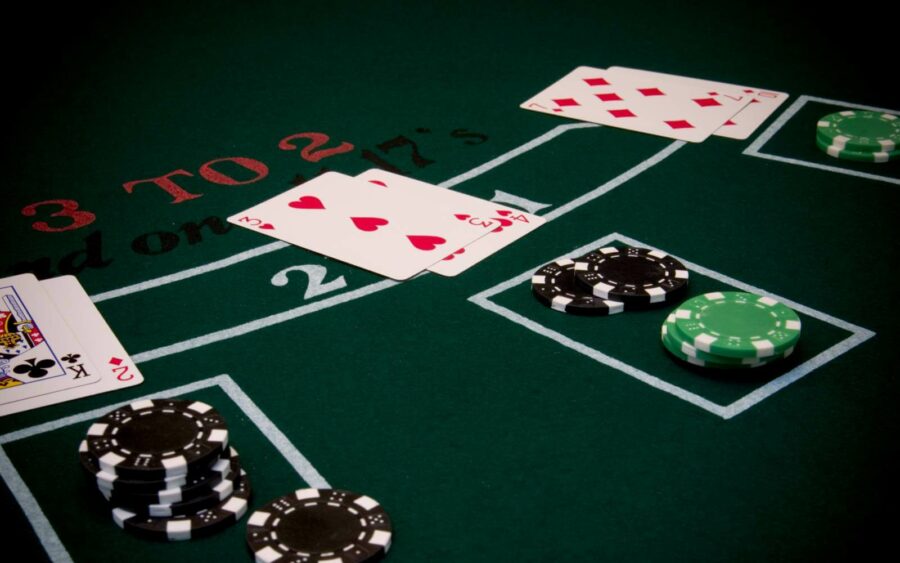
At home, the dealer gives two cards to each player and two to themselves. Typically, one of the dealer’s cards is face up (the “upcard”) and the other is face down (the “hole card”).
See Also: How to Win in Blackjack?
How to deal blackjack at home: The dealer’s role
The dealer is the engine of the game. They are responsible for shuffling, dealing, and managing the “bank.”
- Fixed Rules: Unlike players, the dealer has no “choice.” In most home games, the dealer must hit on any total of 16 or less and must stand on any total of 17 or more.
- Rotating the Dealer: A popular home variant is to rotate the dealer role every 5 or 10 hands. This ensures everyone gets a chance to play against the house and keeps the social dynamic balanced.
Advanced player options: Hit, stand, split, or double
To give your home game a professional feel, make sure everyone knows these four moves:
- Hit: Take another card to increase your total.
- Stand: Keep your current total and end your turn.
- Split: If you have two cards of the same value, you can split them into two separate hands by placing a second bet.
- Double Down: Double your initial bet in exchange for receiving exactly one more card.
See Also: When to Hit on Blackjack?
How to play blackjack at home with only 2 players
You don’t need a crowd to play. In a 2-player game, one person acts as the dealer and the other as the player.
- The game remains a direct challenge.
- The player makes their move first. If the player busts, the dealer wins automatically without having to play their hand.
- This is the best way to practice “Heads-Up” strategy before hitting a real casino.
Betting at home: Real money vs. symbolic stakes
If you choose to play for money, the host must act as the “House Bank.” * The Buy-In: Players give the host cash in exchange for chips.
- The Responsibility: As the host, you must keep this cash safe and separate to ensure everyone can “cash out” their chips at the end of the night.
- Limits: Always set a “Table Minimum” and “Table Maximum” before the first hand to prevent the game from becoming too competitive or uncomfortable.
FAQs
What is the best number of players for a home game?
While you can play with as few as 2 people, the ideal number is 5 to 8 players. This creates a lively social atmosphere without slowing down the game too much.
How many decks should I use?
In a casual home setting, one or two decks are sufficient. However, using 4 to 6 decks (and a card shoe) makes the game feel more like a professional casino and reduces the frequency of shuffling.
What happens in a tie (Push)?
In a standard game, if the player and the dealer have the same total, it is a “Push.” No one wins or loses, and the player’s bet is returned.
Can you play blackjack without a dealer?
Strictly speaking, no. One person must always fulfill the dealer’s duties (dealing cards and acting as the “house” hand). However, you can use a rotating dealer system so that the role is shared among all participants.
See Also: What Is Insurance in Blackjack?
By Focus Gaming News Editorial Team