



IAGR: “Gambling markets are increasingly global, and many regulatory challenges require collaboration across jurisdictions”
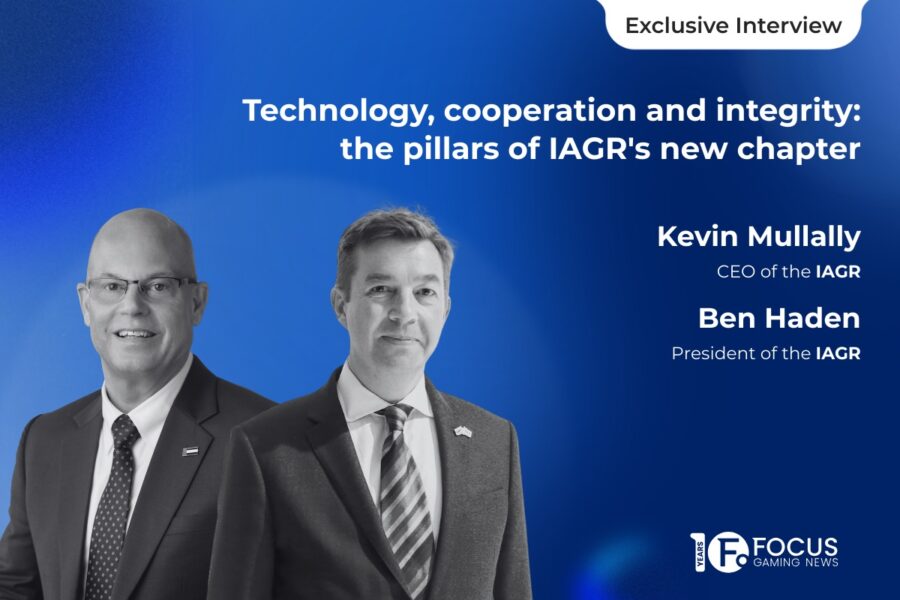

Focus Gaming News spoke with IAGR CEO Kevin Mullally and President Ben Haden about the organisation’s transition to professional leadership and its strategic priorities for global regulatory cooperation.
Exclusive interview.- At a time when gambling markets are becoming increasingly interconnected and technologically complex, the role of international regulatory cooperation has never been more critical. In this exclusive interview with Focus Gaming News, Kevin Mullally and Ben Haden discuss the evolving mission of the International Association of Gaming Regulators (IAGR) as it enters a new chapter with the appointment of its first-ever CEO.
From strengthening global collaboration and advancing regulatory technology to supporting jurisdictions at different stages of market maturity, Mullally and Haden outline how the organisation intends to expand its impact while remaining firmly member-led.
Congratulations, Kevin, on your appointment as IAGR’s first Chief Executive Officer. What are your three to five strategic priorities for IAGR in your first year?
Kevin Mullally: My first priority is listening. IAGR’s strength lies in its members, and understanding the challenges they are facing will shape everything we do. Regulators today are navigating rapid technological change, expanding cross-border activity, and increasing public scrutiny. Our work and programme must reflect those realities and support regulators in responding to them.
Second, I want to build on IAGR’s growing global impact. The organisation is expanding its work through conferences, working groups, and a broader set of communications channels. My role is to strengthen coordination across these efforts and ensure we continue to deliver meaningful value to members and partners around the world.
Third, deepening international cooperation will be essential. Gambling markets are increasingly global, and many regulatory challenges require collaboration across jurisdictions. IAGR provides a trusted forum where regulators can exchange knowledge, share practical experience, and work together to strengthen oversight and consumer protection.
A central focus of this work will be regulatory technology. Regulators are increasingly using advanced data analytics, artificial intelligence, and other technology-driven tools to improve compliance, monitor markets, and combat illegal gambling. IAGR can help regulators identify effective solutions and share practical lessons from their use.
Finally, effective regulation benefits from engagement across the broader regulatory ecosystem. Constructive dialogue with responsible industry stakeholders, technology providers, and compliance experts helps regulators stay informed about emerging risks and innovations. By fostering that exchange, IAGR can support stronger regulation while building the partnerships that allow the organisation to expand its work responsibly.
Ben Haden: Completely agree with what Kevin sets out there. From the Board’s perspective, the priority is simple: ensuring IAGR continues to evolve in step with the needs of our members and the ecosystem they regulate. Regulators are operating in an increasingly complex and interconnected environment. Strengthening leadership capacity enables us to support that work more effectively while remaining firmly member-led.
Kevin, you’ve spent decades in gaming regulation across state, private sector, and international roles. What drew you to this field initially, and what has kept you engaged through such significant industry evolution?
Kevin Mullally: Public service has always been the constant in my career. Gaming regulation encompasses several areas that are central to effective governance, including consumer protection, financial integrity, technological innovation, and public trust. It is a field where sound policy and strong oversight can directly impact people, markets, and communities.
The industry has evolved dramatically over the past several decades. What keeps me engaged is the need to continually adapt regulatory approaches to new technologies, new business models, and increasingly global markets, while maintaining the core principles of fairness, transparency, and integrity.
It is challenging and intellectually demanding work, but also very rewarding because regulators’ decisions have real and lasting consequences for the integrity of the marketplace.
This is IAGR’s first CEO position in the organisation’s history. How do you view the transition from a volunteer-led model to a professional executive leadership structure, and what does that shift mean for the organisation’s impact?
Ben Haden: IAGR remains fully member-led. Strategic direction continues to be set by the Board on behalf of the membership. What this appointment does is strengthen operational leadership. I firmly believe it will bring a step-change in delivery.
As IAGR’s global reach and programme have expanded, it became clear that consistent executive coordination was needed to support delivery and continuity. This is a proportionate step not a shift in governance philosophy.
The CEO reports to the Board. Independence, neutrality, and regulator focus remain unchanged.
“IAGR remains fully member-led. Strategic direction continues to be set by the Board on behalf of the membership.”
Ben Haden, president of the IAGR.
Kevin Mullally: My role is execution. The Board defines strategy, and I ensure we deliver against it effectively. That distinction is important.
IAGR includes regulators from developed and emerging markets with vastly different capacities and resources. How will you ensure IAGR serves both sophisticated regulatory bodies and those building frameworks from scratch?
Kevin Mullally: One of IAGR’s unique strengths is its diversity. Some members oversee highly mature markets with sophisticated supervisory tools. Others are building frameworks from the ground up.
IAGR’s role is not to propose a single model but to create a trusted platform for exchange. Mature regulators benefit from exposure to emerging models and innovation. Developing jurisdictions benefit from practical insight and peer experience.
Success for IAGR means ensuring that every member, regardless of the size or maturity of their market, gains tangible value from participation and leaves better equipped to strengthen the integrity and effectiveness of their regulatory systems.
“IAGR’s role is not to propose a single model but to create a trusted platform for exchange.”
Kevin Mullally, CEO of the IAGR.
Ben Haden: From a governance perspective, inclusivity has always been central to IAGR. Our membership spans the globe and a wide range of regulatory models. If you have a question on regulation one of our members will have the answer. The Board is committed to ensuring that IAGR remains relevant and accessible to all members, whether they oversee long-established markets or are shaping new frameworks. As we head to our annual conference in Lima, Peru in October this year come and you’ll see the best expression of that. An agenda that speaks to everyone and the best annual opportunity to network with the widest range of your regulatory peers.
The IAGR has long emphasised collaboration among regulators. How do you plan to strengthen international cooperation and knowledge exchange in practice?
Kevin Mullally: Effective cooperation must be structured and sustained. It cannot depend solely on occasional meetings or informal exchanges.
IAGR will focus on strengthening the mechanisms that allow regulators to work together in practical ways. That includes expanding the role of working groups, increasing year-round engagement beyond the annual conference, and ensuring that regulators have access to high-quality subject-matter expertise when confronting emerging risks.
We will also place greater emphasis on producing tangible outputs that regulators can use directly in their work. This may include practical guidance, shared analytical tools, and collaborative approaches that help regulators address common challenges more effectively.
Many of the challenges regulators face today, including illegal gambling, financial crime, and threats to the integrity of betting markets, do not stop at national borders. Regulators benefit from trusted networks where they can exchange knowledge, share practical experience, and develop solutions that strengthen oversight across jurisdictions.
IAGR also welcomes engagement with stakeholders who bring relevant subject matter expertise, including technology providers, compliance specialists, and academic experts. By bringing regulators together with knowledgeable stakeholders in a structured and transparent environment, IAGR can also serve as a forum where policymakers learn from regulatory experience and practical expertise.
Our goal is to ensure that cooperation produces real outcomes, stronger regulatory tools, and better-informed policy decisions.
Ben Haden: And this is why we’ve appointed Kevin, I’m incredibly excited about how he is going to help us make this happen – the right person who shares our values and the right time to meet head on the stimulating challenges we regulators face.
By Focus Gaming News Editorial Team