



Holly Gagnon, Bragg Gaming Group: “The gaming industry never stands still, and neither should its leaders”
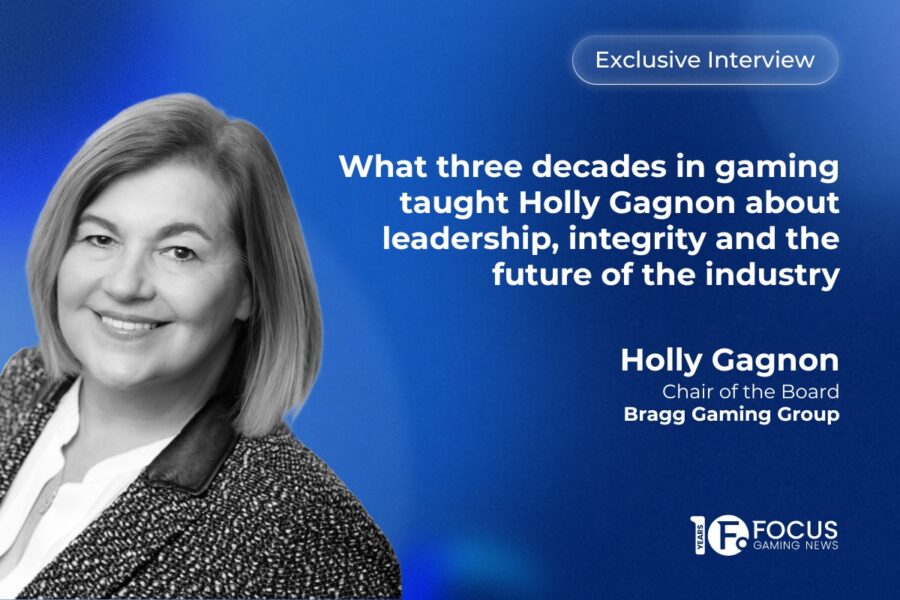

Focus Gaming News spoke to Holly Gagnon about her recent induction into the AGA Gaming Hall of Fame, her leadership philosophy and her strategic role at Bragg Gaming Group.
Exclusive interview.- With a career spanning more than three decades across tribal gaming, commercial gaming, corporate governance, and executive leadership, Holly Gagnon, Chair of the Board at Bragg Gaming Group, has earned a reputation as one of the sector’s most respected voices. This year, her contributions were recognised with one of the industry’s highest honours: induction into the American Gaming Association’s Gaming Hall of Fame Class of 2026.
In this exclusive interview with Focus Gaming News, Gagnon reflects on the milestones that defined her leadership journey, the transformations that have reshaped the gaming landscape, and the lessons she has learnt from leading through periods of growth, disruption, and innovation. She also shares her perspective on governance, mentorship, the future of player engagement, and how her experience as an operator continues to influence her role as Chair of the Board at Bragg Gaming Group. From leadership development to the opportunities created by emerging technologies and regulated markets, Gagnon offers valuable insights into what it takes to build lasting success in an industry that never stands still.
Holly, congratulations on being named to the AGA Gaming Hall of Fame Class of 2026. What does this recognition mean to you personally after more than three decades dedicated to the gaming industry?
Thank you. It’s an incredibly humbling honour, particularly because it’s recognition from an industry that has shaped so much of my professional and personal life.
When I look back over the past three decades, I don’t think about individual titles or milestones as much as the people I’ve had the privilege to work alongside. Some of the work I’m proudest of isn’t a title at all, it’s the teams I helped build and the people who went on to lead in their own right.
I’ve been fortunate to witness this industry evolve from a relatively traditional business into one driven by innovation, technology and changing player expectations. To have played a role in that journey, and to be recognised by peers I’ve respected throughout my career, is something I’ll always be grateful for.
Looking back on your remarkable career, what have been the defining moments that shaped your leadership philosophy and the professional you are today?
One of the greatest lessons I’ve learnt is that leadership isn’t about having all the answers, it’s about surrounding yourself with talented people, empowering them and creating an inclusive culture where different perspectives are welcomed.
I’ve had opportunities to lead through periods of significant change, whether that meant entering new markets, navigating industry disruption or helping organisations evolve alongside shifting customer expectations. Those experiences reinforced the importance of adaptability. The gaming industry never stands still, and neither should its leaders.
I’ve also learnt that sustainable success is built on integrity. Relationships take years to earn and moments to lose, so consistency, transparency and accountability have always been central to how I’ve tried to lead.
You have played a significant role in the evolution of tribal gaming, commercial gaming and leadership development. Which industry transformation has had the greatest impact on you, and why?
It’s difficult to point to just one because our industry has continually reinvented itself. But if I had to choose, I’d say it is the access to gaming. When I started my career, there was limited access with a small number of jurisdictions. With both the expansion of land-based jurisdictions as well as online, there is significant competition. Gaming businesses were required to evolve and focus beyond buildings and operations to consider the entire player journey to be successful. We think about the entire player journey, how technology can personalise experiences, how data can help operators make smarter decisions, and how entertainment continues to evolve alongside consumer expectations.
That transformation has fundamentally changed how companies compete. The organisations succeeding today aren’t simply operating casinos or delivering games, they’re crafting experiences that build long-term engagement and loyalty. I believe that’s a very positive direction for the industry.
Today, as a Chair of the Board at Bragg Gaming Group, you continue to contribute to the industry’s evolution from a strategic perspective. How has your experience as an operator influenced the way you approach governance and innovation today?
Having spent much of my career on the operator side gives me a practical perspective on what truly creates value.
Innovation is exciting, but it has to solve real challenges. Operators are looking for partners who understand their business, help them engage players more effectively and help them grow.
That’s exactly what drew me to Bragg Gaming Group’s board. From a governance standpoint, my role is to make sure we back innovation that solves real operator problems, and to keep the discipline that turns good ideas into a durable business.
Good governance isn’t about slowing innovation, it’s about helping organisations innovate with purpose.
Throughout your career, you’ve been recognised not only as a successful executive but also as a mentor to hundreds of gaming professionals. What leadership principles have guided you the most, and what advice would you give to the next generation of industry leaders?
I’ve always believed that leadership is measured by the success of the people around you.
The most rewarding part of my career has been watching talented individuals grow into leaders themselves. Creating opportunities, encouraging curiosity and giving people the confidence to take on bigger challenges is one of the most meaningful responsibilities any leader has.
For those entering the industry today, my advice would be to stay curious. Technology will continue to change, regulations will evolve and markets will mature, but the willingness to learn, adapt and listen will always be valuable.
Equally important is remembering that this remains a people business. Relationships, integrity and collaboration will always matter, regardless of how sophisticated the technology becomes.
As the gaming industry continues to evolve through technology, new regulated markets and changing player expectations, what excites you most about its future, and what legacy do you hope to leave behind?
Technology, particularly AI and data-driven personalisation, is creating opportunities to engineer more engaging, responsible and enjoyable player experiences than ever before. At the same time, new regulated markets continue to demonstrate the positive impact that well-regulated gaming can have for operators, players and local economies.
The future belongs to companies that combine innovation with responsibility and never lose sight of the customer. Those that truly understand the player journey will be the ones that shape the next chapter of our industry.
As for my legacy, I hope it’s less about individual accomplishments and more about the people I’ve worked with. If I’ve helped build stronger organisations, supported future leaders and contributed to an industry that continues to innovate with integrity, then I’ll consider that a career well spent.
By Focus Gaming News Editorial Team