


Andrew Rhodes: “In 2026, we’ll keep ramping up the tools and interventions that make large-scale illegal gambling in Great Britain increasingly difficult to operate”
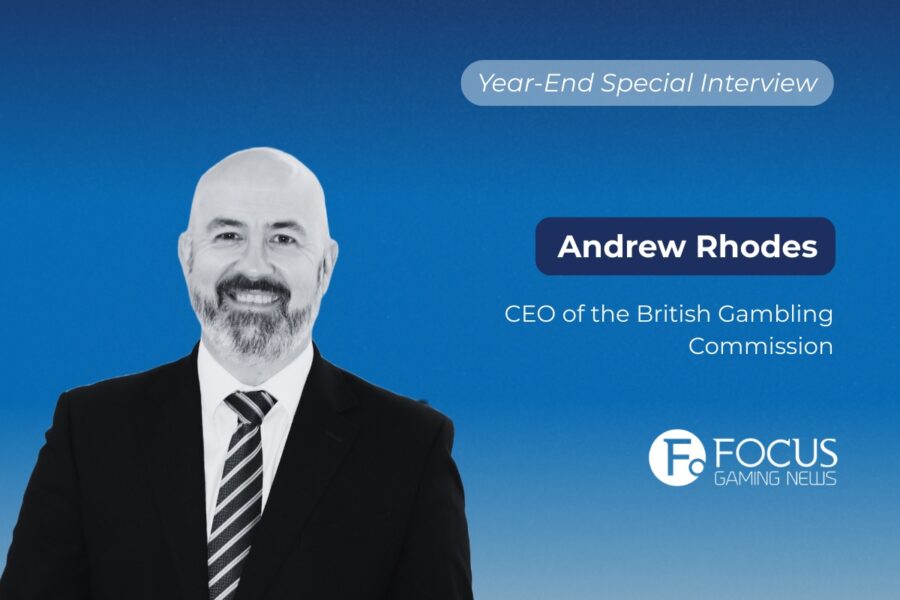

In an exclusive interview with Focus Gaming News, Andrew Rhodes, CEO of the British Gambling Commission, discusses the impact of the Gambling Act Review, the Gambling Survey for Great Britain and the Commission’s priorities for the year ahead.
Exclusive interview.- In this Focus Gaming News year-end special interview, Andrew Rhodes, CEO of the British Gambling Commission, reflects on the first full year of implementing the most extensive regulatory reforms in two decades. He discusses the early effects of the Gambling Act Review, the insights emerging from the Gambling Survey for Great Britain, the evolution of the Commission’s evidence priorities, and the regulatory agenda set to shape 2026—from tackling illegal gambling to advancing data-driven oversight and refining financial risk checks.
The Gambling Act Review represented the most significant reform in two decades. Looking back on 2025, what has been the impact of these measures—particularly financial risk assessments, machine betting limits, and the mandatory levy—on operator behaviour and consumer protection outcomes?
We’ve launched a comprehensive evaluation programme designed to understand, as clearly as possible, the real-world effects of the Gambling Act Review White Paper’s reforms. These changes are the biggest in 20 years, so naturally, everyone is eager for the results. But the truth is: it’s still too early for firm conclusions. What we can say is that we’re tracking the impact closely and methodically, making sure that when we do report back, the picture is grounded in evidence—not assumptions.
The Gambling Survey for Great Britain (GSGB) is described as “the largest survey of its kind in the world.” Following its first full year of publication in 2024 and updates through 2025, what have been the most surprising revelations about gambling behaviour in Great Britain? How are these findings being utilised to reshape regulation?
One of the most striking insights has come from an area where research has historically been thin: the collateral impact of someone else’s gambling. Among people who said someone close to them gambles, 5.2 per cent reported experiencing one or more severe consequences, and 11.4 per cent told us they’ve felt stress or anxiety at least occasionally because of that person’s gambling. That’s a sobering reminder that harm radiates far beyond the individual placing the bets.
We’ve known for some time that the PGSI, while valuable, doesn’t capture every type of harm. The new GSGB questions help fill those gaps, revealing tangible harms even among people who don’t register highly on PGSI scores. This deeper understanding is already helping refine how we think about harm, vulnerability, and protection.
Prize draws have also emerged as an eye-opening area. Although we don’t regulate them, the GSGB is showing just how quickly participation is growing, putting them right behind betting as an activity. Understanding the broader landscape is crucial for anticipating future regulatory needs.
We’ve also added new long-term tracking questions on public trust and on illegal gambling. These will form important impact metrics as we continue to shape regulations that reflect a fast-changing market.
“Harm radiates far beyond the individual placing the bets.”
Andrew Rhodes, CEO of the British Gambling Commission.
The “Evidence Gaps and Priorities” programme 2023-2026 concludes in 2026. Of the six priority evidence themes, which have you made most progress on, and which continue to present the greatest research challenges? Will there be a Phase 2 of the programme or different evolving priorities?
We’ve recently concluded a sizeable stakeholder engagement exercise – which included surveys and workshops with those working within the gambling industry, academics and researchers, individuals with lived experience of gambling-related harm and third sector organisations – to supplement our previously published Evidence Gaps and Priorities themes with Evidence Roadmaps.
The roadmaps document, published last month to coincide with the introduction of the statutory levy, builds upon the six Evidence Gaps themes and is intended to provide additional detail about priority evidence gaps. Further information is available in the blog that accompanied the publication.
As expected, the evidence gaps have evolved since the initial 2023 publication and progress has been made against all six themes, with some reflections and examples published alongside each theme after the first year.
We recognise that there will always be the need for robust evidence and have taken the opportunity to be clear about our priorities in a ‘forward look’ section for each theme, whilst spelling out where we believe other members of the gambling ecosystem are best placed to contribute. To support our awareness, we’re trialling a research reporting form as an opportunity for stakeholders to get in touch and share details of their ongoing research on any of the priority topics.
What are the Commission’s priorities for the next year?
Illegal gambling has been front and centre recently. In November, we wrapped up a four-part analytical series on the issue, and this will continue to be a major focus. With the additional funding announced in the Budget, we’ll keep ramping up the tools and interventions that make large-scale illegal gambling in Great Britain increasingly difficult to operate.
We’ll soon publish our response to the gaming machines consultation, and we’ll outline the next steps on developing effective financial risk checks that work for both industry and consumers. Our data innovation pilot will also expand—helping us find smarter, more efficient ways for licensees to share data, while reducing regulatory burden.
We’re continuing to work closely with the government, the industry, consumers, and others with a stake in gambling regulation to ensure we remain firmly anchored in the public interest. And we remain focused on our responsibility to regulate the National Lottery—ensuring it continues to be run with integrity, transparency, and for the benefit of good causes across the UK.
By Focus Gaming News Editorial Team