UK National Lottery should comply with industry responsible gambling measures, charity says
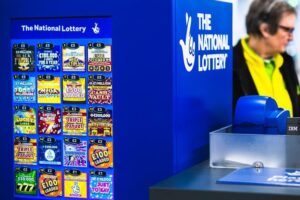
GambleAware says the Allwyn-run lottery has become an outlier in an industry increasingly focused on public health.
UK.- A new report argues that the UK National Lottery should be obliged to provide signposting to problem gambling treatment services in line with the rules for businesses in other gaming verticals. GambleAware noted that the Allwyn-run lottery is the most popular form of gambling in Britain, with around eight million weekly customers. But it says the lottery still doesn’t do its bit to raise awareness of gambling harm and support services.
It’s often argued that the lottery is a lower-risk form of gambling, meriting certain exceptions from the rules imposed on other verticals. However, GambleAware’s research found that up to 600,000 lottery customers may experience problem gambling. The charity says that figure means the lottery should not be treated as an exception when it comes to a duty to meet responsible gambling measures, noting that even while lower risk, it’s “not risk-free”.
According to GambleAware’s 2024 Annual Treatment and Support Survey, conducted by YouGov among nearly 18,000 adults, 84 per cent acknowledge that the National Lottery is a form of gambling, 46 per cent disagree that its products are harmless, 74 per cent want clear support information on products and 69 per cent believe advertising should direct players to support services.
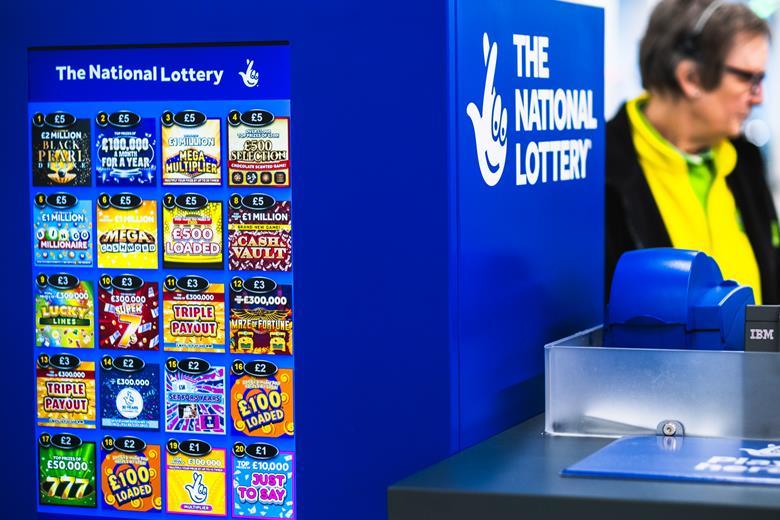
GambleAware suggests that the National Lottery should implement signposting to treatment services via both physical and digital touchpoints, from scratchcards to its app-based instant win products.
It quoted one woman with experience of gambling harm as saying: “When I gave up gambling and self-excluded myself from places I could gamble, the one thing I couldn’t bar myself from was playing the lottery in shops.
“In my early recovery, I bought £450 worth of scratch cards. Later, I moved to online instant games with jackpot prizes that looked and sounded like fruit machines. I was lured in, and I know others who’ve had similar experiences. Putting support information on tickets and cards would help so much.”
Another person was quoted describing financial hardship caused by spending with the National Lottery app: “I got a bit of a habit with the instant scratch cards on the app… it did lead me into financial difficulty; I wasn’t able to buy food for about a week because I’d spent the food shopping money on scratch cards.”
Andy Boucher, chair of trustees at GambleAware, said the National Lottery had become an outlier in the industry and should meet the same level of responsibility as other operators. He said: “We recognise the great work the National Lottery has done supporting a range of worthy causes over many years. In the public’s mind, it is there to do good in the community, and so we believe it is also the right thing for it to look after the people who play the National Lottery.
“Allwyn has previously stated that ‘player safety is our top priority’. It must now live up to those words and play a critical role in protecting people from gambling harms, which are a serious public health issue that can drive societal inequalities, worsen mental health issues, and increase pressure on our overburdened health system.”
Ian Semel, CEO of Breakeven, a member of the National Gambling Support Network, said: “At Breakeven, we’ve delivered support for over 20 years. Around 11 per cent of clients who came to us in 2024 disclosed that the National Lottery or scratch cards were causing them gambling harm.
“That’s why we’ve joined the call for the Lottery to signpost to support services like us. People need to know where to get help – the moment they realise they might be at risk.”
Allwyn response
However, Allwyn, which took over the operation of the UK National Lottery in February of last year, has defended its approach. An Allwyn spokesperson said: “We signpost to a range of front-line gambling support services across The National Lottery website, communications, products and marketing. All Scratchcards and draw-based games tickets feature details of GamCare and the National Gambling Helpline – which is run by GamCare and commissioned by GambleAware.
“Responsible play on The National Lottery has provided enormous societal benefits across the UK with £50bn raised for Good Causes since 1994. We’ll continue to work with GambleAware as part of our ongoing £1.6m annual commitment to support Research, Treatment and Prevention of gambling-related harm.”
The company added that it also links directly to a dedicated ‘responsible play’ website that provides details for 11 other support services, including GambleAware. It added there was no evidence that National Lottery games are associated with causing high-risk problem gambling and noted that the National Lottery is not governed by the Gambling Act.
“We use a rigorous game design process to design games that are lower risk and don’t appeal to vulnerable groups,” it said. “All games are risk-assessed at an early stage, ensuring that they are responsible in their design.” The operator uses two independent industry-standard tools, Gamgard and ASTERIG, to assess the risk levels of a game’s structural and situational characteristics, and a risk checklist to identify any further risks posed by the game. “If any of these tools identify a risk level which is too high, we will revise the game. If the risk remains too high, we will not launch the game at all,” Allwyn said.
Allwyn has been criticised for delays in its updates of National Lottery technology. It has been rolling out National Lottery self-checkouts at supermarkets and testing hi-tech scratch card dispensers.