
Kate Chambers: “The GCGRA has been very clear that it expects operators and suppliers to arrive ready, not to build their programmes after the licence is granted”
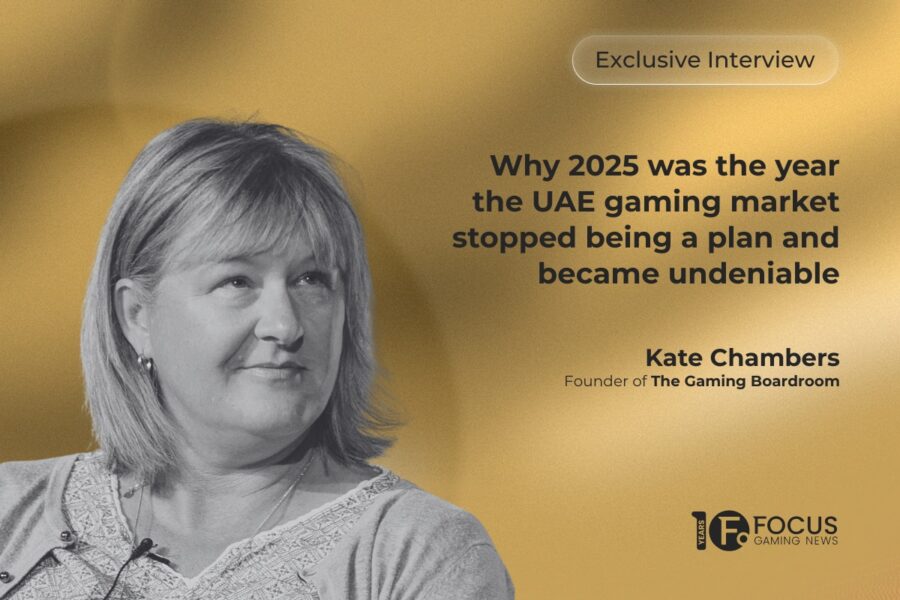
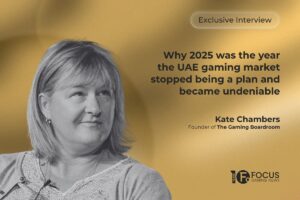
Kate Chambers, Founder of The Gaming Boardroom, discusses the rapid development, investment potential, and regulatory framework of the UAE’s emerging commercial gaming market.
Exclusive interview.- As the United Arab Emirates (UAE) continues to build out one of the most closely monitored new gaming frameworks globally, the conversation has rapidly evolved from speculation to active market positioning. With the General Commercial Gaming Regulatory Authority (GCGRA) overseeing a multi-vertical rollout that spans lottery, online gaming, and integrated resorts, the UAE is emerging as a rare case of a market being constructed almost simultaneously across its entire ecosystem.
In this exclusive interview with Focus Gaming News, Kate Chambers, founder of The Gaming Boardroom (TGB) and former director at Clarion Gaming, offers a strategic and operational perspective on how the gaming market in the UAE is taking shape.
How would you characterise the UAE commercial gaming market today, still a regulatory work in progress, or already an investable market?
Both, and I don’t think that’s a contradiction. The framework is still being built, but serious money is already moving, and not just in one direction. We have a licensed lottery that’s operational, a US$5bn integrated resort under construction, supplier approvals across slots, lottery and systems technology, and a live online platform. That’s not a single-vertical story. The whole industry is being assembled at once, which is unusual and, frankly, exciting to watch.
My honest view is that it’s investable right now if you know where to look, and if your compliance house is in order. The GCGRA has been very clear that it expects operators and suppliers to arrive ready, not to build their programmes after the licence is granted. That bar is high, but it’s the right bar for a market that needs to get this right first time.
“The whole industry is being assembled at once, which is unusual and, frankly, exciting to watch.”
Kate Chambers, founder of The Gaming Boardroom.
What was the most important shift in 2025 that changed the conversation from speculation to serious market entry planning?
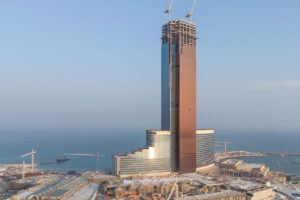
For me, it was seeing the physical reality of Wynn Al Marjan Island take shape. There’s a point at which a project stops being a plan and becomes undeniable, and that happened last year. When you’re looking at a 70-floor tower that has topped out and is moving into fit-out, the conversation changes. People stopped asking whether it would happen and started asking how they needed to position themselves.
The online licensing framework announced in October added important structural clarity, one licence per emirate, each emirate opts in, and that opened up serious planning conversations on the digital side too. But the land-based momentum was what really shifted the room. That’s what made 2025 feel different.
Which verticals have the strongest medium-term potential, lottery, sports betting, online casino, or land-based?
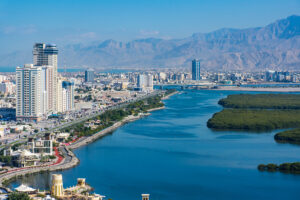
Land-based is the anchor and, right now, the most clearly defined opportunity. The integrated resort model plays perfectly to what the UAE already does well, premium tourism, hospitality, entertainment. Wynn sets that template, and a lot depends on how well Ras Al Khaimah executes on its ambition of growing visitor numbers significantly by 2030. If that works, conversations about further resort licences in other emirates will follow naturally.
But I’d push back on the idea that it’s just about the casino floor. Lottery is already live and has real reach. Sports wagering makes obvious sense given the population mix, the appetite for football, cricket and racing here is genuine and significant. And racing is honestly an underappreciated part of this story; the UAE has a real horse racing culture, and that hasn’t been fully connected to its commercial potential yet. The medium-term picture is an ecosystem, not a single vertical.
What should operators be doing now to position themselves well for UAE entry?
Start with compliance and don’t treat it as a formality. The GCGRA classifies gaming operators as designated non-financial businesses, which means full AML and counter-terrorism financing obligations. They expect mature programmes already in place. Operators who show up with a plan to build their compliance function after getting licensed will struggle.
Beyond that, understand the customer. The UAE’s eligible market is almost entirely expatriate, and it’s one of the most diverse populations anywhere in the world. What works in a European or Asian market won’t simply transfer. And for land-based operators and suppliers, engage with the regulator now. The GCGRA has been genuinely open to industry dialogue, and the operators building those relationships today will be better placed when opportunities arise.
“The GCGRA classifies gaming operators as designated non-financial businesses, which means full AML and counter-terrorism financing obligations.”
Kate Chambers, founder of The Gaming Boardroom.
How does the UAE compare with other emerging regulated markets globally?
Singapore is still the most useful reference point, limited licences, large integrated resorts, local population excluded from gaming, a serious compliance culture, and a clear tourism rationale. It’s a model that worked, and the UAE is following a recognisably similar logic. Ras Al Khaimah’s tourism ambition is significant, and if it delivers, the scale of the opportunity starts to look very compelling.
What I find striking is the pace. Japan has been working on its integrated resort programme for years and has progressed to one site. The UAE went from establishing a regulator to having licensed operators, a resort under construction, and a live lottery in under two years. That reflects genuine political commitment, and in this industry, that matters as much as anything else.
What does a genuinely successful UAE commercial gaming market look like to you by 2030?
It starts with Wynn Al Marjan Island delivering, open, profitable, and contributing meaningfully to Ras Al Khaimah’s growth as a destination. If the land-based anchor works, everything else follows more easily. Further resort licences in other emirates, a lottery with real scale, sports wagering that’s properly serving the market across retail and digital, and an online sector that’s small but well-run.
What I’d really like to see is the UAE becoming a place where the industry genuinely invests and innovates, not just operates. The GCGRA has talked about that ambition, and I think it’s achievable. This market has moved faster than almost anyone expected. I’m not inclined to underestimate what another four years could look like.
By Focus Gaming News Editorial Team