



Mika Kuismanen: “The Finnish gambling reform is being carried out at least ten years too late”
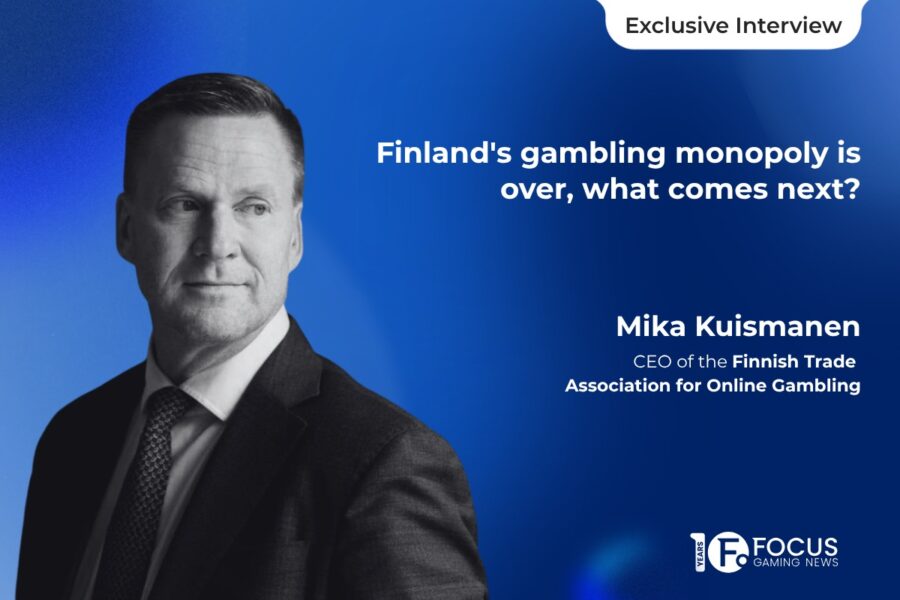

Mika Kuismanen, CEO of the Finnish Trade Association for Online Gambling, spoke to Focus Gaming News about Finland’s transition from a monopoly to a licensed market.
Exclusive interview.- As Finland moves towards dismantling its long-standing gambling monopoly, the country stands on the verge of one of the most significant regulatory transformations in Europe’s gaming landscape. The shift to a licensing model is not only a structural overhaul, but a necessary response to declining channelisation rates and the growing influence of unlicensed operators.
In this context, Focus Gaming News spoke with Mika Kuismanen, CEO of the Finnish Trade Association for Online Gambling, to examine the implications of a reform widely seen as necessary.
Finland is in the middle of a process that will undoubtedly mark a turning point: the end of the gambling monopoly and the opening of the online market. What are your first impressions of this shift? Do you think it is happening at the right time, or could it have been done sooner?
The transition from a full monopoly to a licensing system is definitely a positive thing for several reasons. If we look at the market share of the current monopoly company in competitive verticals, they are alarmingly low, being less than 30 per cent. This results in significant tax revenue losses for the state and the problem of gambling remaining in Finland. Finland is really a ‘wild west’ when it comes to gambling and the reform regulates our system, not liberalises it. Unfortunately, the reform is being carried out at least ten years too late. A dramatic decline in the channelisation rate has been visible for a long time, but the political courage to break the monopoly has been lacking.
“Finland is really a ‘wild west’ when it comes to gambling and the reform regulates our system, not liberalises it.”
Mika Kuismanen, CEO of the Finnish Trade Association for Online Gambling.
A strictly regulated market often draws criticism from those who argue that overly tight rules can push players towards unlicensed operators. How do you see that risk playing out in Finland?
The Gambling Law passed last December provides good opportunities for the development of a responsible market in Finland. The law itself gives operators sufficient incentives to apply for a licence in Finland. I see the biggest threat as how the supervisory authority will operate. If it focuses more or less only on regulating the licensed market (like in Sweden, for example), and does not invest in regulating the black market, then naturally the risk is high that the market share of unlicensed operators will increase. We need a regulator which will actively forward guide the market.
Under this new ecosystem, what role will the Finnish Trade Association for Online Gambling play — and how will it evolve as the market matures?
The Rahapeliala was a significant player in influencing the upcoming gambling law. The activity and professionalism of the member companies are particularly commendable for this. The lobbying work will not end, because, as has been seen in other countries, political risk is constantly present. This has been reflected in the fact that legislation is constantly threatened with restrictions on the gambling market, often on irrational grounds.
The gambling industry is an active player now and in the future, also in discussions with the supervisory authority and other administrations, and represents the industry in the media and at other events related to the industry.
What aspects of the new regulatory framework do you think still need refinement before the 2027 launch?
The Gambling Act will not and does not need to be changed before the market opens on July 1, 2027. As stated, the law is balanced from the perspective of all parties. What still needs to be clarified is, for example, the technical solutions required from operators regarding, for example, the submission of gaming events to the supervisory authority, etc. Also, discussions on how the authority will provide instructions regarding advertising and marketing have not yet taken place.
The licensing process for online gambling in Finland has recently opened. What has been the initial response from operators preparing for the July 2027 deadline?
Operators are enthusiastic about the Finnish market. There have been a surprisingly high number of inquiries and requests for advice, considering that Finland is not a particularly large market. I believe that we will see a significant number of licence applications, and at the time of writing, 24 applications have already been received by the Police Board, although there is still well over a year until the market opens.
Looking ahead, what is your outlook for the future of the industry in Finland?
I am moderately positive about the future. The law provides a good opportunity for the development of the industry in Finland. At the same time, it must be noted that the industry is being attacked from many directions. Political pressure for regulation is strong, and some politicians do not understand that irrational regulation leads to the growth of the black market. The next election period (2027-2031) is important, because if ill-considered and rapid changes are made to the law without empirical evidence, then there is a risk of negative development in the industry.
“The law provides a good opportunity for the development of the industry in Finland.”
Mika Kuismanen, CEO of the Finnish Trade Association for Online Gambling.
Do you think it is realistic to achieve a harmonised set of rules across Europe’s gambling markets in the future — and would that genuinely make things easier for operators?
Excellent question, and I think this is being considered and discussed far too little. I belong to the school of thought that European regulation would be welcome, especially to prevent or at least make it more difficult for unlicensed companies to operate. This would be particularly important in relation to, for example, payment systems and IP-blocking type of issues. This would also reduce the risk of single countries to free-ride.
By Focus Gaming News Editorial Team