Special report: Forging Europe’s united front against illegal online gambling

Seven months after European gambling regulators agreed to share intelligence and coordinate measures against unlicensed operators, Focus Gaming News analyses how things have progressed.
Key takeaways
- Unlicensed operators in the EU-27 generated €80.6bn in gaming revenue in 2024, 71% of the total €114.3bn European online gambling market, compared to just €33.6bn for the legal sector, according to a Yield Sec study for the European Casino Association.
- More than 6,200 active illegal operators were targeting EU consumers in 2024 (a 26% increase year-on-year) with an estimated 81 million Europeans engaging with unregulated platforms.
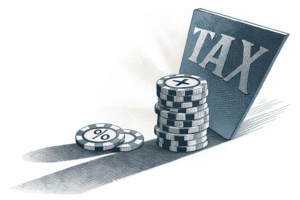
- At an assumed average tax rate of 25%, European treasuries were losing an estimated €20bn annually to the illegal market.
- In its most recent enforcement period, the UK Gambling Commission referred 447,778 URLs to Google and Bing for removal, of which 287,961 were taken down, while issuing more than 3,140 cease-and-desist notices.
- Portugal’s SRIJ issued 54 closure notices and blocked 129 websites in the first half of 2025 alone, but illegal operators continue to use mirror sites, cryptocurrency and decentralised marketing to evade blocks.
Europe.- On November 25, 2025, gambling regulators from Austria, France, Germany, Great Britain, Italy, Portugal and Spain entered an agreement addressing the issue of unlicensed gambling operations. After several years of limited coordination among authorities, the move established a framework for exchanging information on illegal operators and a strategy for applying collective pressure on social media and digital platforms.
The declaration was made following a meeting held at Spain’s Directorate General for Gambling Regulation (DGOJ) in Madrid on November 12, on the margins of the 1st International Gaming Congress. It was an official acknowledgement that no single national regulator could effectively control the scope and sophistication of illicit online gaming.
Here, Focus Gaming News analyses the content and significance of that statement and examines what concrete changes have been implemented across the seven jurisdictions in the seven months since it was published.
The scale of the problem
By late 2025, Europe’s illegal online gambling market was the dominant force in the digital sector. According to a November 2025 study conducted by Yield Sec on behalf of the European Casino Association, unlicensed operators in the EU-27 made €80.6bn ($91.8bn) in gaming revenue in 2024. Compared to just €33.6bn ($38.3bn) for the entire legal sector, this accounted for 71 per cent of the €114.3bn ($130.2bn) European online gambling market. The same study identified more than 6,200 active illegal operators targeting EU consumers – a 26 per cent increase on the previous year – and estimated that 81 million Europeans had engaged with unregulated platforms.
The fiscal cost is considerable. At an assumed average tax rate of 25 per cent, European treasuries were losing an estimated €20bn ($22.8bn) annually. Meanwhile, most illegal sites offer no credible age verification, no self-exclusion tools and no contribution to harm-minimisation research or treatment.
National regulators had documented the problem extensively. The UK Gambling Commission published a detailed four-part research series between September and November 2025 examining consumer behaviour, risk factors and the limits of existing disruption tools.
Parallel concerns were raised in Paris, Rome, Berlin and Lisbon. Yet enforcement remained fragmented. Illegal operators exploited differences in national advertising rules, payment rails and blocking powers, rotating domains and marketing channels faster than any individual authority could respond. Affiliate networks, social media and video platforms were the primary acquisition channels for players who might otherwise have used licensed services.
The joint statement and its commitments
The November 25, 2025 statement expressed “common concern” at the “increasing proliferation of advertising targeting [their] jurisdictions by unauthorised operators through digital channels such as social media, video platforms and affiliate networks.” Such activity, it said, “not only contravenes national legislation but also places citizens, including minors and vulnerable individuals, at heightened risk.” The borderless nature of the threat and the speed of technological innovation made it “easier for illegal operators to evade regulatory oversight,” undermining consumer protection, public order and the integrity of regulated markets.
The three commitments were:
1. Sharing information on illegal operators among the seven jurisdictions.
2. Calling on digital platforms and social media networks to strengthen their control mechanisms to prevent the dissemination of advertising content from unauthorised operators.
3. Reaffirming their commitment to share knowledge and best practices in identifying, investigating and sanctioning operators acting outside the law.
Changes implemented since November 2025
Implementation has been incremental, focused on scaling existing tools and aligning complaints to platforms rather than dramatic public takedowns. Across signatory jurisdictions, regulators have increased the volume and coordination of complaints to major digital platforms. Complaints now carry multi-jurisdictional weight, raising the reputational and commercial stakes for platforms that fail to act consistently.
In the United Kingdom, the Gambling Commission significantly increased the tempo of disruption activity. Between July 2024 and June 2025, its illegal markets team referred 447,778 URLs to Google and Bing for removal, of which 287,961 were taken down. The Commission issued more than 3,140 cease-and-desist and disruption notices during the same period.
Payment blocking measures also expanded, beginning with an initial referral to Visa in January 2025 and subsequent outreach to Mastercard and digital wallet providers. The Commission business plan for 2026–27 prioritises the further development of capabilities to address the illegal market, while the UK government has now created an Illegal Gambling Taskforce.
In the first half of 2025, the Portuguese gambling regulator, Serviço de Regulação e Inspeção de Jogos (SRIJ) issued 54 closure notices, ordering internet service providers to block 129 websites and making five referrals to prosecutors in the first quarter alone. In the second quarter it took 208 enforcement actions, including 110 website blocks and 97 cease-and-desist notices.
In June, Manuel Castro Almeida, Portugal’s economy minister, announced that the government would introduce new legislation to strengthen market oversight and increase sanctions for regulatory non-compliance.
Search-engine delisting and payment interventions have proved some of the most immediately effective tools. Measures against advertising on major platforms remain more variable, reflecting differences in national legal interpretations and uneven enforcement.
Industry and expert perspectives
Regulators have framed the initiative as protective of both consumers and the integrity of licensed markets. Industry observers and compliance professionals have generally welcomed the direction while emphasising that enforcement must be accompanied by regulatory and tax settings that make legal offerings genuinely competitive.
The regulated markets continue to up standards, with greater investment in data-driven harm prevention and player tracking, but high tax rates and restrictive product rules in some markets continue to be cited by analysts as factors that can sustain demand for illegal alternatives offering fewer restrictions or better perceived value.
Legal experts have noted that platforms now face a more credible prospect of coordinated regulatory pressure across multiple major markets simultaneously. Trade bodies have stressed that sustainable reduction of the illegal market requires both disruption of illegal supply and continuous improvement in the attractiveness and accessibility of regulated products.
Persistent challenges
Seven months after the agreement, the illegal market remains resilient. Operators continue to use mirror sites, cryptocurrency and decentralised marketing to evade blocks. Many users are still drawn to illegal sites by aggressive advertising or habit.
While some major social media and video platforms have strengthened policies, consistent enforcement, particularly of affiliate and influencer marketing, remains challenging. Differences in national enforcement powers create an uneven landscape.
Early indicators suggest that coordinated pressure is raising the cost and difficulty for illegal operators to acquire customers through mainstream digital channels, but the structural power of the black market remains.
What remains to be resolved
Greater alignment on certain operational standards in advertising and payment enforcement and data sharing could strengthen the united front, but EU-wide gambling legislation remains politically remote. Meanwhile, enforcement tools alone are unlikely to shrink the illegal market sustainably if regulated offerings are perceived as less competitive on price, product range or user experience.
For the wider global industry, Europe’s experiment in coordinated cross-border enforcement against illegal operators provides a potential template. However, the long-term success will depend on achieving sustained platform accountability, legislative backing where needed and a focus on making regulated markets attractive enough to draw players away from unregulated offerings.