Court rules that Ohio and Tennessee can enforce gambling laws on Kalshi
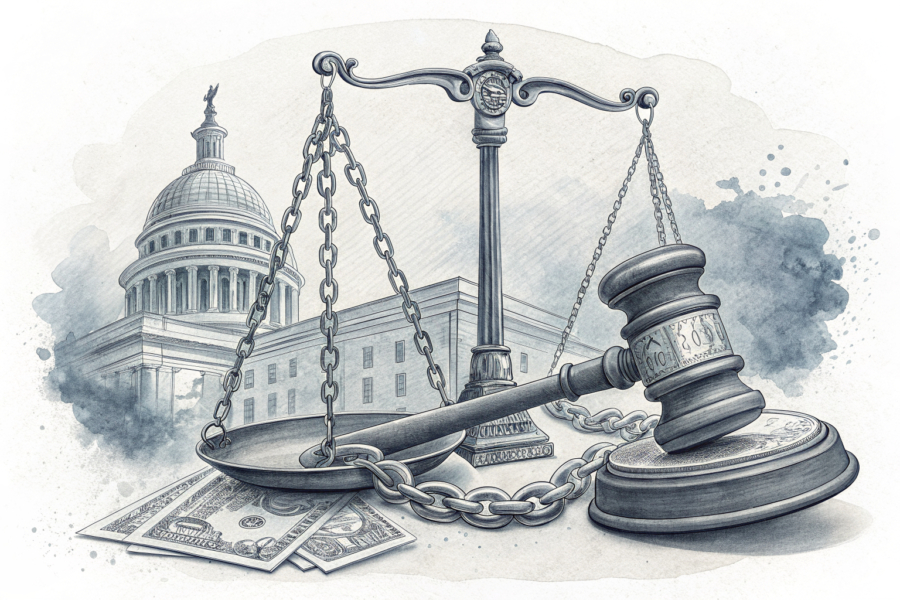
The court found Kalshi’s sports contracts don’t qualify as swaps, and said the CEA wouldn’t block state enforcement.
Key Takeaways
- The Sixth Circuit has ruled that Ohio and Tennessee can enforce their gambling laws against Kalshi’s sports event contracts.
- Kalshi argued its contracts are swaps regulated exclusively by the CFTC, so state gambling laws couldn’t apply. The court rejected that argument.
- Judge Julia Smith Gibbons wrote that Kalshi didn’t show its contracts meet the CEA’s definition of a swap, because they aren’t tied to events with financial, economic or commercial consequences.
- The court added that even if the contracts were swaps, the CEA would not stop the two states from enforcing their gambling laws.
U.S.- The US Sixth Circuit Court of Appeals has ruled that Ohio and Tennessee can enforce their gambling laws against Kalshi’s sports event contracts, rejecting the company’s argument that the products fall exclusively under federal oversight. The decision, issued on September 25, found that the Commodity Exchange Act (CEA) does not prevent the two states from applying their gambling regulations.
Kalshi had argued that its products were swaps regulated exclusively by the Commodity Futures Trading Commission (CFTC), meaning state gambling laws could not apply. However, Circuit Judge Julia Smith Gibbons rejected that argument and ruled that Kalshi had not demonstrated that its sports contracts meet the CEA’s definition of a swap because they are not linked to events with the type of financial, economic or commercial consequences contemplated by the law.
As for federal preemption, the court said that even if Kalshi’s contracts were considered swaps, the CEA would not prevent Ohio or Tennessee from enforcing their gambling laws against the company.
Several cases have gone against Kalshi recently. The US Court of Appeals for the Ninth Circuit ruled in favour of the Blue Lake Rancheria Indians and the Chicken Ranch Rancheria of the Me-Wuk Indians in their legal dispute with Kalshi and Robinhood, stating that the tribes had valid grounds to argue that the company’s sports-event contracts could violate their rights under federal law when offered on tribal lands.
Meanwhile, in Iowa, District Judge Stephen Locher rejected KalshiEX LLC’s request for a preliminary injunction that would have prevented the state from enforcing its gambling laws against the prediction market operator. The US District Court for the Southern District of Iowa found that Kalshi was unlikely to succeed in its argument that the Commodity Exchange Act (CEA) overrides Iowa’s gambling laws regarding contracts tied to sporting events.
Frequently asked questions (FAQs)
- Why did the Sixth Circuit rule against Kalshi? The court found Kalshi hadn’t shown its sports contracts meet the CEA’s definition of a swap, since they aren’t linked to events with financial, economic or commercial consequences. It also said the CEA wouldn’t preempt state gambling laws even if the contracts were swaps.
- Can states regulate prediction markets like Kalshi? According to the Sixth Circuit, Ohio and Tennessee can enforce their gambling laws against Kalshi’s sports contracts. Courts in other jurisdictions have reached differing conclusions on the question, so the scope of federal and state authority remains unsettled.
- What is Kalshi’s argument for federal oversight? Kalshi says its sports contracts are swaps regulated exclusively by the CFTC on a federally registered exchange, so they should operate under one uniform federal framework rather than different rules in each state.