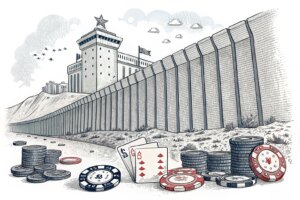



German gambling report suggests need for stronger structural safeguards
The Glücksspiel-Survey 2025 could inform the German gambling regulator’s ongoing review of market regulations.
Germany.- The third national report on gambling prevalence in Germany has called for tighter monitoring of the licensed market. It suggests that the Fourth Interstate Treaty on Gambling passed in 2021 provides a stable framework but leaves unresolved issues around harm minimisation.
The Glücksspiel-Survey 2025 was published by researchers from the Institute for Interdisciplinary Addiction and Drug Research (ISD) and the University of Bremen, funded by the Deutscher Lotto-und Totoblock (DLTB). Their main recommendation is that the Bundesländer and the federal gambling regulator, the Gemeinsame Glücksspielbehörde der Länder (GGL), should focus on “structural prevention rather than relying primarily on individual responsibility to minimise gambling risks.”
The researchers carried out a survey on a representative sample of 12,000 adults as part of a monitoring programme that began in 2021 when the legislation was passed to regulate online gambling in Germany. The researchers say the findings suggest that German players need environmental safeguards rather than education campaigns alone.
According to the survey, gambling participation in Germany rose slightly to 64.9 per cent (2023: 63.8 per cent). Lottery games remained the most popular format (40 per cent), followed by scratch cards (35 per cent) and retail sports betting (17 per cent). Online gambling participation reached 11 to 12 per cent, but Germany still trails other European markets in this regard.
Meanwhile, pathological gambling was found to affect 0.9 per cent of adults (around 630,000 people). An additional 2.5 per cent were classed as problem gamblers, and 1.9 per cent as at risk. In total, around 5 per cent of adults – roughly 3.4 million people – show some level of gambling-related risk behaviour.
The survey found strong public support for protective measures: some 78 per cent of respondents favoured restrictions on gambling advertising, though the study does not specify which types. Some 85 per cent support enhanced staff training for behavioural intervention in venues and online platforms.
Researchers also flagged the risk of online casino products. “Forms of gambling characterised by high event frequency and rapid play sequences – particularly online casino slots and virtual slot machines – show a significantly stronger association with problematic gambling behaviour. Preventive measures should therefore focus especially on these higher-risk products,” they wrote.
Industry reaction
The German Online Casino Association (DOCV) and the German Sports Betting Association (DSWV) have criticised the report. They claim the survey had “significant methodological flaws”. They point instead to long-term studies by the Federal Centre for Health Education (BZgA) and a 2024 Forsa survey, which estimated that just 200,000 people in Germany have problematic gambling behaviour (0.37 per cent of the adult population).
Presidents Dirk Quermann and Mathias Dahms said in a joint statement: “Every person with a gambling disorder is one too many. In the regulated market, state-approved protective measures are in place – from deposit limits and the nationwide OASIS exclusion system to mandatory warnings and breaks from gambling. None of these exist in the black market.
“Anyone who takes player protection seriously must therefore also take the growing black market seriously: there, vulnerable players are unprotected.”
However, the Glücksspiel-Survey 2025 could carry weight as the GGL conducts its review of the first five years of Germany’s Interstate Gambling Treaty, which it’s due to present to the Bundestag this year. The regulator has pledged to assess whether the framework has achieved its goals of balancing player protection, market sustainability, advertising controls and enforcement of online gambling standards.