5 Leaders – 1 Question: What are the real chances of land-based casinos being legalised in Brazil?
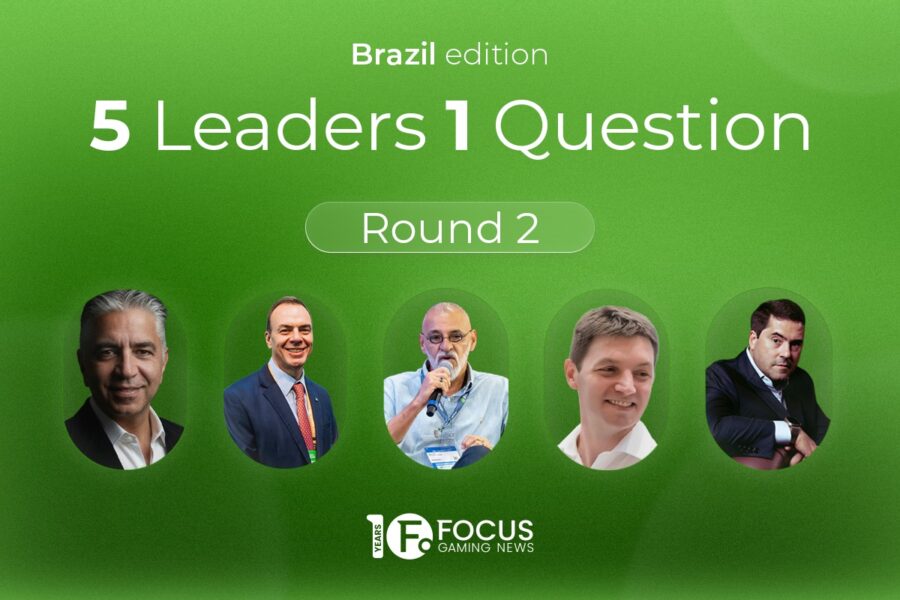

Five leading figures share their views on the real chances of Brazil legalising land-based casinos in an election year, even as the regulated online market has already shown strong performance and helped build the institutional foundations for a broader gambling framework.
Key takeaways
- Brazil’s regulated online market generated approximately R$ 37 bn (€6.2 bn) in GGR in its first full year, exceeding government projections, with around 25 million Brazilians participating and close to R$ 10 bn (€1.67 bn) in taxes returned to the state.
- PL 2.234/2022, the land-based casino legalisation bill, has already passed the Chamber of Deputies and the Senate’s Constitutional and Justice Committee, but failed to pass urgency in the Senate plenary in December 2025.
- Brazil is one of the last countries in the Americas without regulated land-based casinos, having banned them since 1946.
- The Supreme Federal Court (STF) has scheduled RE 966.177, which will consider whether the 1941 ban on games of chance was received by the 1988 Constitution, potentially shifting the timetable from Congress to the courts.
- According to the bill’s rapporteur, legalisation could generate more than R$20bn (€3.34 bn) annually in revenue for the Union, states and municipalities, a fiscal argument that could prove decisive in the next legislature.
Special report.- Brazil adopted an unusual sequencing by legalising igaming before land-based casinos. That approach has already produced real results in the online market, while the land-based bill now faces a more difficult political path despite growing industry support and a regulatory structure that is already taking shape.
In this edition of “5 Leaders – 1 Question”, Focus Gaming News brought together five leading figures from Brazil’s gaming industry and asked them: Looking at today’s political and social climate, what do you think are the real chances that land-based casinos will be legalised in Brazil in the next few years?
The participants are Alex W. Pariente, founder & principal of Pariente Advisory; Plínio Lemos Jorge, president of the Associação Nacional de Jogos (the National Association of Games and Lotteries, ANJL); Magnho José, journalist specialised in lotteries, gaming and betting and president of the Instituto Brasileiro Jogo Legal (the Brazilian Institute for Legal Gaming, IJL); Rafael Marchetti Marcondes, president of the Associação Brasileira de Fantasy Sports (the Brazilian Fantasy Sport Association, ABFS) and chief legal officer at Draftea; and Alessandro Valente, co-founder and board member of Super Afiliados, co-founder of Brazilian Lounge, and responsible for the BiS SiGMA South America show.
Digital first
For Alex W. Pariente, Brazil’s decision to legalise digital gambling before land-based casinos has already proven instructive.
He notes that in its first full year, the regulated online market generated roughly R$37bn in gross gaming revenue, above the government’s own projection, with around 25 million Brazilians participating and close to R$10bn returned to the state in taxes. In his view, “that is not a speculative market; it is a demonstrated one, evidence of how firmly Brazilians have embraced gaming as a form of entertainment. And because a meaningful share of activity still sits in the informal market, the channelisation opportunity ahead is significant: every point recovered from the illegal economy becomes visible, taxed, and protected, and the fiscal contribution grows with it.”
Pariente argues that the main obstacle to land-based legalisation is not economics or demand, but politics. “The bill has already cleared the Chamber and the Senate’s justice committee, and roughly six in ten Brazilians support it. The obstacle is political, a determined minority and a legislative calendar that keeps deferring the vote, now into an election year. My read is that legalisation is more a matter of time than of merit; whether it arrives in the next few years will be decided by the Brazilian people and their representatives, and that is rightly theirs to decide,” he says.
For him, the heavy lifting is already being done. The institutional and regulatory architecture built around the online market (licensing, payments, integrity, AML and consumer protection) would also provide the foundation for a credible land-based integrated-resort framework. If legalisation comes, he says, Brazil will not be starting from zero.
Election-year politics
Plínio Lemos Jorge sees 2026 as an atypical year because of the electoral cycle.
He argues that, although the regulated betting market has now been in force for more than a year, political factors are affecting the sector, often inappropriately, because ideological assessments are overtaking discussions that should be technical.
Jorge believes that, once the election is over, Brazil will return to a more favourable climate for advancing the bill through Congress and allowing the country to have physical casinos again after 80 years. He says the proposal is already approved in the Chamber of Deputies and now only needs approval in the Senate plenary.
He adds that the bill would introduce strict regulation of the physical market, including limits on the number of casinos in resorts, while also legalising activities such as jogo do bicho and bingo, which currently operate outside the law. In his view, that would improve public safety and allow the state to control and tax these activities.
Timing and composition
For Magnho José, the current electoral and political climate creates major obstacles to approval.
He says the proximity of elections means the months ahead will be dominated by campaigns, making it unlikely that senators will take up a subject that remains deeply divisive in public opinion. He notes that support for and opposition to land-based gambling is currently balanced, which makes the vote politically sensitive.
José believes a Senate vote is still possible this year, but only after the election. If that does not happen, the issue will depend on the next legislature, since two-thirds of the Senate will be renewed and the balance of forces could change. He warns that conservative and religious blocs, especially those with close ties to evangelical sectors, have historically opposed legalisation.
He also says the reputation damage caused by sports betting and online gaming has complicated the debate, since years without proper online regulation created a disorderly market and operational problems. In his view, rather than helping land-based casinos, the online debate has actually made progress on the physical market more difficult.
“I believe that if the course is corrected within the igaming sector and there is not an overly conservative Congress, the approval of the project in the Senate could be feasible within the next two years; otherwise, the prohibition of physical games will remain in force. It is worth noting that Brazil adopted a methodology that was the opposite of the international standard by prioritising the regulation of online gaming over physical gaming, without taking into account that, in practice, the population already has unrestricted access to virtual casinos through mobile devices,” he concludes.
A moving legal window
Rafael Marchetti Marcondes argues that the bill is technically more mature than ever, but politically stalled.
He points out that PL 2.234/2022 has already been approved in the Chamber and in the Senate’s Constitutional and Justice Committee, yet the rejection of urgency in December 2025 showed there are still not enough supporters in the Senate plenary. Since 2026 is an election year, he believes senators have little appetite for morally sensitive issues.
Marcondes says: “My reading is that voting in 2026 is improbable, but legalisation in the coming years is more probable than ever. There is even a new variable capable of reshaping this landscape: the Supreme Federal Court (STF) has scheduled the RE 966.177 for August, which will consider whether the 1941 ban on games of chance was received by the 1988 Constitution.”
He stresses that the Court will not legalise casinos directly, because decriminalisation is not the same as regulation. But if the criminal ban is removed, Congress will no longer control the timetable in the same way, and the choice would shift from prohibition versus legalisation to whether Brazil allows a decriminalised market to exist without rules or builds a regulated, licensed and taxed one.
He also says: “This scenario is likely to speed up the approval of the PL 2.234, rather than slow it down. The experience of regulating fixed-odds betting (online betting) has already demonstrated that the Brazilian state is capable of regulating, monitoring and collecting taxes in this sector.
“The real window of opportunity is 2027, with the new legislature, and it could open earlier depending on what the Supreme Court decides. The final driver will be fiscal: according to the project’s rapporteur, Senator Irajá, legalisation could generate more than R$20bn per year in revenue for the Union, states and municipalities. This is an argument that survives even a cycle of elections.”
A broader regional exception
Alessandro Valente says the issue of land-based casino legalisation has become increasingly common at events such as BiS SiGMA South America and BiS Brasília, reflecting growing interest from both the industry and public authorities.
Still, he believes Brazil remains in a politically polarised environment, with many pre-candidates and public figures already opposed to the topic, which makes short-term progress more difficult. Once the election period ends, however, he expects a more rational debate to return. “The country is facing urgent challenges in areas such as health, security, housing and education, which naturally concentrates the attention of society and the government,” he says.
Valente notes that Brazil is an exception in the Americas, since nearly every other country in the region has some form of regulated land-based gaming, while Brazil has banned casinos since 1946. He argues that regulation is the most responsible path because it can create clear rules, effective oversight and a safe environment that generates jobs, tax revenue, tourism investment and sustainable economic development.