German gambling regulator shines light on growing black market in new report
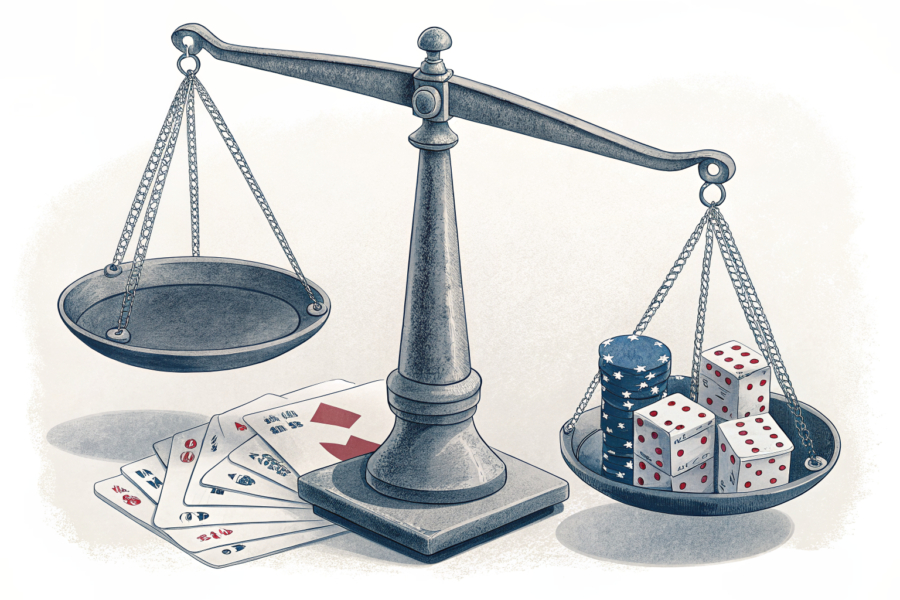
The GGL’s study suggests a rise in gross gaming revenue (GGR) from unlicensed activity.
Germany.- The national gambling regulator GGL has published a 132-page study examining the scope of black market online gambling in Germany. According to the findings, gross gaming revenue (GGR) from unlicensed activity was estimated at €547m in 2024. That would represent a 17 per cent increase compared to €466m in 2023.
The report, commissioned by the GGL and conducted by the Blockchain Research Lab, calculated a channelisation rate of 77.03 per cent, which would mean that regulated gambling in Germany accounts for only slightly more than three-quarters of the online gambling market. The GGL said this was in line with its expectations.
Commenting on the results, GGL CEO Ronald Benter stated: “The scientifically calculated channelling rate confirms our previous assumptions about the size of the black market. The results support the fact-based regulatory approach within the framework of the 2021 Interstate Treaty on Gambling.”
The study involved a two-part analysis of Germany’s unlicensed online gambling sector. First, there was a review of existing measurement methods, which highlighted the variability of results depending on methodology. Secondly, to generate new insights, researchers conducted a panel survey of 2,000 people who had gambled online (excluding lotteries) in the past year.
Participants identified up to seven platforms they used, reporting average stakes and losses per session and per month. Operators were classified as licensed or unlicensed using the GGL whitelist and other references, with data cleaning applied where necessary. Spending patterns were then compared against official licensed-market revenue figures to estimate the size of the unlicensed segment.
The study also assessed common approaches to measuring illegal gambling activity, including traffic-based benchmarks, behavioural tracking, proxy indicators such as tax data and player surveys.
Licensed vs. unlicensed gambling platforms in Germany
Participants made 4,027 mentions of gambling operators in total. Some 79.7 per cent referred to licensed providers, while 20.3 per cent were found to refer to unlicensed platforms. Unlicensed operators accounted for roughly 22.4 per cent of total stakes and 22.97 per cent of reported losses.
Players who used only unlicensed sites reported higher average monthly stakes (€1,425) and losses (€475) compared to those who exclusively used licensed platforms (€1,243 in stakes and €358 in losses).
Users of unlicensed sites only wagered €88.96 per session on average, compared to €77 among licensed-only users. The report concluded that this difference was not statistically significant. Licensed operators most frequently mentioned included Tipico, Bwin, Bet-at-home and Betano. Unlicensed platforms cited included Stake.com, WooCasino and PlatinCasino.
Recommendations for Germany’s gambling review
The report’s authors stressed the importance of ongoing monitoring through repeated, standardised surveys combined with technical tools. Suggested methods included machine learning classifiers to detect illicit platforms, transaction monitoring, web crawling, payment flow analysis, and blockchain analytics for crypto-enabled gambling.
Both the researchers and the GGL emphasised that the figures should be seen as indicative rather than definitive and called for mixed-method approaches and continuous assessment to strengthen enforcement strategies.
Meanwhile, the third national report on gambling prevalence in Germany published by researchers from the Institute for Interdisciplinary Addiction and Drug Research (ISD) and the University of Bremen has called for tighter monitoring of the licensed market. It suggests that the Fourth Interstate Treaty on Gambling passed in 2021 provides a stable framework but leaves unresolved issues around harm minimisation.
The Glücksspiel-Survey 2025 recommends that the Bundesländer and the federal gambling regulator, the Gemeinsame Glücksspielbehörde der Länder (GGL), should focus on “structural prevention rather than relying primarily on individual responsibility to minimise gambling risks.”
Both recent reports could carry weight as the GGL conducts its review of the first five years of Germany’s Interstate Gambling Treaty, which it’s due to present to the Bundestag this year. The regulator has pledged to assess whether the framework has achieved its goals of balancing player protection, market sustainability, advertising controls and enforcement of online gambling standards.