Open competition vs. state monopoly: Blask analyses the Nordic igaming markets
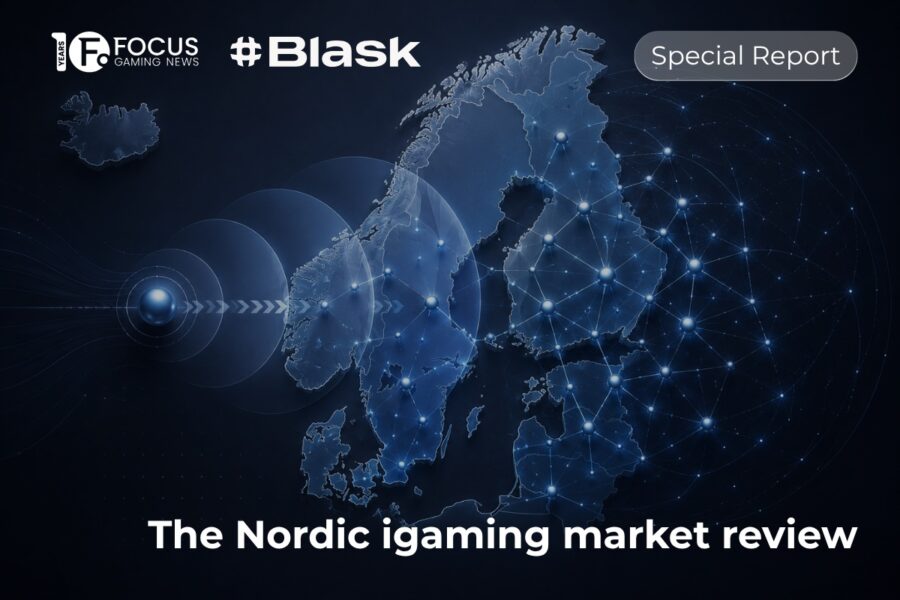
The AI-powered igaming analytics platform has released an exclusive report on the igaming map in Sweden, Denmark, Finland, and Norway.
Special report.- Blask, an AI-powered igaming analytics platform, has released a new exclusive report for Focus Gaming News on the Nordic igaming markets. The igaming map shows how the market is splitting, two markets run on open competition and two on monopoly control.
The report analyses the market in Sweden, Denmark, Finland, and Norway. “Through the lens of Blask Index data, we mapped 12 months of demand dynamics and brand competition across all four markets”, it said. Blask Index is a real-time measure of market demand volume for igaming brands in a given country, based on normalised search data.
In Sweden and Denmark, licensed competition shows a settled open market, with steady demand, durable leaders, and rotation in the tiers below. Finland and Norway are both monopoly markets, but with differences in each.
Open regulated markets
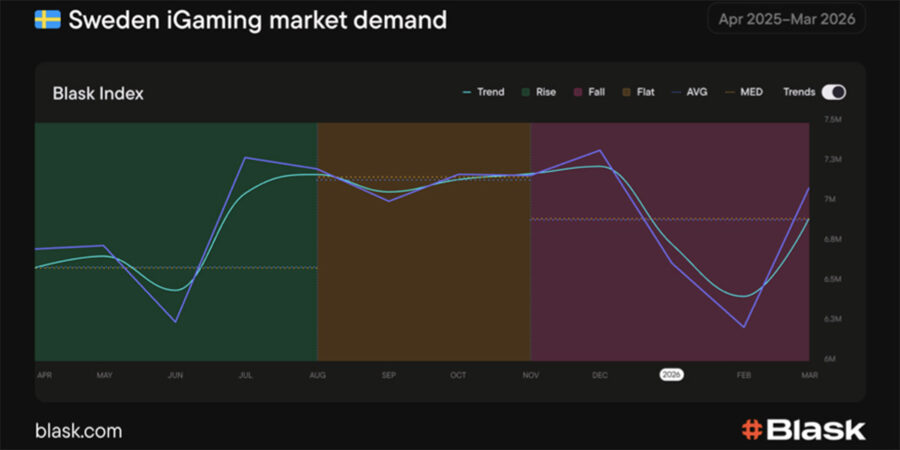
According to the study, the Swedish market dipped in June, recovered sharply in July, held near that higher level through autumn, then weakened in early 2026 before rebounding in March. The elevated demand from July through November aligns with the football season, which drives betting activity across the market.
It shows that the BAP (brand’s accumulated power) structure is stable at the top and fluid below it. Blask’s metric BAP is a brand’s percentage share of total market demand in a specific country and period. ATG and Svenska Spel, together, account for more than half of the total market demand. NV Casino, the only offshore brand in the list, emerged in third place.
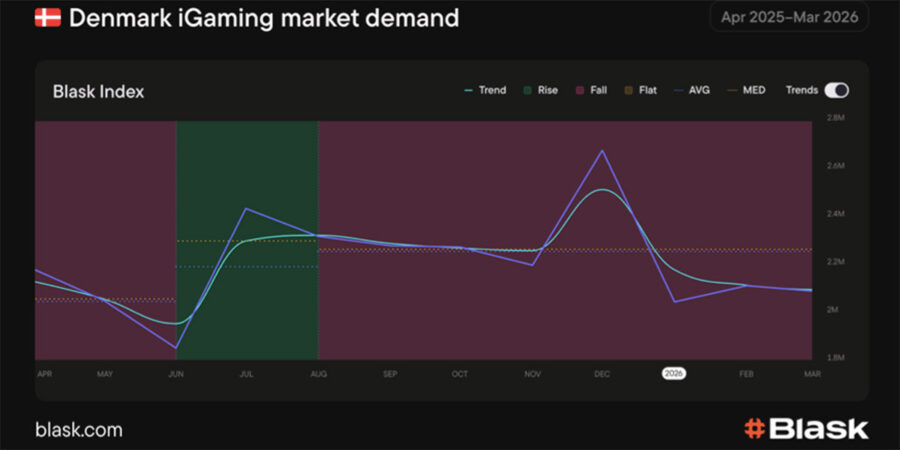
In Denmark, the demand bottomed in June, then recovered as the Danish football season kicked off in July. That uplift held through autumn before a sharper spike in December, likely driven by winter sports and end-of-year activity. Early 2026 saw the expected seasonal pullback.
The release shows the brand structure is stable at the top but more fragmented than Sweden’s. Danske Spil leads and Bet365 follows in the second place. The list includes a dozen brands competing within a relatively narrow share range, with no clear third force.
Monopoly markets
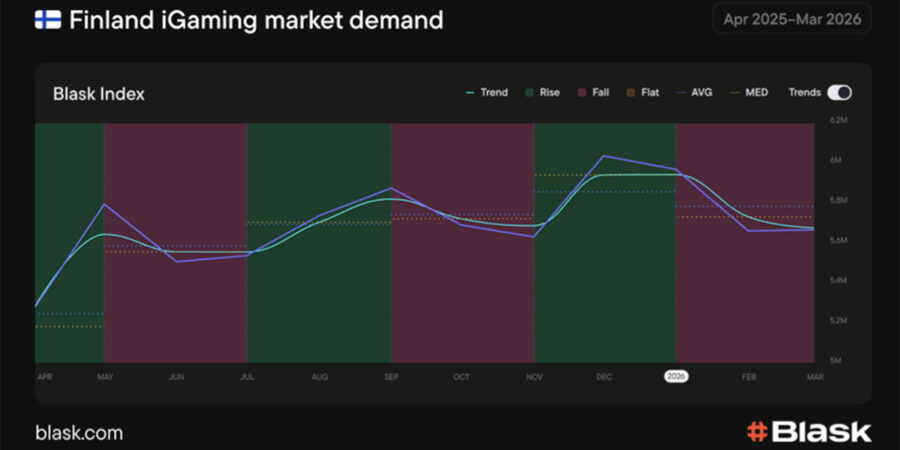
Finland’s Blask Index was relatively stable over the past 12 months, with moderate peaks in May, September, and December. “That stability reflects a market where one incumbent holds more than half of the total demand. It may not last: Finland is scheduled to open its market to licensed competition in July 2027, and that structural shift will likely look nothing like the controlled curves visible here,” the report added.
Veikkaus holds a commanding position, and Paf remains in a distant second place. The rest of the market is spread thin across a long list of brands.
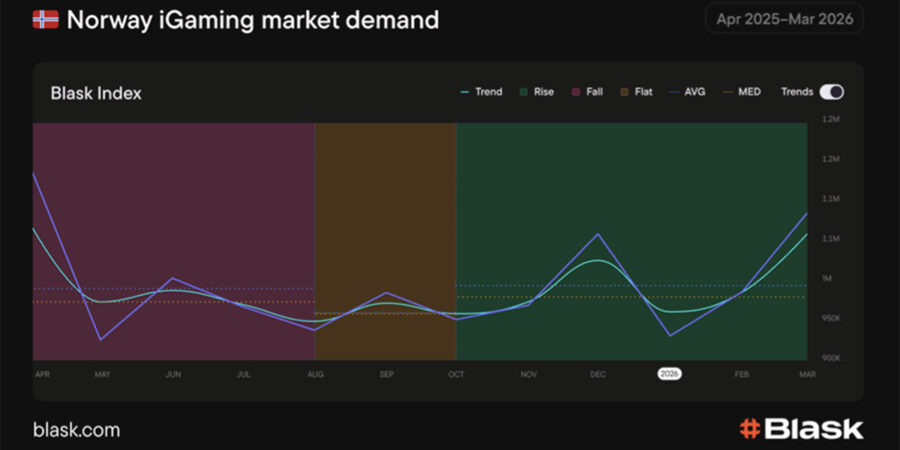
Norway’s market is the most tightly controlled of the four, the report added. The Blask Index remained contained through most of the period, with demand increasing in autumn and in March 2026, aligning with the country’s football season. The overall demand stayed smaller and more bounded than in the open Nordic markets.
The platform said: “Norway runs a hard monopoly. The regulator actively blocks offshore operators — and by Nordic standards, the enforcement is serious.”
Norsk Tipping still holds close to three-quarters of total market demand, even after losing ground over the past year. “Stake, Roobet, and Rainbet all strengthened at the margin. The monopoly remains intact, but the leakage is visible and growing,” it said.
What comes next
The study concludes that Sweden and Denmark show that open competition produces stable demand, entrenched leaders, and a competitive mid-tier that keeps rotating without destabilising the top. Finland and Norway show what monopoly control looks like in practice: concentrated demand, a single dominant operator, and limited room for anyone else.
By 2027, the Nordic map will look different. The report shows Norway’s monopoly is holding but losing ground to offshore brands. Finland is moving in the opposite direction by design: the licensing process is open, the monopoly era for online segments is ending, and the current brand hierarchy is best read as a starting point.
By Focus Gaming News Editorial Team