

British PM pledges more local power over “location and numbers of gambling outlets”
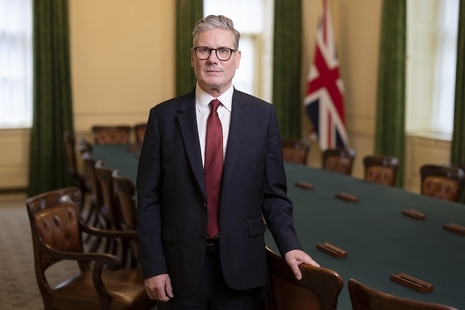

Keir Starmer told MPs the government is looking at “additional tools” for councils.
UK.- The British prime minister Keir Starmer has responded to calls from local government authorities for more powers to intervene in planning applications for gambling venues. Starmer told the weekly Prime Minister’s Questions session in the House of Commons that the government was looking into the possibility of granting local councils more power over the “location and numbers of gambling outlets”.
There has been growing pressure from local government authorities for more power to reject planning applications from gambling premises, including bookmakers and arcades. In April, a coalition of 38 local governments wrote to Lisa Nandy, secretary at the Department of Culture, Media and Sport, to propose six reforms to the 2005 Gambling Act, which would include an ability to take into consideration household debt levels when evaluating applications for gaming venues.
Until now, central government had offered little response on the matter and was generally believed to want to avoid new restrictions on industry expansion. However, Starmer’s comments yesterday suggest that new powers for local governments are now on the table in the form of cumulative impact assessments.
The Labour prime minister, who took office in July 2024, was responding to a question from Dawn Butler, the Labour MP for Brent East in London.
He said: “It is important that local authorities are given additional tools and powers to ensure vibrant high streets. We are looking, Mr Speaker, at introducing cumulative impact assessments. These are like those already in place for alcohol licensing. We will give councils stronger powers over the location and numbers of gambling outlets to help create safe, thriving, high streets.”
The Gambling Act currently includes the concept of an “aim to permit”, which requires the Gambling Commission (UKGC) and local licensing authorities to lean towards permitting gambling provided that it complies with licensing objectives.
As well as calling for the ability to consider household debt levels, local governments have called for powers to block gambling venues near schools. They also want a change in classification to put bingo halls and adult gaming centres would be put in the same category as betting shops and want the power to prohibit gambling advertising and sponsorship in their jurisdictions, going beyond the rules enforced at the national level by Westminster. London sought to do this to an extent when London mayor Sadiq Khan pledged to ban gambling ads across Transport for London (TfL) networks four years ago, but it hasn’t happened.
Finally, councils are also calling for a review of some technical rules, including of the spin speed and stake limits for B3 gaming machines. Its sixth proposal is the introduction of a statutory levy to fund gambling harm prevention, but this is already coming into effect at the national level this month.
Gambling Commission can’t “police every gambling establishment”
While some councils call for more local control over gambling premises, the Gambling Commission is concerned that some local authorities expect it to do their job. Speaking to the Peers for Gambling Reform (PGR) group yesterday, executive director Tim Miller said the regulator had been urged to play more of a role inspecting gambling venues, a responsibility that falls on local government under the Gambling Act.
He said: “The power to grant premises licences sits with local authorities in their role as licensing authorities. It also made clear that any licence fees they charge must be used solely for the purpose of their local regulatory activities, which includes premises inspections.
“And there was a clear statutory logic to this. As a fairly small regulator based in Birmingham, the Gambling Commission is not in a position to police every gambling establishment up and down the nations of Britain.”
He also expressed concern about the focus on calling for new interventions. “I sometimes worry that the public policy debate around gambling spends a lot of time trying to generate, and campaign on, new ideas yet gives limited attention to ensuring and assessing the effectiveness of those ideas once they are put into practice,” he said.
Nevertheless, Starmer’s comments may be a another cause for concern for the British gaming industry following calls for a rise in gambling tax. For now, the sector has been lobbying in a bid to see off an existing Treasury proposal to unify the current three forms of gambling tax under a new Remote Betting and Gaming Duty, which could be confirmed in the autumn budget due on November 26.