



Blackjack hand signals: a complete guide to gestures

Contents:
- Blackjack table etiquette: why you need to use hand signals
- The Role of Hand Signals
- Historical Context
- Differences Between Casual and Professional Play
- How to signal a hit in blackjack
- Face-up Cards (Most Common in Casinos)
- Face-down Cards (Less Common)
- How to signal stand (Stay) in Blackjack
- Face-up Cards
- Face-down Cards
- Other common Blackjack hand gestures
- Double Down Signal
- Split Signal
- Surrender Signal (If Available)
- Blackjack hand signals for Face-up vs Face-down games
- Tips for new players: avoiding confusion at the table
- Real-World examples and scenarios
- Mastering Blackjack gestures like a pro
While blackjack has become a popular game throughout the world, it is also a game for people of varying skill levels and experience. Professional players understand that while luck, and even basic strategy can help them win at blackjack, the importance of communicating with other players and the dealer is equally important as understanding when to hit and stand.
To guarantee a smooth, secure, and clear gaming experience, casinos have developed a system of hand signals to communicate between themselves and the player at the table.
This comprehensive resource provides detailed information about each of the blackjack hand signals, and will teach you how to play blackjack like a pro.
Blackjack table etiquette: why you need to use hand signals
Using a standardized set of hand signals in blackjack has a number of benefits for both the player and casino. Not only does this help ensure clarity when giving an order to the dealer, but it also helps to ensure security and efficiency.
The Role of Hand Signals
- Clarity: Casinos deal cards to multiple people simultaneously. Hand gestures assist in quickly clarifying intentions, which reduces mistakes.
- Security: Standardized hand gestures assist in decreasing the potential for cheating and/or miscommunication between the player and the dealer.
- Efficiency: The use of hand gestures allows for a quicker game, as a tap or wave can be given much quicker than giving the same instruction verbally.
- Professionalism: Clearly communicating orders through hand gestures clearly shows that the player respects the game, other players at the table, and the dealers.
Historical Context
Since the middle of the 20th century, hand signals have become an essential part of casino blackjack games. Prior to this time, blackjack was a very verbal game. The noise level within many casinos created problems with verbal instruction and many errors occurred due to the verbal nature of the games.
To help control the environment and protect the player’s bet, the use of hand signals were introduced by the casino industry. The hand signals eventually developed into a standard set of universally accepted signals that allowed blackjack to be played in a consistent manner around the world.
Differences Between Casual and Professional Play
- Casual Players: Will likely rely upon verbal instruction or informal gestures; this will often result in some confusion.
- Professional Players: Use exact gestures and exact timing so the dealer knows exactly what they are doing.
See also: How to play blackjack at home
How to signal a hit in blackjack
Hitting is one of the most common decisions in blackjack, but to avoid mistakes, it is crucial to make sure you signal correctly to the dealer.
Face-up Cards (Most Common in Casinos)
In face-up games, where your cards are visible to everyone:
- Gesture: Using one finger, lightly tap on the table or point to your cards.
- Meaning: You want another card.
- Best Practices:
- Tap once and do not move until the dealer responds.
- Your gesture should be clear and deliberate.
- Casinos may allow verbal “hit” statements; otherwise do not make them.
Example Scenario: Your total is 12, and the dealer has a 5. One tap will signal you would like to receive another card.
Common Mistakes:
- Tapping the table multiple times or with great force.
- Pausing between taps (which could give the impression of uncertainty).
Face-down Cards (Less Common)
Face-down card games are played when you cannot see other players’ cards:
- Gesture: You tap near where you put your cards on the table, never physically tapping your own cards.
- Reason: You do this to avoid confusing the dealer as well as to prevent accidental exposure of your cards.
- Example Scenario: You have 9 and 3 face down. The dealer believes you tapped to get another card because you did not expose your cards to other players.
Tip: Since casinos will have some variation in hand gestures for face-down games, observe how the other players at the table play their hands and/or ask the dealer before you begin.
How to signal stand (Stay) in Blackjack
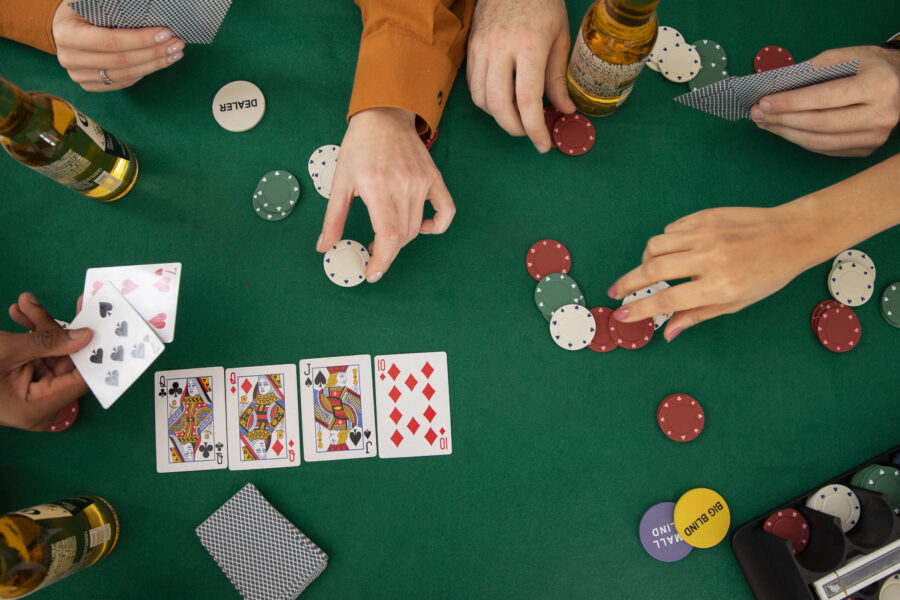
Standing is the choice to hold on to your existing hand without drawing another card. Clear signalling will prevent the dealer from accidentally giving you another card.
Face-up Cards
- Gesture: Place your hand horizontally over your face-up cards (or don’t move them).
- Meaning: Signals to the dealer that you’re happy with your hand and don’t need any more cards.
- Example: You have 18, and the dealer shows a 6. Standing is optimal. Wave your hand horizontally to indicate your intention.
- Mistakes to Avoid:
- Leaving a vague hand position that appears as though you’ve decided to take a hit.
- Changing your mind mid-gesture.
Face-down Cards
- Gesture: Flat hands are placed above your hole cards and do not touch them.
- Meaning: This indicates to the dealer that you’d like to stand.
- Tip: Refrain from verbally confirming your intention with the dealer except when permitted to do so.
Other common Blackjack hand gestures
There are additional hand signals beyond placing a single chip, which will allow you to execute specific strategies that involve betting.
Double Down Signal
- Gesture: Place a new chip next to your original wager. This is your signal to receive an additional card from the dealer.
- Meaning: You want to double your initial bet in exchange for receiving exactly one more card.
- Best Practices:
- Only double down when you have a favorable hand, such as totals of 10 or 11.
- Wait for the dealer’s acknowledgement before continuing.
- Example: You have 11, and the dealer shows 5. Placing a second chip and pointing indicates a double down.
Split Signal
- Gesture: Lay a couple of chips adjacent to your starting wager and separate your pair of cards (‘fan’ the cards with your hands, or make a ‘V’ sign with your fingers).
- Meaning: Splits a pair into two separate hands, each with a separate wager.
- Strategy Tip:
- Always split Aces or 8s.
- Never split 10s or face cards.
- Example: You have two 8s, and the dealer shows a 6. Signal a split to maximize winning potential.
Surrender Signal (If Available)
- Gesture: Slide half your chips toward the dealer.
- Meaning: Half your wager will be lost immediately to surrender the hand and stop play.
- Strategy Tip: The best time to surrender is when you have a weak hand in comparison to what the dealer is showing.
- Example: You have 15 and the dealer is showing a 10. By surrendering, you can avoid losing money on this hand.
See also: What Is a Soft 17 in Blackjack?
Blackjack hand signals for Face-up vs Face-down games
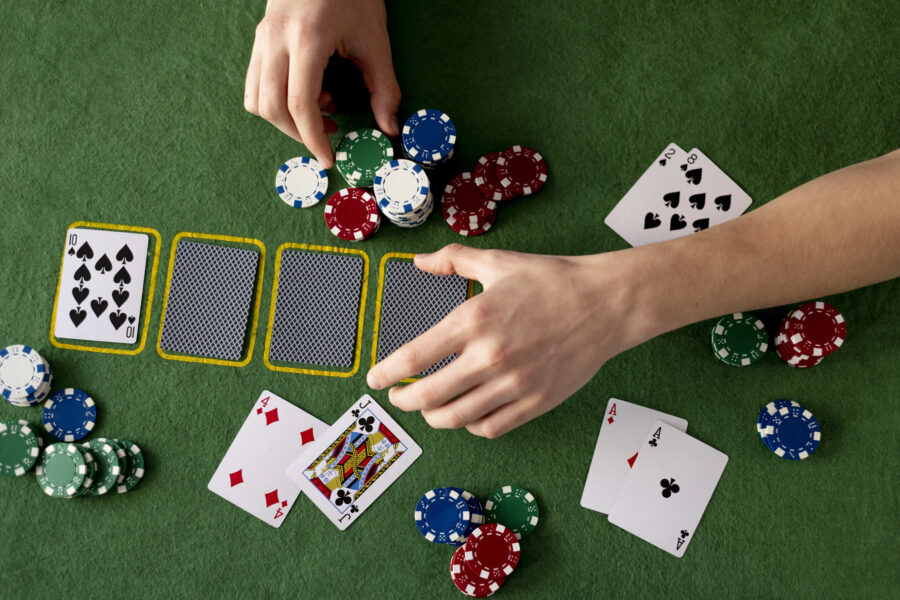
The kind of game you play will determine how you indicate your moves:
- Face-up Games: These games require more direct signs of play, such as pointing or tapping on cards. They are easier for the dealer to understand, and they need to interpret the action.
- Face-down Games: Signs are made above the cards and you cannot touch your cards. Clear and deliberate signs are required.
Tips for new players: avoiding confusion at the table
Beginners can feel overwhelmed. Follow these tips:
- Practice Before You Play: Use a deck at home to familiarize yourself with gestures.
- Observe Experienced Players: Watch gestures and timing.
- Know House Rules: Each casino may have minor differences.
- Be Confident: Clear, deliberate gestures reduce mistakes.
- Maintain Table Etiquette: Respect space, chips, and other players’ cards.
Real-World examples and scenarios
- You can practice doubling down by placing a chip on the table and pointing at it in the casino (this lets everyone know that you want to double down). When you place the second bet, and the dealer says “double down,” he will deal you an additional card. You will not be able to take another card after that card is dealt.
- When you have two of the same card, such as two 8s, you should make a “V” shape with your fingers, so the dealers knows you want to split your hand into two separate hands.
- You can also use the “push all-in” option when you have a low-value hand; for example, if you have a hand with 16 and the dealer has 10. To do this, slide your entire bet across the table to the dealer, so they know you want to give up on the hand.
Mastering Blackjack gestures like a pro
Hand signals are important in blackjack, as they help you create an air of clarity, smoothness and professionalism. The basic signals for hit and stand, as well as the more difficult ones for double down, split and surrender should be perfected to ensure you are playing like a pro at the blackjack table.
Understanding the differences between face-up and face-down games, learning to avoid the usual faults and constant practice will make you a safe and professional casino blackjack player. When you use your signals, your hands really do say what your strategy is. Play well, signal well, enjoy your blackjack and have a great game.
See also: How many decks in blackjack are used
By Focus Gaming News Editorial Team