



Beyond integration: what operators really expect from providers in 2026, according to Onlyplay
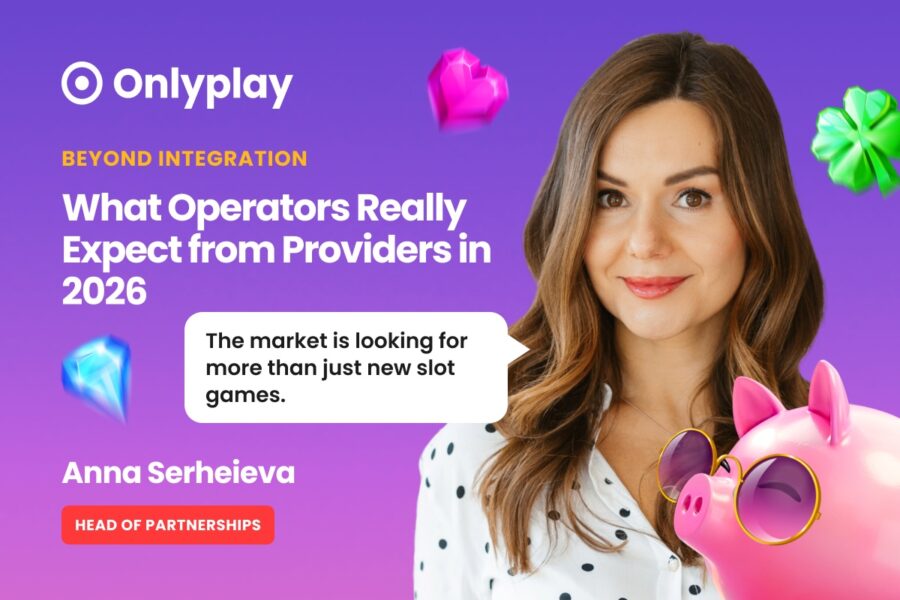

In the following article, Anna Serheieva, Head of Partnerships at Onlyplay, discusses how evolving player expectations and AI are shaping operator-provider dynamics.
Opinion.- The relationship between operators and game providers is evolving rapidly. A few years ago, a strong portfolio, promotional tools, and flawless integration were often enough to build a successful partnership. Today, those components are simply the baseline. The real question is what sets providers apart now.
According to Anna Serheieva, head of partnerships at Onlyplay, operators are far more demanding in selecting partners, showing a market where player expectations continue to advance alongside the industry.
AI readiness is becoming a new competitive advantage
One of the most significant trends impacting the industry is the growing adoption of AI-powered recommendation tools in casino lobbies. AI-driven personalisation is changing how games are surfaced to players, which is reshaping how operators present content and how providers need to respond.
Operators are no longer simply displaying games in a catalogue. Instead, they personalise content based on player behaviour, preferences, mechanics, themes, visual style, and previous game experiences. This makes structured product information a critical part of a provider’s value.
“Providers need to learn how to speak the language of AI. The more structured and detailed information we can provide about a game, the higher the chances that an algorithm will present it to the player,” Anna explains.
Metadata is now as important as the product itself. Game themes, mechanics, bonus features, visual elements, and mathematical models must be clearly structured and categorised. However, that alone is no longer enough. Operators increasingly expect providers to deliver advanced analytics, performance forecasting, and granular game data that helps optimise products for specific player segments.
We are competing for more than market share
When industry professionals discuss competition, they typically focus on the rivalry between game providers. But the competitive landscape has become much broader.
Looking at user behaviour, it becomes clear that player attention is now divided among countless forms of digital entertainment.
As Anna notes: “Today, we compete with any product or service capable of capturing a user’s attention and delivering instant emotional engagement.”
Social media platforms, mobile games, streaming services, and emerging formats such as prediction markets are all competing for the same share of attention.
In this environment, providers can no longer focus solely on igaming. They must also respond to expanded digital experience standards by launching new mechanics, engagement models, and product innovations.
Social features are becoming a new growth driver
One of the fastest-growing trends in igaming is the adoption of social mechanics within gaming products.
Players now expect interactive experiences rather than passive entertainment. Mobile games and social platforms have embraced this behaviour for years, and operators are increasingly looking for products that keep players engaged beyond the traditional gameplay loop.

This shift in player behaviour ultimately inspired the creation of Piggy Tap, Onlyplay’s innovative Tap Game, which has consistently ranked among Onlyplay’s top-performing titles over the past three years.
“After numerous experiments, we realised that the market is looking for more than just new slot games. There is growing demand for new forms of player engagement and new ways for players to interact with gaming content.”
Piggy Tap demonstrates how social mechanics can be successfully integrated into igaming products, creating new opportunities for player interaction and deeper engagement.
The biggest challenge is strategic, not technical
Integration and security are often perceived as the industry’s primary technical challenges. In practice, however, the most complex projects tend to be strategic instead of purely technical, and it is in these projects that providers are genuinely tested.
According to Anna, the most resource-intensive requests usually involve highly customised solutions in which a partner wants to test a new concept, even though the eventual business result remains unresolved.
“Technically, almost anything can be built. The real challenge is finding the right balance between technical capabilities, business objectives, and partner expectations.”
One such project required several months of development to adapt a game to a client’s specific requirements. The team successfully delivered every requested feature, yet the product ultimately failed to achieve the expected commercial results.
The experience confirmed an important lesson: technical execution alone does not guarantee market success.
At the same time, Onlyplay has seen the opposite scenario. Relatively small adjustments requested by partners with a clear understanding of their audience, product strategy, and business objectives have led to marked performance improvements. In such cases, even minor product enhancements became catalysts for stronger engagement and increased revenue.
The strongest results emerge when a clear business vision on both sides of the partnership supports technical decisions.
Emerging markets are changing product development
African markets deserve special attention because their technical realities differ significantly from those of more mature regions. These differences shape how products must be developed.
Loading speed, game size, and data consumption directly impact the player experience. To address these challenges, Onlyplay invested in lightweight game versions optimised for local connectivity conditions, network infrastructure, and lower-spec devices.
Players rarely notice these optimisations, and that is exactly the goal.
The objective is not to market “lightweight games” as a feature, but to ensure a flawless, enjoyable gaming experience regardless of internet quality or device limitations.
Partnership is becoming a key strategic asset
As regulatory requirements become more complex and markets continue to evolve, operators increasingly expect providers to contribute more than content. They are looking for expertise, flexibility, market adaptability, and a genuine commitment to long-term collaboration.
The strongest partnerships are no longer built around individual game launches but around shared growth and long-term business development.
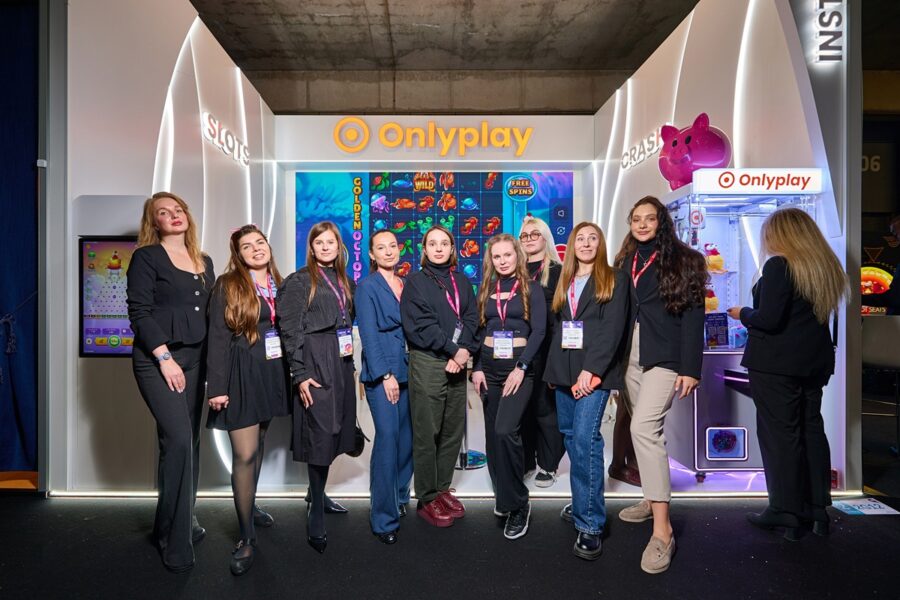
As Anna emphasises, “This is exactly why we continue strengthening our partnerships team. In today’s igaming environment, partners expect more than fast responses. They expect a strong understanding of the market, the product, and their business goals. Behind every successful project are people who know how to find solutions, build trust, and approach collaboration with a long-term perspective.”
She believes that professional expertise is the foundation of partnerships that can withstand market transitions, regulatory changes, and business growth.
What comes next?
In 2026, a provider’s success will be defined by far more than the quality of its portfolio.
AI readiness, market expertise, technological adaptability, and the ability to build long-term partnerships are becoming critical differentiators.
Increasingly, operators are choosing not just a portfolio or a brand name, but a partner they can grow alongside.
By Focus Gaming News Editorial Team