



Philippine Bureau of Immigration calls for cooperation against human trafficking
The BI has called for greater coordination with local authorities.
The Philippines.- The Bureau of Immigration (BI) has issued a statement calling for cooperation to tackle the number of Filipino trafficking victims departing the country illegally to work in scam operations.
The statement reads: “The BI has been actively strengthening border security measures, but the agency stresses the need for greater coordination with local authorities to prevent illegal departures through other routes.”
BI commissioner Joel Anthony Viado said three victims of human trafficking, two women and one man, returned to the country on March 16 from Phnom Penh, Cambodia. They flew back on a Philippine Airlines flight after being forced to work as love scammers. The victims sought help from the Philippine embassy after facing physical abuse and torture for more than two months. The National Bureau of Investigation (NBI) is investigating their recruiters.
According to Viado, the victims did not have any record of leaving the Philippines. They said they left the country illegally by taking a small boat from Jolo, Sulu, to Sabah, Malaysia. In Sabah, their passports were stamped with fake Philippine departure stamps before they travelled by land to Kuala Lumpur and then flew to Bangkok, Thailand, before travelling to Cambodia.
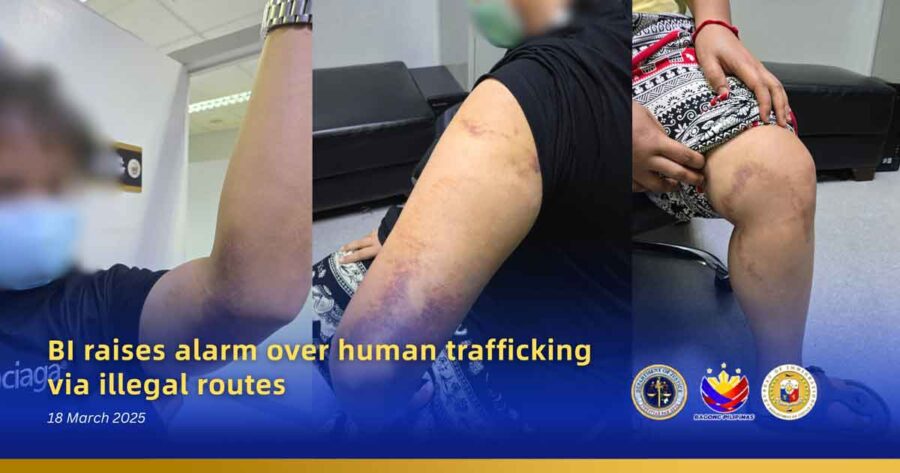
They were recruited through Facebook by a Filipino who promised them a job as Customer Service Representatives (CSR) with a monthly salary of US$1,000. Once in Cambodia, they went through training to become love scammers but received only US$300. When they sought to transfer to another employer due to underpayment, their Chinese boss physically assaulted them, took their mobile phones, and left them in an unfamiliar area. They eventually contacted the Philippine Embassy.
Forensic tests confirmed that the passports had fake departure stamps. Viado said the BI is working to strengthen border control but needs cooperation from all levels of government, including local government units (LGUs) and law enforcement agencies that oversee areas used for illegal travel routes.
Viado said: “Everyone must work together as there is a need to strengthen efforts at all levels to curb illegal departures. Traffickers are exploiting illegal routes to avoid detection by immigration, making it crucial for LGUs and local authorities to increase monitoring and enforcement in vulnerable areas.”