


Vusi Mtsweni, MER: “Africa’s gaming markets are no longer peripheral. They are significant, sophisticated and globally connected”
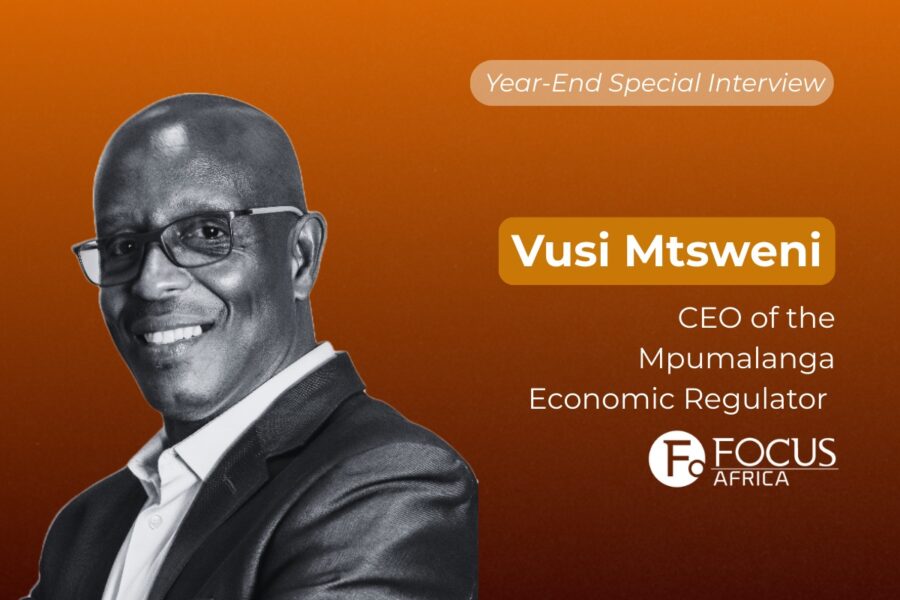

Vusi Mtsweni, CEO of the Mpumalanga Economic Regulator (MER), speaks with Focus Gaming News on the digital evolution of Africa’s gaming market in 2025 and outlines the regulator’s priorities for the year ahead.
Exclusive interview.- In this exclusive interview with Focus Gaming News, Vusi Mtsweni, chief executive officer of the Mpumalanga Economic Regulator (MER) and newly appointed IAGR Trustee, offers a panoramic view of Africa’s fast-advancing digital gaming landscape. He reflects on how 2025 reshaped regulatory priorities in South Africa and across the continent, highlighting intensifying scrutiny of online betting, the growing threat of illegal operators, and the rising imperative for evidence-driven consumer protection.
Mtsweni also examines the policy debates that defined the year—from national tax proposals to evolving responsible gambling frameworks—and outlines the regulatory direction MER will pursue in 2026 as Africa’s gaming markets become more sophisticated, interconnected and strategically significant.
Africa’s digital gaming moment: Regulation, responsibility and resilience
As Africa’s gaming and betting markets continue their rapid digital evolution, 2025 will be remembered as a year when scale, scrutiny and responsibility converged. Across the continent, and particularly in South Africa, the expansion of online betting sharpened regulatory focus on consumer protection, illegal supply and the sustainability of existing frameworks.
For regulators, the central question was no longer whether gaming markets would grow, but how that growth could be governed responsibly, in a way that protects vulnerable communities while preserving legitimate economic activity.
A year of acceleration and recalibration
In South Africa, 2025 was characterised by the continued dominance of betting, especially online betting, within the regulated gambling ecosystem. The sheer volume of wagers, coupled with their digital and cross-border nature, elevated public debate around affordability, advertising exposure and the effectiveness of existing safeguards.
One of the most significant national milestones was the publication by National Treasury of a discussion paper proposing a 20 per cent national tax on online betting (and interactive gambling) gross gaming revenue (GGR). While still under consultation, the proposal prompted a polarised debate across the sector, with stakeholders expressing varying views on its potential effectiveness in addressing social costs while preserving a viable and competitive regulated industry. At the same time, it reignited necessary debate about channelisation, competitiveness and the risk of inadvertently strengthening illegal offshore markets if taxation and enforcement are not carefully aligned.
In Mpumalanga, 2025 further consolidated the province’s position as a major contributor to South Africa’s wagering activity. This prominence brought increased attention to questions of regulatory consistency, provincial autonomy and legal clarity, particularly against the backdrop of evolving case law and heightened scrutiny of betting contingencies.
Across Africa, several common themes emerged. Regulators increasingly moved toward longer-term licensing models to support investment certainty; payment and payout controls were tightened in response to fraud and consumer risk; and innovation continued in low-data and USSD-based betting products, particularly in East and West Africa. Perhaps most notably, there was a growing shift toward regulator-led harm prevention tools, including multi-operator self-exclusion systems and outcome-based responsible gambling measures.
“n South Africa, 2025 was characterised by the continued dominance of betting, especially online betting, within the regulated gambling ecosystem.”
Vusi Mtsweni, chief executive officer of the MER.
The global regulatory conversation: an IAGR perspective
From a global standpoint, 2025 reaffirmed the value of international regulatory collaboration. As a trustee of the International Association of Gaming Regulators (IAGR), I have seen firsthand how shared learning has become indispensable in a borderless digital market.
IAGR’s focus during 2025 reflected a maturing regulatory discourse: moving beyond rule-making toward measuring what works. The organisation’s emphasis on resilience, understanding why certain interventions succeed and how they can be adapted across jurisdictions, resonated strongly with regulators facing similar challenges despite vastly different market sizes and socio-economic contexts.
Notably, the recognition of initiatives such as Nigeria’s SAFEPLAY self-exclusion framework and youth-focused prevention programmes in Europe illustrated a clear direction of travel: effective regulation increasingly depends on system-level tools, not fragmented, operator-by-operator compliance. The lesson is clear: harm prevention must be scalable, interoperable and evidence-driven.
Regulatory pressures on the ground
For MER, 2025 was shaped by a set of intersecting regulatory pressures that will be familiar to many African regulators.
First, illegal and offshore online supply remains the single greatest structural threat to regulated markets. These operators exploit cross-border payments, social media marketing and weak consumer recourse, undermining both player protection and fiscal objectives. Addressing this challenge requires far more than licensing; it demands cooperation with financial institutions, platform providers and law enforcement agencies.
Second, advertising saturation emerged as a critical concern. Gambling messaging is increasingly embedded in sports content and digital media, blurring lines between entertainment and risk. Regulators face the complex task of enforcing advertising standards in fast-moving, algorithm-driven environments.
Third, affordability and vulnerability rose to the top of the policy agenda. In economies facing persistent inequality and high unemployment, regulators are rightly challenged to demonstrate how gambling frameworks protect low-income households, young adults and social grant recipients from harm.
Finally, policy uncertainty, driven by litigation, national tax debates and evolving interpretations of product scope, required regulators to communicate clearly and act transparently. Markets function best when rules are known, stable and consistently enforced.
Responsible gambling as a regulatory obligation
At MER, we have long maintained that responsible gambling is not optional; it is a condition of participation in the regulated market. Against a backdrop of economic pressure and expanding digital access, the regulator emphasised that harm prevention requires active regulatory intervention rather than reliance on consumer choice alone.
Throughout the year, responsible gambling was embedded across licensing, compliance and public engagement activities, with clear expectations that operator profitability must not depend on excessive or harmful play.
MER expanded targeted awareness initiatives, particularly for youth and young adults, strengthened visibility of support services, and raised expectations for meaningful operator engagement rather than symbolic compliance. Self-exclusion was elevated to a core regulatory tool, with stronger enforcement and clearer operator obligations.
While gambling-related harm was not eliminated, 2025 marked a significant shift. Responsible gambling became a central regulatory priority, self-exclusion gained credibility as an enforceable mechanism, regulatory engagement matured, and harm minimisation was increasingly recognised as a broader public policy imperative rather than solely an industry concern.
Policy lessons with continental relevance
The national debate around online gambling taxation in South Africa offers important lessons for peers across Africa. Tax policy, while essential, cannot operate in isolation. If increased fiscal burdens are not matched by strong enforcement against illegal supply, the unintended consequence may be to push consumers toward unregulated alternatives.
Equally, the debate highlighted the importance of regulatory certainty. Clear rules on product scope, advertising, data reporting and consumer safeguards reduce opportunistic behaviour and strengthen trust in the regulated market. For African regulators navigating fast-growing digital sectors, clarity is not a constraint, it is a competitive advantage.
Looking ahead to 2026
As we look toward 2026, the sector faces both opportunity and headwinds. Digital growth will continue, but so too will political and societal expectations around consumer protection. Illegal offshore competition remains persistent, and policy choices, particularly around taxation, will need careful calibration. At the same time, the scale, reach and sophistication of gambling advertising, particularly across digital and social media platforms will increasingly come under scrutiny, as policymakers and regulators seek to ensure that promotional activity does not undermine responsible gambling objectives.
For MER, priorities in 2026 are clear. We will continue to modernise our regulatory tools, with greater emphasis on data-driven supervision and risk-based compliance. Licensing and approvals will increasingly focus on compliance-by-design, ensuring that consumer protection is embedded from the outset.
Advertising and marketing practices will form an important area of regulatory focus, with attention given to content standards, placement, audience targeting and the protection of vulnerable groups, including minors and at-risk consumers. Enforcement efforts against illegal supply will intensify through partnerships and intelligence-led approaches. Enforcement efforts against illegal supply will intensify through partnerships and intelligence-led approaches.
Above all, our focus will remain on balance: enabling a legal, innovative and economically valuable gambling sector, while ensuring that communities are safeguarded and harm is minimised.
Africa’s gaming markets are no longer peripheral. They are significant, sophisticated and globally connected. The task before regulators is not to slow that momentum, but to shape it responsibly, with resilience, collaboration and evidence at the centre of regulatory practice.
By Focus Gaming News Editorial Team