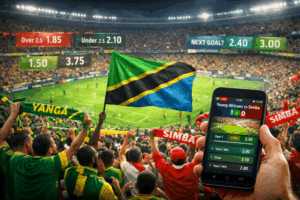


Tanzania Premier League football clubs back calls for single official betting partner


Football stakeholders push for revenue sharing as Tanzania explores monetising betting markets linked to domestic fixtures.
Tanzania.- Premier League clubs in Tanzania have backed calls for the Tanzania Football Federation (TFF) to appoint a single official betting partner, as football stakeholders push for a share of the revenue generated by betting markets linked to domestic matches.
The debate follows a 60-day legal notice issued by TFF to several betting companies, accusing them of listing Mainland Premier League matches – including the high-profile clash between Young Africans S.C. (Yanga) and Simba S.C. – without authorisation.
Club officials say the current situation allows bookmakers to generate revenue from Tanzanian football without providing financial returns to the teams whose matches underpin betting markets.
Joseph Mlundi, Assistant Secretary of Mbeya City, a football club based in southwestern Tanzania, criticised the imbalance between football clubs and gambling operators. “Premier League clubs are essentially content creators for betting companies. Without our matches, there would be no betting slips. As content owners, how do we benefit?”, he said, according to Tanzania Insight.
The federation has also begun exploring a structured betting rights model linked to high-profile fixtures such as the Kariakoo derby between Young Africans and Simba, as authorities seek to determine the commercial value of Tanzanian football matches within the country’s betting market. This initiative forms part of wider efforts by the federation to monetise domestic football fixtures within the betting ecosystem.
Currently, clubs competing in the Mainland Premier League generate income primarily through sponsorship and broadcasting deals. These include partnerships with NBC Bank Tanzania, which sponsors the league, as well as broadcast agreements involving Azam TV and the national broadcaster Tanzania Broadcasting Corporation (TBC).
Betting revenue dispute
However, club officials say none of the betting revenue generated from matches played in Tanzania flows back to the teams themselves. Mlundi also questioned how bookmakers set odds for Tanzanian clubs without consulting teams or football authorities. He said: “You assign Mbeya City odds of 3.0 against another team at 2.0. What criteria did you use to assess my team’s strength? Who gave you the authority to lower the status of my team?”
Other league officials have echoed calls for greater transparency around betting activity linked to domestic football. Omari Ayoub, Secretary General of Coastal Union, said the industry needs clearer data on the value generated by betting on local matches. “There must be an assessment to determine the actual value – how many people are involved, how much they stake, how much is paid to winners, and how much remains,” said Ayoub.
Betting operators have not publicly commented on the dispute, although several licensed companies have reportedly expressed interest in securing official partnership rights linked to high-profile fixtures.
Stakeholders believe appointing a single official betting partner could provide a structured way for Tanzanian football authorities to capture revenue from betting markets using domestic football fixtures.