

Senegal’s online betting booms as market outpaces regulation
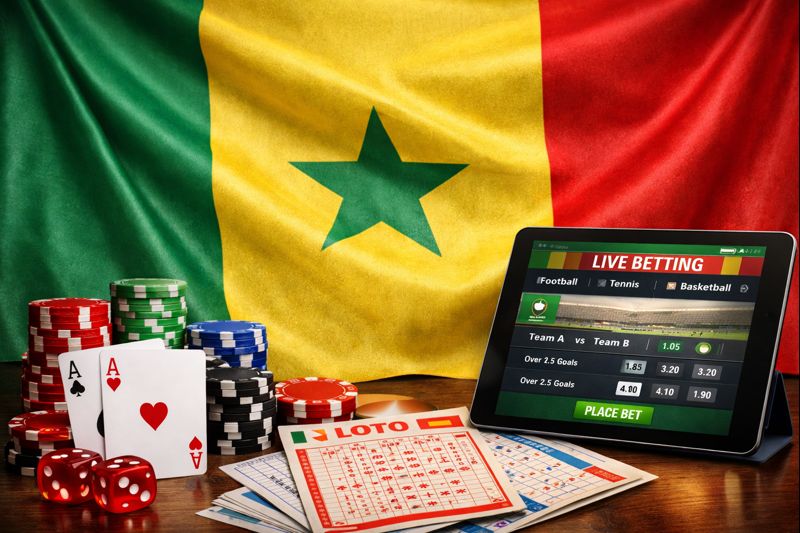

Players face risks as rapid digital growth stretches a regulatory framework designed for cash-based betting kiosks.
Senegal.- Senegal’s online betting market is expanding rapidly, but the regulatory framework has not kept pace, leaving players exposed as many platforms rely on foreign licences, according to industry reports.
Statistics show that Senegal’s online betting and gaming market is growing strongly, with analysts projecting total gambling revenues could reach $2.1bn by 2026, driven by mobile gaming and increased participation. In the first half of 2025, national lottery operator LONASE reported a profit of CFA20.7bn ($34m) and total revenues of CFA37.2bn ($61m), fuelled by lotteries and sports betting.
Senegal’s gambling laws were originally designed for physical betting kiosks, where printed tickets are paid for in cash, according to reports in Pulse Sénégal and CasinosOnline-Africa. These laws still govern licensing and operations for traditional establishments, but online betting has developed outside this framework, with no clearly defined standards for digital operators. “Although online betting is legally permitted, the risk of choosing an unreliable or poorly managed betting site is enormous,” said the Pulse Sénégal report.
The legal uncertainty in the sector is further highlighted in the report: “Online betting has been practiced outside the scope of current legislation, which means there are no clearly defined standards for issuing licences to digital betting companies.”
Regulatory gaps and player risks
Industry reports say Senegal’s digital gambling framework lags the booming market, leaving operators reliant on foreign licences and players exposed to inconsistent protections.
The report added that online betting operates largely on trust and user experience, leaving bettors to navigate a market without clear legal protection. “As long as there is no modern regulatory system to govern local digital betting operations, the distinction between a reputable company and a site generating short-term profits must be made solely by the bettor.”
The active 20 per cent tax on winnings, recently introduced to boost government revenue and oversight, has added pressure on both players and operators. Analysts say it may push users toward offshore platforms, reduce local promotions and intensify competition for smaller brands, while bettors increasingly favour platforms with transparent fees.
Until regulations catch up, bettors are advised to verify licences, avoid untested platforms, read terms carefully and use aggregation sites, as Senegal media reports stress the importance of remaining vigilant and choosing well-established platforms with clear policies.
Despite regulatory gaps, online betting continues to grow, fuelled by mobile payment systems, affordable smartphones and football’s popularity, which drives live betting activity. Reports highlight that the sector’s rapid expansion continues to outpace government oversight, increasing both opportunities and risks for users.