


Sebina Hlapolosa, ALGA: “Women are no longer just contributing in advisory roles; they’re leading regulatory discussions and shaping the sector’s future”
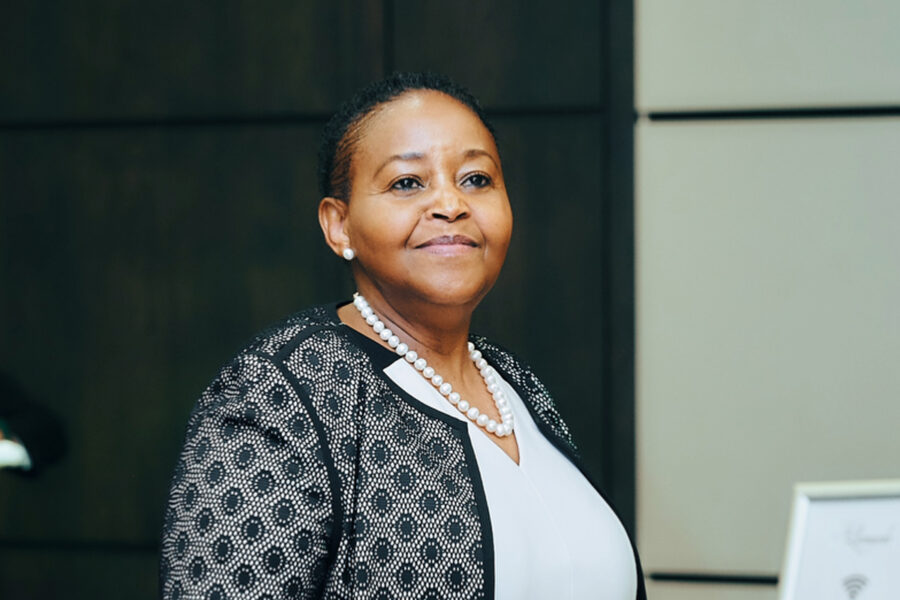

Focus Gaming News spoke with Sebina Hlapolosa, Board Chairperson of ALGA, about leadership, regulatory challenges and the future of Africa’s lottery and gaming sector.
Exclusive interview.- As Africa’s lottery and gaming landscape evolves at remarkable speed, issues of governance, capacity, digital transformation and inclusive leadership have become central to the sector’s future. Few voices are as closely involved in shaping that future as Sebina Hlapolosa, Board Chairperson of the African Lotteries & Gaming Association (ALGA). Recognised by the Mail & Guardian for her leadership, Hlapolosa has played a pivotal role in strengthening regulatory frameworks, championing cross-country collaboration, and advocating for greater representation in decision-making spaces.
In this exclusive interview with Focus Gaming News, she reflects on her career journey, the opportunities and regulatory challenges facing the continent, the role of Africa’s rapidly growing youth population, and the practical steps needed to foster stronger governance and accelerate women’s progression across the industry.
Congratulations on being recognised by the Mail & Guardian. What does this nomination mean to you, and what does it signal for women’s leadership in Africa’s lottery and gaming sector?
Thank you. I’m genuinely honoured by the nomination. For me, it’s a quiet reminder that the work we do behind the scenes matters, especially in sectors where governance, transparency, and public trust are non-negotiable. I’ve spent many years advocating for responsible practice and opening of doors for people who don’t always see themselves represented, so this recognition feels meaningful.
For the sector itself, I think it signals a growing maturity. Women are no longer just contributing in advisory roles; they’re leading regulatory discussions, shaping compliance standards, and influencing how technology and public interest intersect. When women are visible in these spaces, it shifts what young professionals believe is possible. That’s where the real impact lies.
To me personally, it symbolises trust that comes with the responsibility of leading an organisation in a sector where the majority are still men.
Can you share your journey to becoming the Board Chairperson of ALGA?
My route to ALGA wasn’t linear. Having been at the helm of many firsts in the development of the public and private sector partnerships over the course of my career, I find myself having been in roles that have built the journey to where it is now. I continue to work towards building such collaborations for the good of a Pan-African body, which is ALGA.
Over the years, I’ve held multiple governance and executive roles across different institutions of state and private entities. Some of the roles I’ve occupied have required extensive work throughout the continent to foster intra-continental collaborations at a political and private entity level. That experience is what has culminated in the role and duties I fulfil as the Board Chairperson of ALGA.
I came into the sector through governance and regulatory advisory, often helping organisations, public and private, navigate the messy realities of compliance frameworks and ethical practice. Over time, I found myself increasingly involved in helping regulators strengthen their capacity. This would occasionally require designing programmes, sometimes serving the role of consultant.
A lot of exciting trends in this space, propelled by, amongst others, digital transformation, regulatory evolution, and innovation, made this opportunity for me to want to be a part of ALGA. It’s a position I take seriously, because the decisions we make and the influence they have on this industry have an impact on the lives of Africans. These can elevate contributions to the much-needed economic transformation throughout Africa. They will inevitably drive economic change and have a cooperative impact on national development and social development.
Africa’s youth population is the youngest in the world. How do you see this shaping the future of gaming and lotteries?
Digital transformation alone is a huge force with which the African youth population should lead.
This being a growing industry matches well with a growing population and the advent of technology. As a result, the youth population is primed to shape the future of this industry. They are best positioned to drive economic impact at scale on the continent, through the world of lotteries and gaming. However, they can never do it alone. The assistance of all key stakeholders is imperative.
In my view, the youth bulge will only have meaning when it transforms every part of the sector. This includes but is not limited to product design, distribution models, customer behaviour, and even the pace at which regulators need to respond. It goes without saying that young people are digital-first, highly connected, and quick to adopt new entertainment formats. That means operators have to innovate responsibly, and regulators have to stay one step ahead. The best way to be relevant is to have these young people as part of the journey as co-creators of policies and platforms.
A youthful audience needs strong consumer education. It needs to take into consideration the understanding of odds, managing spending, or navigating digital platforms safely. Done well, we can build a generation of informed players rather than vulnerable ones. Done poorly, the risks compound quickly.
So the demographic is both an incredible opportunity and a real responsibility. Together with civil society, governments, operators and regulators, they can truly harness this opportunity.
What are the biggest regulatory challenges facing the African gaming sector today, and how do you think they can be addressed?
Though many, the challenges that I’ll speak to are those of fragmentation and capacity. On the one front, every country has its own licensing rules, tax regimes, and enforcement capabilities. That lack of alignment for instance, creates gaps with remote gaming, where operators can move across jurisdictions faster than regulators can respond.
Then, on the capacity front, regulation today demands a deep understanding of data analytics, cybersecurity, financial crime, and consumer behaviour. Many authorities simply don’t have access to continuous training or modern tools.
The laws that are currently in place and the rate at which the industry is evolving with these technologies are simply mismatched. As things stand, how the regulatory frameworks have been engineered does not speak to the pace at which laws need to be passed to ensure the standardisation of the sector. Regulatory reforms need to align with global standards and local realities.
As ALGA, we work towards the development of stronger cross-country collaboration. To help bolster these efforts, and through public and private partnerships, the building of technical centres of excellence and investing in skills development can encourage structured partnerships between regulators and reputable operators. One of ALGA’s core roles is to make that kind of shared capability possible.
Given the fragmented landscape, is a unified regulatory approach in Africa realistic?
A single, continent-wide framework is not realistic in the immediate future. That said, alignment on core standards is absolutely necessary and is already happening in pockets. There is an emergence to converge on various issues that affect both regulators and operators on the continent. Some of the issues which require immediate attention are anti–money laundering controls, data privacy regulation, transparent data management, responsible gambling principles, and ethical marketing.
A harmonised technical standard and shared risk intelligence could chart the course of action as a next step. In addition to this, the reduction of loopholes should create a more predictable environment for both operators and regulators. Unity doesn’t have to mean identical legislation; it can mean consistent principles that protect consumers and support sustainable growth.
From your own leadership journey, what practical steps can boards and regulators take to accelerate women’s progression beyond policy statements?
The first step is accountability. Targets mean nothing if leaders aren’t held responsible for meeting them. Boards need to build gender representation into performance metrics, succession planning, and executive mandates.
Secondly, women need access to real opportunities, not just mentorship. Sponsorship, where senior leaders actively open doors, makes a measurable difference. Procurement is another overlooked area; giving women-owned businesses opportunities across the value chain has a multiplier effect.
Many of the roles with the highest influence in this sector, such as risk, compliance, data, and regulation, are still male-dominated. Investing in specialised training for women across the ecosystem, in these areas directly changes the leadership pipeline.
ALGA is known for its partnerships across the continent. How are you working with platforms like Women in Gaming Africa, and what can stakeholders expect from the upcoming ALGA Leadership Review?
Collaboration is central to ALGA’s mandate. Working with platforms like Women in Gaming Africa helps us expand access to leadership development, technical training, and industry networks for women across different regions. We’ve been able to support regulators with skills programmes. In doing so, we’ve provided operators with guidance that leans towards a shared knowledge base where countries can learn from one another.
The upcoming Leadership Review will articulate the next phase of ALGA’s strategy. Stakeholders can expect a sharper focus on strengthening governance, elevating technical and ethical standards. As we drive towards the professionalisation of the sector, integrating mental health and responsible gambling into regulatory practice is imperative to how we support the industry. The aim is simple: to build an ecosystem that is trustworthy, future-ready, and informed by local culture and the development of our societies.
By Focus Gaming News Editorial Team