

Peter Emolemo Kesitilwe, AIA: “If we get the foundations right, igaming can be a meaningful contributor to jobs, innovation and tax revenues across the continent”
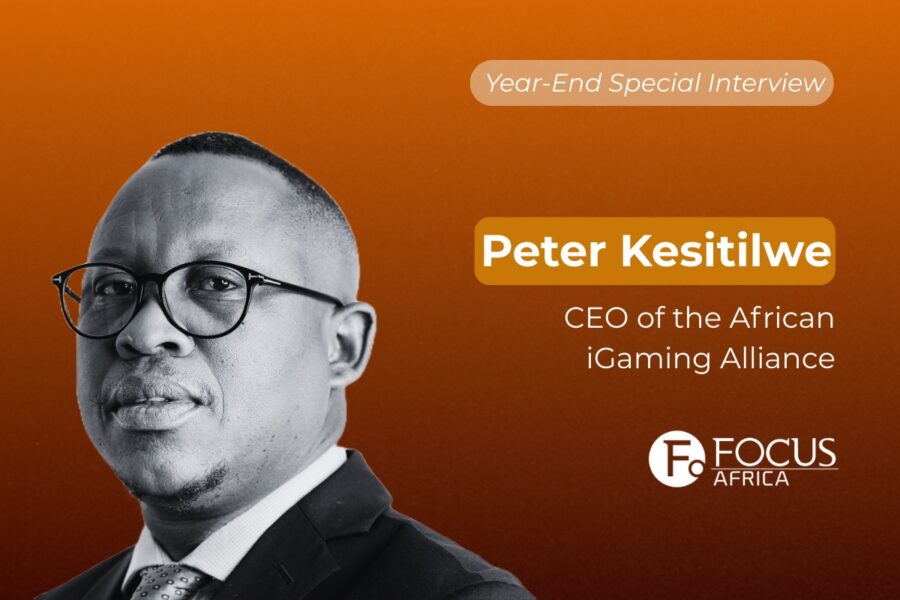

Peter Emolemo Kesitilwe, CEO of the African iGaming Alliance (AiA), discusses the association’s milestones in 2025 and its priorities for advancing regulation across the continent in an exclusive interview.
Exclusive interview.- Peter Emolemo Kesitilwe, CEO of the African iGaming Alliance (AIA), spoke to Focus Gaming News and outlined how 2025 marked the organisation’s transition from concept to a fully operational pan-African industry body. He discusses the Alliance’s early regulatory engagements across the continent, its role in shaping emerging standards, the compliance and consumer-protection challenges facing Africa’s rapidly expanding mobile-first market, and the priorities that will define AiA’s efforts to support sustainable, well-regulated industry growth in 2026.
Reflecting on 2025, what were the major milestones and achievements for the AiA in advancing the regulation and development of iGaming across the continent?
2025 has been a foundational year for the AiA because it is the year we formally moved from concept to execution. We established AiA as a dedicated, pan-African trade association representing licensed iGaming operators and suppliers, with a clear mandate to support responsible, well-regulated markets. Our founding members – including Betway Africa, 888Africa, SportyBet and betPawa – collectively operate across more than 20 African jurisdictions, and employees over 5,000 people across the continent and our members contribute US$500m in annual tax revenues across Africa, which gives us genuine continental reach from day one.
We have prioritised building trust with regulators and policymakers: this year alone, AiA has engaged directly with authorities in Nigeria, Kenya, Rwanda, Benin, South Africa, Uganda, Tanzania, Zambia and others to understand their priorities and share practical industry perspectives on tax, enforcement and responsible gaming. Internationally, we have become a recognised counterpart for organisations such as EGBA, IBIA, GRAF, ARSO and Clarion, and we have joined global conversations around igaming regulation, for coordinated industry voice focused on long-term, sustainable growth rather than short-term wins.
How has the landscape of igaming regulation evolved in key African markets this year, and what role has the AiA played in harmonising standards and best practices among member countries?
Across the continent, we’re seeing a clear shift from treating online gambling as a grey area to actively designing frameworks that recognise digital reality. A number of regulators are reviewing tax models, tightening licensing requirements, strengthening AML/CFT controls and updating advertising rules to reflect the speed and reach of mobile betting. There is also a stronger recognition that if regulated channels are not attractive and predictable, players will simply migrate to offshore and illegal operators. AiA’s role has been to support this transition with comparative insights and a platform for structured dialogue. Rather than pushing a “one-size-fits-all” blueprint, we’ve focused on core principles: evidence-based taxation, clear rules on marketing and sponsorship, robust KYC and data standards, and practical enforcement cooperation against unlicensed operators. We have done this by speaking at regulators’ forums such as GRAF, working with ARSO on standards discussions, sharing European learnings through our relationships with EGBA and IBIA, and preparing material that regulators can use as a reference when they draft or amend laws. The direction of travel is positive: African regulators are increasingly talking to each other and to the licensed industry, and AiA is helping to connect those dots.
“Across the continent, we’re seeing a clear shift from treating online gambling as a grey area to actively designing frameworks that recognise digital reality.”
Peter Emolemo Kesitilwe, CEO of the AiA.
Given the rapid growth of mobile and digital gaming platforms in Africa, what are the primary challenges African operators face regarding compliance, consumer protection, and responsible gaming?
The first challenge is fragmentation. Operators are dealing with very different rules, tax structures and interpretations of online gambling across markets, which creates complexity and sometimes conflicting obligations. The second is keeping compliance and consumer protection tools ahead of the pace of mobile adoption. Africa is a mobile-first region, so issues like real-time affordability checks, protection of young adults, and the safe use of mobile money and alternative payments are front and centre.
Operators are investing in KYC systems, transaction monitoring, self-exclusion and safer-gambling analytics, but the expectations are rightly rising as more regulators move toward a public-health framing. A third challenge is the scale of the offshore and black market: unlicensed operators can ignore local rules on advertising, product design and player safety, which puts compliant operators at a competitive disadvantage while exposing consumers to harm. Finally, there is a skills and capacity gap in some markets – both in industry and in regulators – when it comes to data, AI-driven monitoring and cyber-security. AiA’s members are trying to address this by sharing best practices, supporting training, and being open about where the industry can and should do better.
What initiatives has the AiA spearheaded in 2025 to promote player safety and combat illegal online gambling, and how do you evaluate their effectiveness?
From the outset, we made it clear that AiA is not a lobbying club for lighter regulation; it is an alliance for better, more effective regulation. In 2025, we focused on three practical areas. First, we have consistently framed our public positions around player protection – for example, in our contributions to global discussions, AiA aligned is advocating for evidence-based, proportionate measures that genuinely reduce harm rather than simply pushing players to unregulated sites. Second, we have used every platform we participate in – including GRAF, IAGR, etc events, regulators’ and industry conferences – to promote concrete safeguards such as robust KYC, age verification, self-exclusion mechanisms, data-driven early-warning systems and clear rules on advertising and sponsorship. Third, we are supporting regulators in their fight against illegal operators by sharing market insight, explaining how offshore sites are reaching African players, and highlighting tools that can be used to improve channelisation into the licensed market. It is early days, but the effectiveness is visible in the quality of conversations we are now having: regulators are asking more detailed questions, operators are more open about their systems, and there is a growing shared recognition that we must tackle illegal gambling and player safety together, not in isolation.
“From the outset, we made it clear that AiA is not a lobbying club for lighter regulation; it is an alliance for better, more effective regulation.”
Peter Emolemo Kesitilwe, CEO of the AiA.
Looking forward to 2026, what are the critical priorities and emerging opportunities for the AiA to foster sustainable industry growth and innovation?
Looking ahead to 2026, our priorities are very clear. First, we will deepen our regulatory engagement – not just through one-off meetings, but through structured programmes that bring African regulators together with licensed operators, data experts and public-health stakeholders to co-design practical solutions. Second, we want to help create more certainty and predictability in tax and licensing models so that governments can plan their revenues and operators can invest for the long term. Third, we will continue to elevate Africa’s voice in global conversations by working closely with partners such as EGBA, IBIA, GRAF, ARSO and major conference platforms like Clarion ICE and the Africa Gaming EXPO, Gaming Tech Summit. On the opportunity side, Africa is uniquely positioned to lead in areas such as mobile-first responsible gambling tools, AI-enabled compliance, and the integration of fintech and gaming in a way that is safe and transparent. If we get the foundations right – strong regulation, clear standards and a serious commitment to player protection – igaming can be a meaningful contributor to jobs, innovation and tax revenues across the continent. AiA’s role is to make sure that growth is not only fast, but sustainable and socially responsible.
By Focus Gaming News Editorial Team