

Kenya proposes 14-day deadline for gambling payouts with 5% penalty for late payments


The draft regulations would require licensed gambling operators to pay player winnings within 14 days or face a 5 per cent penalty, daily interest on unpaid payouts and possible licence suspension.
Kenya.- Kenya has proposed stricter player protection measures that would require licensed gambling operators to pay player winnings within 14 days or face financial penalties and possible licence suspension under the draft Gambling Control (Conduct of Gambling Operations) Regulations, 2026, proposed under the Gambling Control Act, 2025.
Under Regulation 104 of the draft Gambling Control (Conduct of Gambling Operations) Regulations, 2026, “any Licensee who fails to pay the winnings to a player within 14 days” would be liable to a penalty of 5 per cent of the total winnings payable to the Gambling Regulatory Authority (GRA).
In addition to the penalty, players would be entitled to receive the outstanding winnings plus interest of 5 per cent per day from the expiry of the 14-day payment period for up to 21 days, or until the winnings are paid in full. The draft regulations further provide that continued non-compliance with the payment requirements could result in the suspension of an operator’s licence.
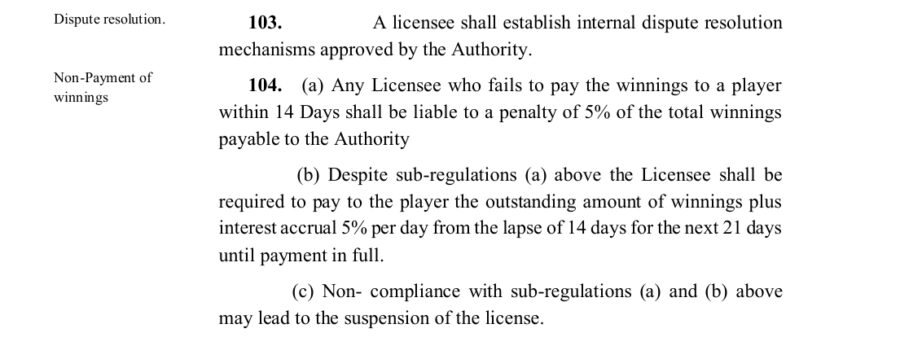
The proposed measures have also been highlighted by the Fintech Association of Kenya, which said in a recent LinkedIn post that Kenya’s proposed gambling regulations “would penalise operators that fail to pay winners within 14 days, as the government tightens financial, technical and consumer safeguards under the Gambling Control Act, 2025.” The association noted that the wider regulatory package would also strengthen licensing, compliance, anti-money laundering and consumer protection measures.
Beyond the proposed payout rules, the draft regulations would also provide the GRA with powers to license, inspect, audit, suspend and revoke gambling operators, while requiring firms to comply with stricter licensing, anti-money laundering and technical standards. Operators would also have to integrate with the central monitoring system, maintain segregated customer funds, implement geolocation controls, obtain data protection certification and generally store player data in Kenya.
The draft regulations would also introduce enhanced responsible gambling measures, including mandatory betting limits, session reminders and self-exclusion tools, while prohibiting gambling advertisements targeting minors or portraying gambling as a solution to financial hardship.
The draft regulations remain subject to the regulatory process before they can be finalised and brought into force.