


GRA launches Kenya’s first licensing cycle under sweeping new gambling regulations


Five subsidiary regulations underpin Kenya’s revised gambling regime, introducing real-time monitoring, tougher licensing and enhanced player protection.
Kenya.- Kenya has begun implementing sweeping new gambling regulations after the Gambling Regulatory Authority (GRA) launched the country’s first licensing cycle under the Gambling Control Act, 2025. The reforms, which took effect from July 1 following the gazetting of five subsidiary regulations on June 30, introduce far-reaching changes to licensing, regulatory oversight, technology, advertising and player protection across the gambling industry.
The reforms comprise the Gambling Control (Licensing) Regulations, 2026, the Gambling Control (Conduct of Gambling Operations) Regulations, 2026, the Gambling Control (Foreign-Based Operators) Regulations, 2026, the Gambling Control (Advertising) Regulations, 2026, and the Gambling Control (Gambling Appeals Tribunal) Regulations, 2026.
Published as Legal Notices 111 to 115 in the Kenya Gazette and made available on the GRA website, the five subsidiary regulations provide the legal foundation for Kenya’s revised gambling regulatory regime.
With the regulations in place, the GRA commenced the country’s first licensing cycle under the Gambling Control Act, 2025, marking the start of licensing under the new regulatory framework.
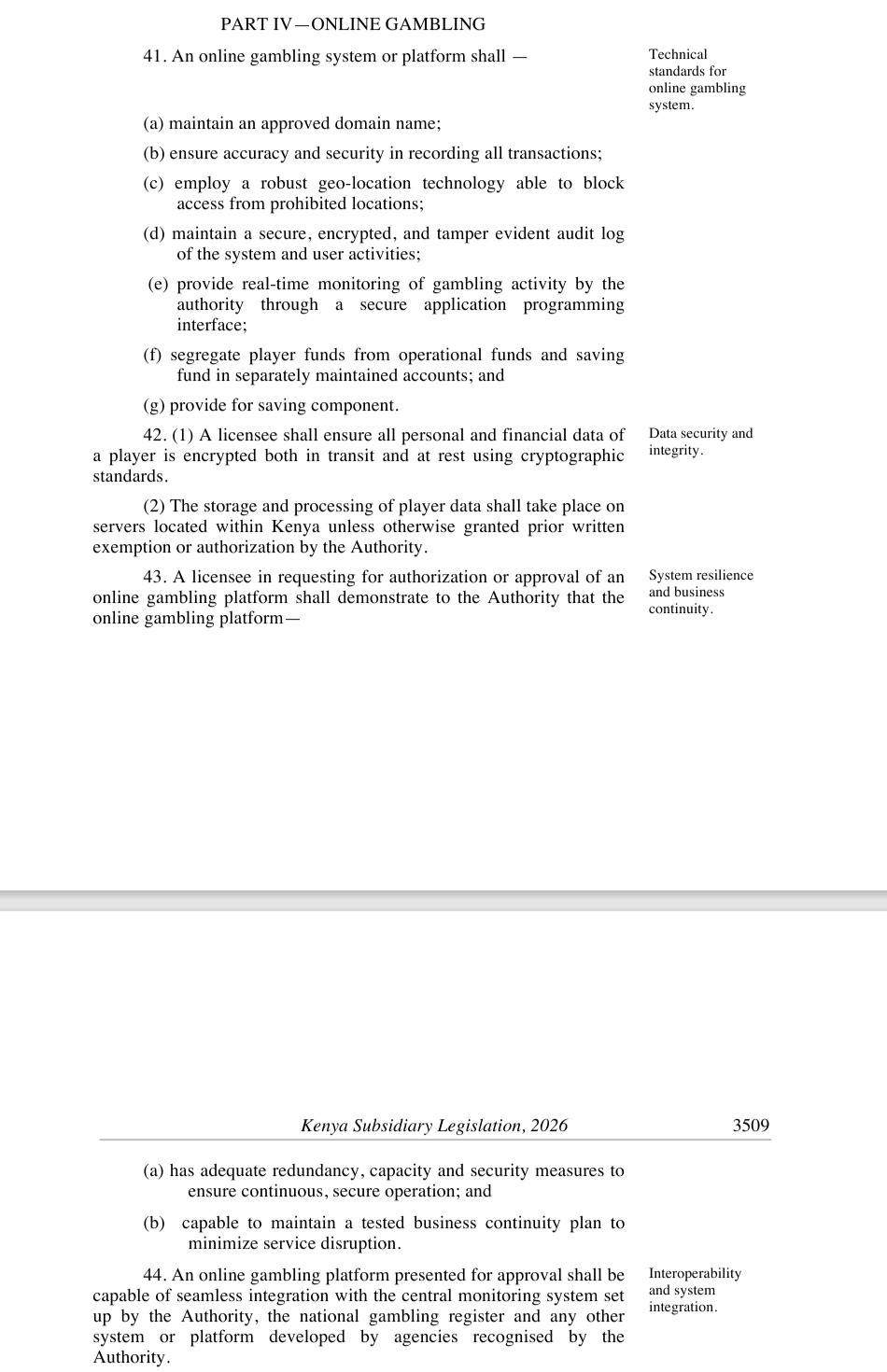
A key feature of the new framework is the introduction of mandatory real-time regulatory monitoring for online gambling platforms. According to the Gambling Control (Conduct of Gambling Operations) Regulations, 2026, operators are required to provide the GRA with “real-time access through a secure application programming interface (API)” and integrate with the Authority’s Central Monitoring System and the National Gambling Register. The regulations also require operators to implement geolocation technology, maintain encrypted audit logs and keep player funds separate from operational accounts, significantly strengthening regulatory oversight.
The Gambling Control (Licensing) Regulations, 2026 establish procedures for licensing casinos, bookmakers, lotteries, online gambling operators, gambling equipment manufacturers, software providers and key gambling employees. Meanwhile, the Gambling Control (Conduct of Gambling Operations) Regulations, 2026 introduce operational standards covering responsible gambling, anti-money laundering controls, cybersecurity, player protection, record-keeping and technical requirements for gambling platforms.
The Gambling Control (Foreign-Based Operators) Regulations, 2026 create a dedicated licensing regime for companies serving overseas markets, while the Gambling Control (Advertising) Regulations, 2026 introduce stricter controls on gambling promotions. The Gambling Control (Gambling Appeals Tribunal) Regulations, 2026 establish procedures for operators to challenge decisions made by the GRA.
Beyond real-time monitoring, the regulations strengthen technology standards by requiring operators to encrypt customer data, maintain business continuity measures and, unless exempted by the Authority, store and process gambling data on servers located within Kenya.
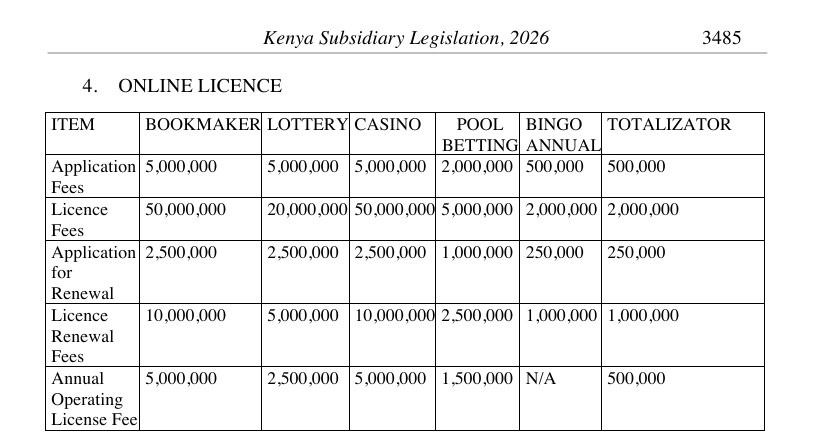
The new licensing regime also expands oversight beyond gambling operators. Businesses supplying gambling software, online platforms, gaming equipment and testing services must now obtain licences, while separate licence categories have been introduced for online bookmakers, online lotteries and online casinos. Under the new fee structure, online bookmakers and online casinos will each pay a licence fee of KES50m (US$387,500), while online lottery operators will pay KES20m (US$155,000), in addition to application, renewal and annual operating fees.
Foreign-based operators face additional financial requirements, including a minimum paid-up capital of KES100m (US$775,000) and a KES200m (US$1.55m) security bond, together with compliance with host-country laws and measures to prevent unauthorised access to their services within Kenya.
Player protection has also been strengthened through mandatory responsible gambling policies, age verification measures and participation in a national self-exclusion system designed to prevent excluded individuals from gambling.
The regulations came into operation upon publication in the Kenya Gazette on June 30. However, licences issued under the previous regulatory framework remain valid for a 60-day transitional period, during which existing operators are required to apply for licences under the new regime.