

Annalisa Samuels, WIGLA: “We are the bridge between capable women and the rooms where Africa’s gaming future is being written”
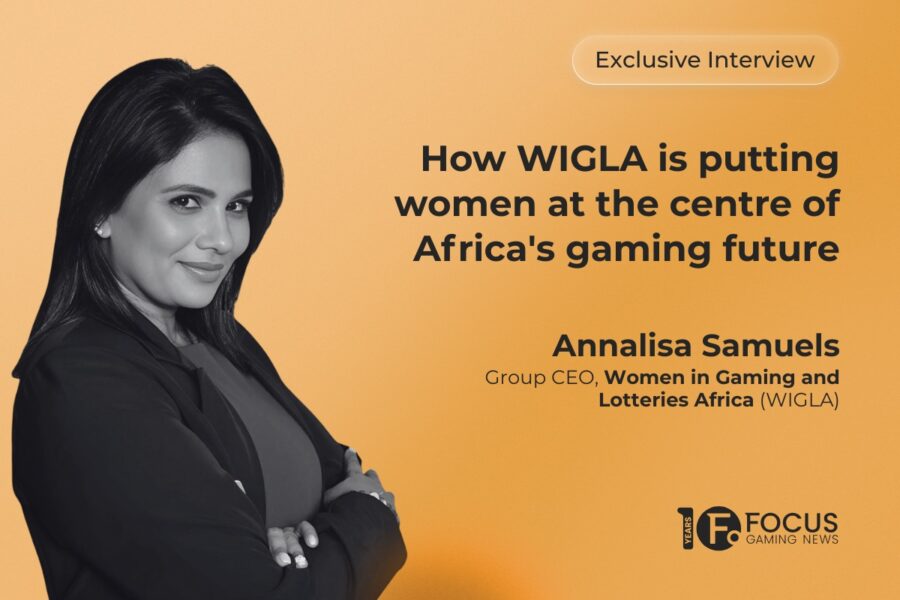
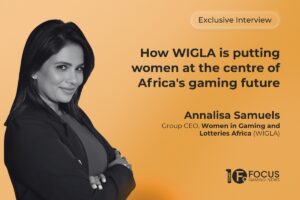
Focus Gaming News spoke to Annalisa Samuels, the Group CEO of WIGLA, about the organisation’s mission and strategies for female inclusion, as well as the future of gaming in Africa.
Exclusive interview.- Annalisa Samuels has spent more than two decades building a career across nearly every corner of Africa’s gaming industry, from compliance and operations to business development and regulatory engagement. Now, as Group CEO of the newly launched Women in Gaming and Lotteries Africa (WIGLA), she is leading an initiative focused on increasing female representation, leadership development and ethical governance across the continent’s gaming and lottery sectors.
In this exclusive interview with Focus Gaming News, Samuels reflects on her journey through the industry, discusses WIGLA’s mission within the broader African gaming ecosystem, and shares her vision for fostering inclusion, strengthening regulatory collaboration and preparing the next generation of women leaders in one of the world’s fastest-growing gaming markets.
Could you tell us a little about your journey to becoming Group CEO of WIGLA and how you first entered the gaming and lotteries sector?
I fell into this industry almost by accident in November 2003. I was recruited by the CEMS Operator to help train stakeholders on the Zonke Monitoring System and to run the Zonke Monitoring System Help Desk. I did not arrive with a grand plan to become an executive; I simply wanted to earn a salary to support my family. That early season, sitting at the operational nerve centre, taught me how to listen to operators and regulators properly and taught me that competence is built – one support ticket at a time.
From there I was fortunate to join Vukani Gaming, where I was given opportunities that probably looked bigger on paper than I felt inside at the time. I helped compile bids for Route Operator Licences in the Western Cape, Eastern Cape, and KZN, supported our site procurement teams, drafted manuals and Internal Control Procedures, served on steering committees, and even. At twenty-five, I was asked to serve as general manager for Vukani KZN. I was young, I was learning on my feet, and I was surrounded by patient colleagues who taught me as much as I was trying to lead. That was twenty-three years ago, so I have had the privilege of growing up inside this industry.
Even though my health issues forced me to step away for almost a year, it was a humbling season. What carried me through was not strategy; it was the realisation that I had been fortunate enough to build skills that still had value even when everything else felt uncertain. When I was ready, the industry welcomed me back. I joined Gold Rush Group as business development manager to work across bingos and betting, applying for new licences, handling business and liquor licence applications and any other project that was assigned, and later Betgames, where I served as sales director from 2019 onward and stepped into the international igaming space.
One of the projects I am most grateful to have been part of was helping bring a new igaming provider into South Africa, facilitating the commercial discussions, compliance, project managing integrations and managing the certifications through the labs, as well as facilitating the approvals with the regulators. I was also instrumental in getting the first fixed odds betting terminal (FOBT) approved in the Northwest and assisted Sizekhaya with their submission on the instant games for the national lottery, and setting up Bitville, the first technically compliant aggregator in the country. It required navigating uncharted regulatory territory, and I certainly did not do it alone, but I am proud that we proved aggregated igaming could operate responsibly within South Africa’s licensing framework.
The truth is, my career has not been linear. I have faced personal challenges that nearly broke me. Through all of it, the one thing that remained constant was this industry and the diverse skills I had been fortunate enough to accumulate along the way. I do not take that for granted. I know what it feels like to have everything else fall away and to realise that your only remaining currency is what you know and how you treat people. That is why WIGLA matters so deeply to me. This role is not a crowning achievement; it is a chance to serve an industry that has carried me when I could not carry myself.
How would you describe WIGLA’s mission within the African Lotteries and Gaming Association (ALGA) ecosystem for those new to the organisation?
WIGLA is the human pillar of ALGA. While ALGA builds the architecture for a unified, ethical African gaming sector, WIGLA ensures that the people inside that architecture, especially the women, are equipped, visible, and heard.
ALGA’s mission rests on three critical pillars: combating illegal lotteries, fostering safe play, and promoting responsible gaming. WIGLA exists to make sure women are central to all three. We are not a peripheral networking group, and we were never designed to be. We are a continental mechanism that connects industry practitioners with policymakers, creates deliberate pathways for leadership, and insists that inclusion be treated as governance, not goodwill.
For those encountering us for the first time, the simplest way to understand WIGLA is this: we exist because Africa’s gaming sector cannot reach its potential if half of its talent pool is underrepresented at the decision-making table. We are the bridge between capable women and the rooms where Africa’s gaming future is being written.
“We exist because Africa’s gaming sector cannot reach its potential if half of its talent pool is underrepresented at the decision-making table.”
Annalisa Samuels, Group CEO, Women in Gaming and Lotteries Africa (WIGLA).
What specific strategies will WIGLA implement in your first year to advance inclusion and leadership for women in the gaming and lotteries industry?
Our first year is about laying foundations that outlast any single event. We are building the structural warehouse for female leadership, not just hosting panel discussions or networking sessions; for me, key matters like the constitution, policies, strategic goals, timelines and resources must be finalised and communicated to all members before we sail off. We need to know what the burning issues are for women specifically per country, province, state, because, similarly to igaming, Africa is not a one-size-fits-all approach. As a team, we need to ensure that we act in a manner that is transparent and focus on projects that will make the highest impact. We want to do things that do not conflict with the other initiatives being adopted by WIGA, WING or WIGEA. In fact, we will support, include and collaborate with them to achieve the best outcome for us all.
For me, the first order of business is to create a value system and code of conduct for all of us in the organisation. I want the women in our organisation to firmly stand up for what they believe in and not go with the flow; also that our self-respect cannot be bought, nor will we remain silent to corruption or malicious hate against us. We will draw boundaries, and we will hold them up. Leaders do not waver in their conviction even if it makes them unpopular; people may not like you, but they will respect you.
According to you, what are the biggest barriers women face in executive roles within the lottery and gaming industries, and how has your experience in the gaming sector shaped your approach?
The barriers are less about open hostility and more about quiet exclusion. Women are often invited into rooms but not into the decision-making. We are asked to lead during crises but rarely groomed to lead during growth. There is still a cultural assumption in parts of this sector about who naturally belongs in gaming, and that assumption quietly filters women out before they ever reach the executive floor.
My own experience taught me that expertise is your only true portable asset, but it’s not always enough on its own. I was given responsibility early, and I am grateful for that, but I also spent years acutely aware that I had to know more, prepare more, and prove more just to be heard. The only reason I survived the personal storms in my life was because I had been fortunate enough to build a broad set of skills across technical integrations, compliance, regulatory policy, marketing, and operations. When everything else fell away, those skills were still there, and they made me employable even when I felt broken.
That reality shapes my approach completely. I do not believe in telling women to simply be resilient as if brute force is a strategy. I believe in building them so comprehensively that they become undeniable. When a woman becomes multiskilled and takes the time to understand the full operation B2C and B2B, takes the time to build relationships that are honest and sustainable, who comes to work, not to just mark herself present but to make a difference, one who says, “Let me try!”, instead of “I don’t know”, and one who thrives on harmony and not conflict, she is no longer asking for a seat. She is carrying the seat with her. WIGLA’s job is to make that level of competence the norm, not the exception, for African women in gaming.
How is WIGLA collaborating with ALGA and national regulators to harmonise standards for ethical gaming practices?
ALGA will serve as our implementation partner on human capital and ethical governance, which means our collaboration is structural, not ceremonial.
With ALGA, we are integrating WIGLA’s leadership development into their broader regulatory harmonisation agenda. You cannot harmonise standards across jurisdictions unless the people writing and enforcing those standards represent the diversity of the markets they govern. WIGLA brings the talent pipeline that makes ALGA’s policy work sustainable. Of course, WIGLA will also assist ALGA when the skills are required.
With regulators, we are pursuing two parallel tracks. The first is educational. We are engaging with regulatory bodies to co-develop training and certification on ethical gaming compliance, responsible conduct, and modern technology audit, risk and reporting. The second is talent-based. We are advocating for more women to serve on regulatory boards, licensing panels, and technical review committees, because ethical standards are only as strong as the institutions that enforce them, and those institutions are stronger when they are diverse. The third is internship programmes to upskill new entrants into the industry. Operators can employ these interns knowing they have the necessary skills to suit the role. This will assist in closing the talent gap.
Our guiding principle is simple: ethical gaming is not a document; it is a practice, and practice is carried out by people. WIGLA exists to make sure the people carrying it out are excellent, ethical, and representative of Africa.
What predictions do you have for the African gaming and lotteries sector over the next 5 years, and how will WIGLA shape that trajectory?
I believe we are entering the most consequential decade in African gaming history. Over the next five years, mobile-first igaming will dominate market growth, regulatory alignment will slowly give way to cross-border harmonisation, and the fight against illegal operators will intensify as governments realise how much revenue is being lost to unregulated channels. I see prediction markets being added as a new contingency; it will have to be legalised, or it will be an opportunity for more illegal sites to be released to satisfy the demand. It will be a case of which is the lesser evil.
Technology will become the common language across the continent; at the forefront will be WIGLA mobilising local talent to build local content and local technology for the continent. This will assist in bringing down the costs of technology and increase the margins for operators, increase the investment from operators through CSI and employment, and increase the performance of smaller B2C operators, as local product means that they can afford to create competitive advantage through unique and exclusive contingencies, but the differentiator will be governance. The operators and regulators who win will be those who treat compliance, responsible gaming, and ethical conduct as revenue enablers, not cost centres. The regulators will have all their processes automated and the bottlenecks associated with approvals will be but a distant memory.
WIGLA’s role in that trajectory is to ensure that women are not spectators to this growth, but architects of it. We also possess the skills to support the discussions and be an integral contributor to the solution.
As the sector scales, the demand for technically literate, regulatorily fluent, and commercially experienced leaders will outpace supply. WIGLA is building that supply. We are training the women who will design the next generation of compliance frameworks, who will lead product teams, and who will sit across from regulators not as supplicants but as peers.
In five years, I want the world to look at Africa’s gaming sector and see not just impressive revenue numbers, but impressive leadership diversity. WIGLA will have shaped that by proving, country by country, that capability has no gender.
“I believe we are entering the most consequential decade in African gaming history.”
Annalisa Samuels, Group CEO, Women in Gaming and Lotteries Africa (WIGLA).
What advice would you give to aspiring women leaders in gaming, or to organisations looking to foster inclusion?
To the women: start by falling in love with the work itself, not the title. I have been privileged to work across nearly every function in this sector, from help desks and technical integrations to compliance audits, application development, marketing strategy, and regulatory policy. That breadth was never part of a master plan; it was born of curiosity and a willingness to serve where I was needed. But it became my greatest asset. When life shook me, and it did, severely, the diversity of my skills was what kept me standing. I was employable not because I was lucky, but because I had spent years learning how to add value in many different rooms.
Be kind, be humble, but never be small. Know your legislation. Learn technical architecture. Understand the commercial drivers. Build relationships that outlast your current job. And when you reach a door, bring others through it with you. Generosity is not a weakness in this industry; it is a legacy.
To organisations: inclusion is not a campaign you launch for Women’s Month. It is a governance decision you make on a Tuesday in March. If your board, your product team, and your regulatory engagement do not reflect the community you serve, you are making poorer decisions than you could be. Start by giving women roles with real budgets and real authority. Partner with WIGLA or similar bodies that are building infrastructure, not hosting photo opportunities. And most importantly, listen to the women already in your building. They will tell you exactly what is broken if you create an environment where they feel safe enough to speak.
My career has been built on second chances, patient mentors, and an industry that allowed me to keep contributing. I have created relationships over the decades, so much so that I honestly feel they are my family and their wins are mine. I want every woman we touch through WIGLA to feel that same sense of belonging and purpose. That is the goal. Everything else is just mechanics.
By Focus Gaming News Editorial Team