


Study suggests Denmark’s gambling regulations are more successful than Sweden’s
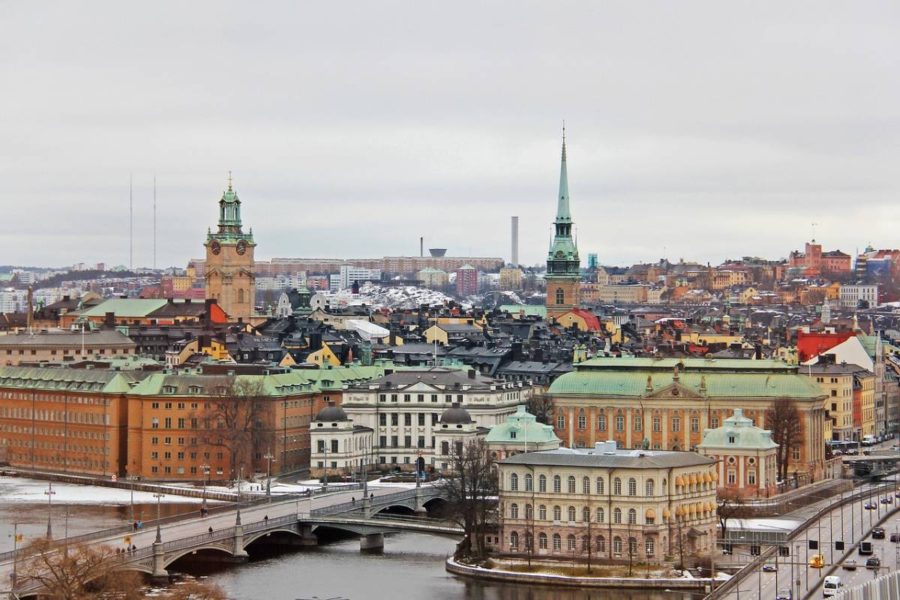
BOS compared the channelisation rates and regulatory culture between the Swedish and Danish gambling markets.
Sweden.- BOS, the Swedish Trade Association for Online Gambling, has made a series of recommendations to the country’s government and the gambling regulator Spelinspektionen following a comparative study that looks at how gambling is regulated in Sweden and Denmark.
The report, carried out by the law firm Nordic Legal, found Denmark’s gambling regulations to be more successful in meeting its country’s gambling policy goals. This includes a higher and more stable channelisation rate to licensed sites.
The report states that Sweden is unlikely to reach its 90 per cent target in terms of channelisation unless a larger reform takes place. Some 18 recommendations laid out in the report aim to address that. The report argues that channelisation is important as a marker for a well-functioning gambling market and should not be neglected as proposed by some policymakers in response to the difficulty in achieving high channelisation goals set in the past.
Repressive measures and a difference in regulatory culture
The report’s authors believe that repressive measures such as ISP blocking and payment blocking cannot alone solve the channelisation problem as long as the licensed gambling market is not allowed to offer a sufficiently attractive gambling offer via less rigid bonus and loyalty regulation.
The report also points to different government and authority cultures in Sweden and Denmark. According to interviews with licensees, Sweden’s gambling regulator is characterised by a punitive culture and a culture of fear, while Denmark is seen as more dialogue-oriented in the relationship between authority and licensees. The escalation ladder of measures in Denmark when licensees violate rules is mentioned as one positive characteristic, while Sweden is said to instantly apply the harshest possible sanctions.
Gustaf Hoffstedt, secretary general of BOS, said: “We hope that the report will be a useful tool and encourage Sweden to find inspiration in several of the measures and approaches that have been so successfully implemented in Denmark. Some of them are strictly rule based, such as how loyalty programs are regulated. Some are more difficult to grasp and of a cultural nature, but just as important, and are connected to the policymaker’s attitude to the industry it is supervising.
“Hopefully, this report can inspire policymakers in Sweden to choose the path of regulation that strengthens the licensed gambling market and as a consequence strengthen consumer protection, as neighbouring Denmark has successfully proven is possible.”
Danish gambling regulation is often held up as an example within the Nordic countries, with Finland looking to the country’s learnings for the planned launch of a regulated Finnish online gambling market in 2027. However, BOS’s report finds that even Denmark’s position also seems to be under threat recently.
Denmark’s minister for taxation, Rasmus Stoklund, has said that the government will look at reforming Danish gambling regulations amid concerns about problem gambling. This could include potential advertising restrictions.
Stoklund said that around 500,000 people in Denmark experience gambling-related problems to some degree, while over 60,000 people have registered with ROFUS, the national self-exclusion system.