



Regulatory report highlights rise of online gambling in Slovakia
The ÚRHH has warned that online gambling is powering past land-based offerings.
Slovakia.- Martin Bohoš, director general of Slovakia’s gambling regulator, the ÚRHH, has emphasised the growth of online gambling in a new report to parliament. While the report does not propose any specific measures regarding the phenomenon, it seeks to highlight the acceleration of online gambling compared to the traditional land-based sector.
The annual report notes that Slovakian gambling spend reached €24.2bn in 2024, a rise of 14 per cent year-on-year. Online gambling generated bets of €12.8bn and land-based gambling €8.92bn (€6.14bn from gaming halls and €2.78bn from casinos).
As for winnings, the total reached €22.8bn, while net gambling losses reached €1.45bn, a rise of 9 per cent year-on-year. The online sector contributed winnings of €11.7bn, while online casino player losses reached €480m. Losses via land-based gambling were also €480m. Meanwhile, gambling taxes totalled €347m, up by €46m year-on-year.
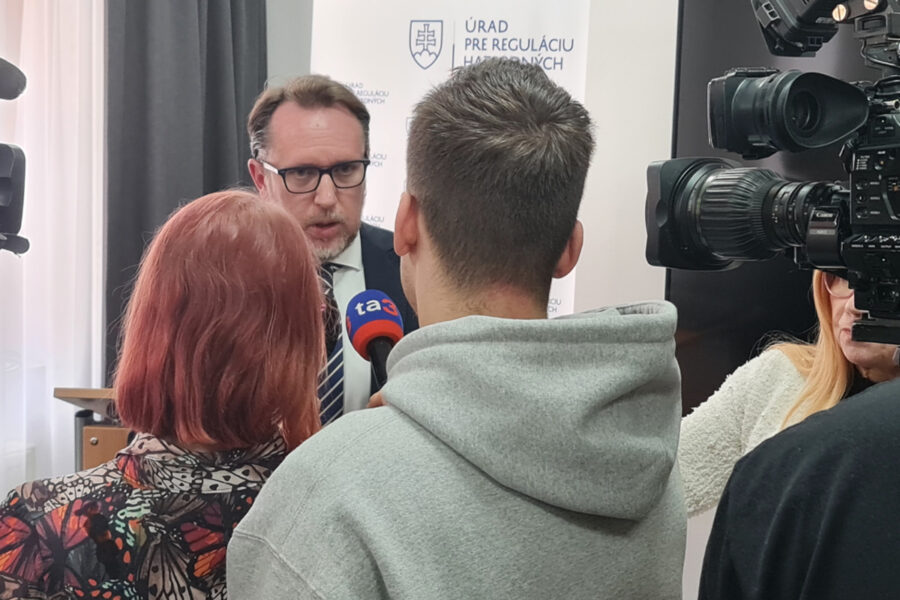
Bohoš reported: “Online casinos continue to hold the largest market share, recording a year-over-year increase in revenue of 29.9 per cent to nearly €476m, with contributions to the state budget rising by 35.1 per cent to €126m.”
He highlighted the divergence between the rate of growth in online gambling versus land-based gambling and suggested that this was the result of digital innovation, changes in consumer preferences and effective state regulation.
While online gambling saw double-digit growth, land-based casinos and gaming halls saw mixed results. Gaming halls, which are run under government contracts, took €6.14bn in bets in 2024 and paid out €5.8bn, resulting in net losses of €340m. That led to a 5 per cent fall in their contributions to the state (€58.95m) in spite of stable player engagement. Meanwhile, land-based casinos took wagers of €2.78bn and paid out €2.64bn for net losses of €140m. Their tax contributions rose by 26 per cent to €16.4m.
Sports betting wagers totalled €2.73bn. Losses reached €310m, and the state’s take rose by 18 per cent to €86.91m. This was ascribed to big events like Euro 2024 and the Paris 2024 Olympic Games.
Bohoš stressed that although online casino growth had boosted state revenues, it also presented challenges and required the ÚRHH to enhance self-exclusion controls and supervision of intervention with vulnerable consumers. He also highlighted concerns about unlicensed gambling. The ÚRHH added 89 platforms to its blacklist in 2024, bringing the total list of blocked platforms to over 820.
He expects the land-based gambling sector to continue to face challenges due to local government restrictions, such as the ban on gambling venues in Bratislava, and changing consumer habits while the growth of online gambling is expected to continue and to see more competition.
Last month, the ÚRHH announced that a new national gambling helpline would be run by Predná Hora, a specialist treatment centre located in a former Bulgarian royal residence in the mountains. The free helpline will run seven days a week between 9am and 1am.
By Focus Gaming News Editorial Team