


More details announced for British Gambling Levy Programme Board


The 10-member board will oversee the delivery of government objectives for gambling research, prevention and treatment.
UK.- The Department for Culture, Media and Sport (DCMS) has provided more detail on the operation of the new Gambling Levy Programme Board. The Terms of Reference detail how the board will operate and allocate funds from the mandatory gambling levy that came into force in April.
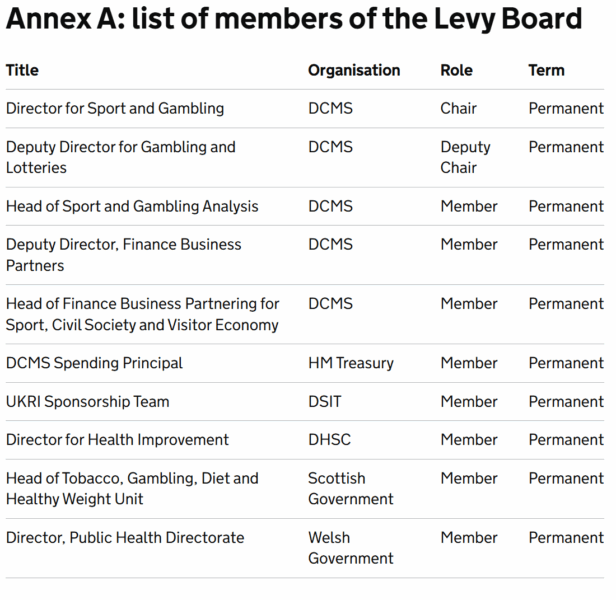
The Gambling Levy Programme Board is intended to bring together key central government departments with representatives from the Scottish and Welsh administrations. Its objective is to ensure that commissioning bodies deliver on government objectives to strengthen and expand research, prevention and treatment (RPT).
The board was created as a formal forum to track progress and performance was created because funding crosses multiple departmental boundaries. It has collective responsibility for monitoring the levy’s overall effectiveness and ensuring it meets agreed priorities. Decisions on specific expenditure programmes remain with the individual commissioning organisations appointed by the department.
Members of the British Gambling Levy Programme Board
The board consists of 10 members, each appointed because of their institutional role within the levy system rather than in a personal capacity. It’s chaired by DCMS director for sport and gambling Ben Dean, with support from Julie Carney, deputy director for gambling and lotteries.
The DCMS retains ultimate responsibility for implementing the statutory levy under Section 123 of the Gambling Act 2005, since final approval of levy allocations rests with the secretary of state, currently Lisa Nandy, or the minister responsible for gambling policy, Fiona Twycross, alongside HM Treasury. The Treasury is formally designated as a joint approver, providing fiscal oversight.
Commissioning Responsibilities
Operational commissioning is distributed across specialist departments. The Department of Health and Social Care (DHSC) will oversee treatment and public health, with NHS England acting as the treatment commissioner and the Office for Health Improvement and Disparities (OHID) leading on prevention.
Research falls under the Department for Science, Innovation and Technology (DSIT), which sponsors UK Research and Innovation (UKRI). Responsibility for prevention and treatment spending in Scotland and Wales remains with their respective governments, reflecting devolved powers in health and education.
GambleAware, the charity that previously commissioned RPT activities using voluntary donations from the gaming industry, will cease operating by March.