


British horseracing sector denies working with anti-gambling lobby
Tension is growing between the gambling and horseracing sectors as the government eyes tax changes.
UK. The British Horseracing Authority (BHA) has denied working with ‘the anti-gambling lobby’ as tension mounts between the racing and gambling sectors, normally strong allies. Some had accused the body of attempting to negotiate with anti-gambling proponents to get a better deal for racing betting amid discussions on gambling tax.
It had been noted that the BHA attended a roundtable discussion organised by the think tank the Social Market Foundation, which has proposed a sharp hike in British gambling tax. The SMF’s stance has more recently gained major political support from former prime minister Gordon Brown and now from the Liberal Democrats.
“Our Axe The Racing Tax campaign has only one focus: to protect the sport of horseracing by calling for the sport to be taxed at a different, lower rate,” the BHA said in a statement. ”This is why suggestions the sport is working closely with the anti-gambling lobby are simply inaccurate. The BHA – along with other racing stakeholders – attended one roundtable organised by the SMF in the spring which explored racing’s views on the Treasury proposals.”
It added: “With the SMF being an independent think tank well-respected by those in government, it would be remiss of any industry to refuse to share its own insights with an organisation that regularly makes recommendations to those in power, even if there is not support from said industry for every recommendation made.”
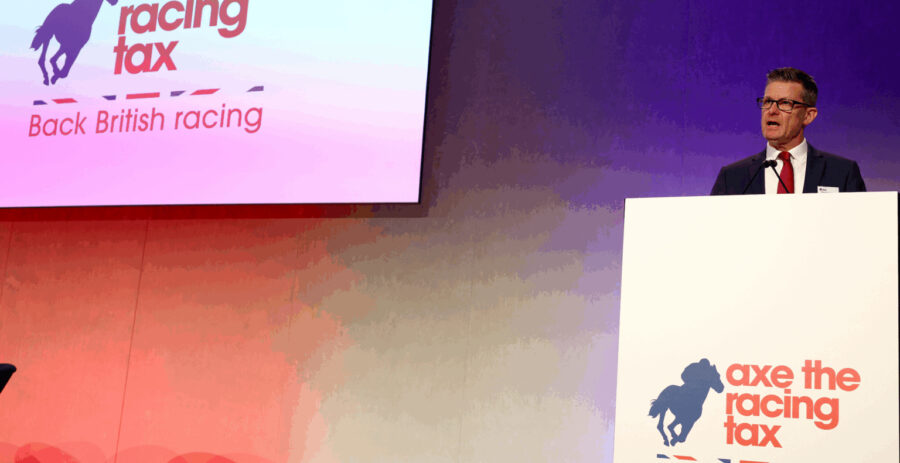
Brant Dunshea (pictured above) told the Racing Post: “History has shown that engagement and transparency with critics is central to an industry maintaining its social licence. Any modern and progressive industry must be able to engage with those that have opposing views, and it is logical to engage various bodies when making our case heard, including respected think tanks and third-party advocates.
”However, this does not equate to racing forming a closer relationship with any such bodies, and this is especially the case as regards the anti-gambling lobby.”
Fallout after ‘Racing’s Cancelled Day’
The tension became apparent when the BHA staged ‘Racing’s Cancelled Day’ on September 10. Billed as the first time in history that the sport refused to race, the action saw a day of races suspended as part of the BHA’s Axe The Racing Tax campaign.
The initiative was intended as a protest against the UK Treasury’s proposals to merge three separate tax categories – Remote Gaming Duty, General Betting Duty, and Pool Betting Duty – into a new single Remote Betting and Gaming Duty (RBGD). Both the gambling sector and the horseracing sector have expressed opposition to the proposal, which they believe would increase the tax burden on horseracing betting, but the Betting and Gaming Council (BGC) criticised the BHA’s decision to suspend racing without consulting its members.
The BHA has defended the decision noting that more than 200 people including 20 politicians attended a campaign event in Westminster in which BHA members and jockeys highlighted the impact that the proposals could have on the UK’s second-biggest spectator sport. It said the #AxeTheRacingTax hashtag has been seen more than 3 million times on social media.
”It was an unprecedented step to take. But it was a step that powerfully articulated the industry’s strength of feeling against a proposal the Treasury claims will simplify online betting taxes, but which will in reality only make horseracing significantly less profitable for bookmakers in comparison to other betting products,” the BHA said. “The consequences of this ‘racing tax’ on operators will have a severe knock-on impact on our sport which has a uniquely symbiotic relationship with the betting industry.”
It added: ”We have been consistently clear that it is not our place to opine on how other betting products are taxed or at what rate. Indeed, the Treasury has been clear throughout that it is only seeking views on the principle of harmonisation, not potential rates. It is on that basis alone that we have engaged with the Government.
”With the Government facing difficult economic headwinds, it would be naïve to assume that harmonisation would result in taxes going down. This is why the Axe The Racing Tax campaign has argued that it is most likely that taxes on horseracing would only increase to at least the current 21 per cent that operators pay on online gaming. Given the size of the fiscal black hole facing the Government it is reasonable to assume that the rate may be considerably higher.”
The issue has highlighted the delicate relationship between horseracing and the gambling sector. Betting revenue is essential for the survival of the horseracing sector, while racing also provides a sizable market for gambling operators. But while gambling operators are keen to avoid a hike in the tax rate on horseracing betting, they’re understandably not keen that this should be at the expense of higher taxes on more profitable verticals. Meanwhile, there has still be no advances in the overdue reassessment of the horseracing betting levy.