Behind the scenes: How Platipus builds games that perform for operators — from concept to scalable launch
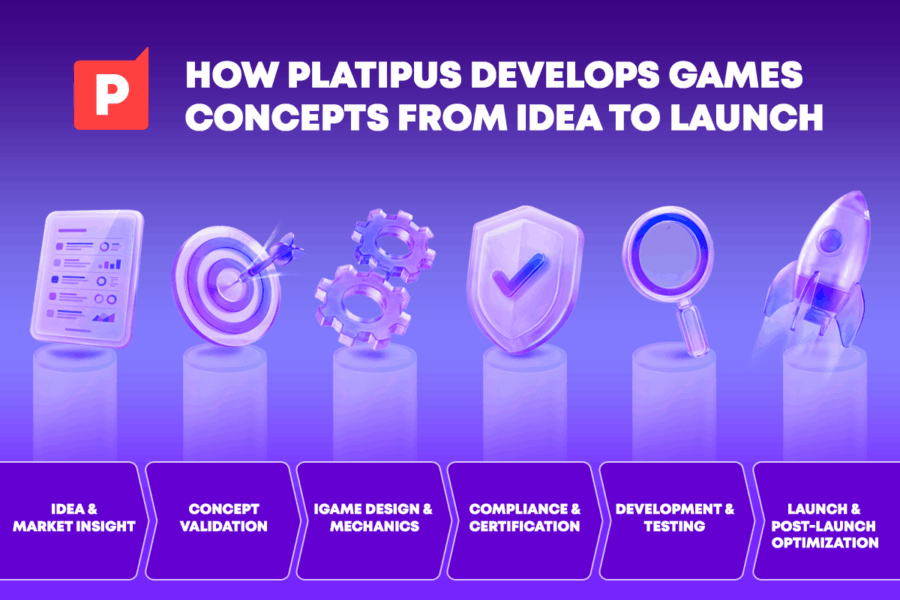
Platipus details its data-driven development process, focusing on operator KPIs, technical stability, and long-term retention to ensure new releases deliver consistent commercial value and seamless global integration.
Press release.- For operators, a new game is never just content. It’s a business decision that impacts retention, ARPU, technical stability, and operational workload. At Platipus, game development is built around this reality.
Every title is designed not only to engage players, but to deliver predictable performance, seamless integration, and long-term commercial value for operators across markets.
Here’s how Platipus approaches game development — from an operator’s perspective.
1. Operator performance comes before creative ideas
At Platipus, games do not start with a theme. They start with operator KPIs.
Before any concept is approved, the team analyses:
- performance data from live markets,
- operator feedback on retention, session length, and volatility tolerance,
- regional differences in player behaviour,
- gaps in existing game portfolios.
The goal is simple: build games that solve real operational needs, not just add another title to the lobby. This ensures that each new release has a clear role within an operator’s ecosystem — whether it’s driving engagement, balancing volatility, or extending player lifetime value.
2. Concept validation with commercial logic
At the concept stage, every Platipus game is assessed through a commercial and operational lens to ensure it delivers measurable value for operators. The team evaluates how the title fits into existing content portfolios, which player segments it is expected to activate, and how it will perform across different markets and regulatory environments. Each concept is clearly positioned in terms of target markets, player profiles, volatility balance, monetisation logic, and engagement drivers, with a strong emphasis on differentiation. This early-stage validation minimises commercial risk for operators by ensuring that only market-ready, portfolio-relevant concepts move into production.
3. Game design built for retention and revenue stability
Game design at Platipus is driven by long-term performance rather than short-term spikes. Mechanics are built to support sustainable player engagement through balanced RTP and volatility, repeat-session incentives, and bonus structures that maintain interest without causing fatigue. Transparent and predictable gameplay logic strengthens player trust, which directly impacts retention and lifetime value. For operators, this results in more stable revenues, clearer performance forecasting, and content that continues to perform well long after launch.
4. UX and visuals optimised for Conversion
Visual identity and UX are treated as performance tools, not aesthetic add-ons. Design decisions are made to:
- reduce friction in gameplay,
- support fast onboarding for new players,
- ensure clarity across mobile and desktop,
- maintain consistency with operator platform standards.
This approach improves conversion rates, reduces support requests, and ensures smooth integration into existing operator interfaces.
5. Technology built for seamless integration and scale
From a technical standpoint, Platipus games are designed to integrate quickly and operate reliably at scale.
Key technical priorities include:
- fast and flexible API integration,
- stable performance across devices and browsers,
- modular architecture for localisation and updates,
- compliance-ready builds for multiple jurisdictions.
For operators, this means shorter time-to-market, fewer technical dependencies, and minimal operational overhead during deployment and expansion.
6. Compliance and risk mitigation by design
At Platipus, regulatory compliance is embedded from the earliest stages of development rather than treated as a final checkpoint before launch. By aligning game logic, mechanics, and technical architecture with regulatory requirements upfront, the team significantly reduces certification timelines and minimises the risk of costly revisions. This proactive approach enables operators to deploy content faster across multiple jurisdictions, simplifies market rollouts, and ensures a smoother scaling process into new regions with confidence and regulatory clarity.
7. Launch as a starting point, not an endpoint
Platipus treats game launch as the starting point of continuous optimisation, not the final milestone. After release, the team actively collaborates with operators to monitor live performance, analyse real player behaviour, and fine-tune mechanics based on real-world data. This ongoing post-launch support allows content to be adapted to specific market dynamics, player preferences, and commercial goals, ensuring sustained performance and long-term value rather than a short-lived launch peak.
Built for operators who think long-term
Platipus builds games for operators who value reliability, scalability, and measurable results. By combining data-driven decision-making, robust technology, and player-centric design, the studio delivers content that supports sustainable growth rather than one-off performance peaks.
Behind every Platipus game is a development process designed to make operators’ lives easier — from integration to optimisation — while delivering consistent value to players and platforms alike.
By Focus Gaming News Editorial Team