



US casino operators won’t face retaliation amid trade tensions, Macau chief executive says


Sam Hou Fai has said trade tensions between the US and China won’t affect US casino operators.
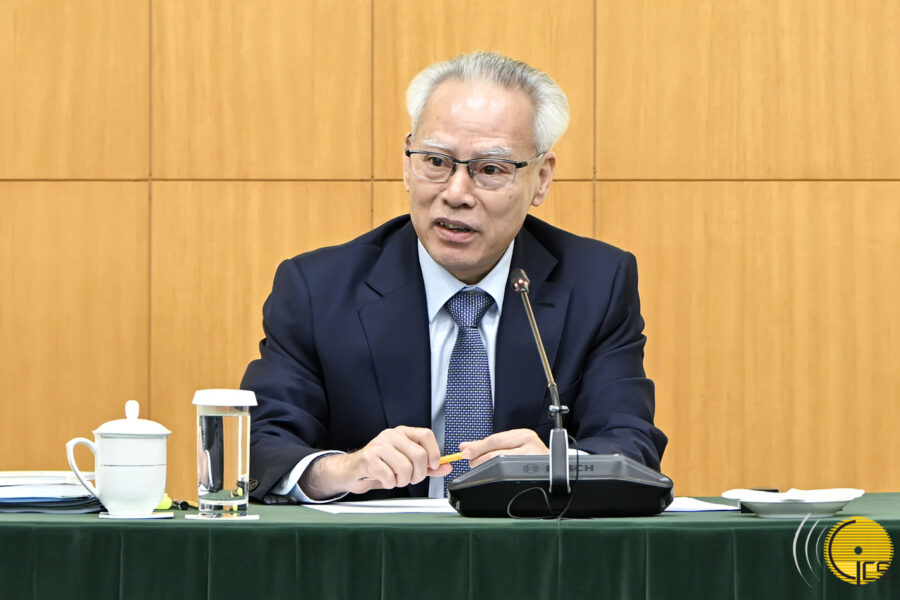
Macau.- Chief executive (CE) Sam Hou Fai has pledged that trade tensions between the US and China won’t lead to retaliation against US casino operators in Macau as long as they follow local laws. Speaking at a conference press after a visit by Beijing official Xia Baolong, Hou Fai said the six gaming operators would be “protected and supported by the Macau government” if they “comply with Macau law and conduct their operations in a lawful and orderly manner”.
Hou Fai’s comments follow the announcement of a 90-day truce in the trade dispute between China and the US from today (14 May), under which the US will cut tariffs on Chinese imports to 30 per cent, while China will cut its tariffs on US goods to 10 per cent.
Three of Macau’s six casino operators are based in the US: Las Vegas Sands (LVS), Wynn, and MGM Resorts International. Macau accounted for 63 per cent, 52 per cent and 23 per cent of their consolidated 2024 revenues, respectively.
The gaming industry brings in about 80 per cent of Macau’s tax revenue, with US operators accounting for over half of that. Under their concessions, operators are committed to investing a minimum of MOP108.7bn (US$13.48bn) in non-gaming initiatives over ten years.
Macau’s CE said at the press conference that it would be “very difficult to reverse the dependency on gaming revenues” in the comming years but that diversifying the economy away from gaming is still a goal.
Macau collected MOP22.20bn (US$2.78bn) in taxes from casino operations in the first quarter of the year. The figure was up 0.2 per cent in year-on-year terms. The figure for March was MOP7.95bn (US$994.5m).
Cumulatively, gross gaming revenue (GGR) for the first three months of the year was MOP57.66bn (US$7.20bn), up 0.6 per cent from the prior-year period. Tax revenue figures cannot be directly compared because there is usually a delay between when GGR is documented and when the government recognises the tax as being paid.