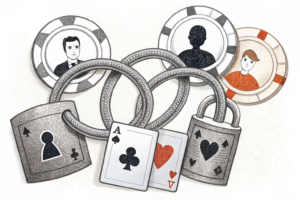


Tax hikes on online gambling sweep across Africa
Policymakers usually justify their tax increases with two main reasons: addressing budget shortfalls and reducing gambling harm.
Across Africa, governments are introducing or debating an increase in taxes on online gambling to generate revenue and address social concerns, a move that affects millions of everyday bettors who turn to sports wagers for extra income.
From Zimbabwe’s upcoming levy on betting firms to Senegal’s recent withholding on winnings, these policies reflect a push to tap into a sector that saw gross gambling revenue climb to over €78bn in South Africa alone last year. Officials say the taxes will fund public services and discourage excessive play, but players and operators warn they could push activity underground, leaving vulnerable users without protections.
Zimbabwe
In Zimbabwe, the finance ministry announced in October that a 20 per cent tax on gross gaming revenue for bookmakers, lotteries and casinos will take effect January 1, 2026, replacing a 3 per cent rate. This follows a January hike to 10 per cent on sports betting winnings, now set to rise to 25 per cent. The amendments classify the levy as a final tax, sparing operators from corporate income duties. About 300,000 Zimbabweans bet online, with six in ten aged 18 to 35, often using platforms for small stakes on local soccer matches. Finance Minister Mthuli Ncube described the adjustment as a way to ensure those benefiting from industry growth contribute fairly, projecting it will add millions to state coffers strained by inflation.
Senegal
Senegal moved first this year, enacting a 20 per cent withholding tax on net winnings from all gambling, online or in-person, starting November 1. The National Lottery of Senegal handles deductions automatically, applying the rate to prizes regardless of player origin. The new policy supplements a 20 per cent operator tax on prize pools, on top of 30 per cent corporate rates. Prime Minister Ousmane Sonko’s administration framed it as part of economic reforms to capture untaxed income, especially from foreign betting apps popular among young workers in Dakar.
South Africa
South Africa’s National Treasury released a discussion paper in November proposing a 20 per cent national tax on online gross gaming revenue, including unlicensed sites. If approved after public consultation closes on January 30, it would layer onto provincial levies of 6-9 per cent for betting and 10-15 per cent for casinos, plus 15 per cent VAT, for effective rates up to 39 per cent. Treasury officials aim to recover €2.86bn lost annually to offshore platforms and fund addiction support, citing global norms where rates often exceed 20 per cent in places like the UK and Kenya.
The pattern extends elsewhere. Ghana’s 2023 tax law, effective last year, imposes 20 per cent on gross gaming revenue for betting and lotteries, while scrapping a 10 per cent winnings levy in April to lighten player loads. Nigeria’s new National Tax Act shifts to up to 30 per cent on profits from January 2026, with 5 per cent on winnings, harmonising old lottery taxes. Kenya upped its stake excise to 15 per cent in 2024, Morocco added 30 per cent on foreign-site winnings in its 2025 budget, and The Gambia recently raised winnings taxes to 50 per cent.
These steps, mostly in West and Southern Africa, follow a decade of sector expansion driven by mobile access as Africa now claims six of the world’s top 20 gambling sites by traffic. Policymakers usually justify their tax increases with two main reasons: addressing budget shortfalls and reducing gambling harm. Gambling taxes provide fast revenue without needing widespread income increases. Socially, officials link the levies to curbing addiction; Treasury data shows online play surging 25 per cent last year, hitting students and low-wage earners hardest.
Industry and players’ cost
Bettors, many facing job scarcity, feel the pinch directly. In Ghana, opposition figure Felix Kwakye Ofosu captured the frustration in a March radio interview. He said: “Betting may not be the most desirable occupation, but for many, it has become a source of solace in tough times. Taxing their meagre winnings when you haven’t provided them with jobs only adds to their struggles.”
Operators, squeezed by compliance costs, raise alarms over viability. South Africa’s Bookmakers warned the tax hike could kick legit operators out of the market, driving users to unregulated sites lacking age checks and player protection features. Sun International CEO Ulrik Bengtsson estimated €14.3m ($15.6m) in added annual costs for his firm, warning of layoffs. In Zimbabwe, consultant Marvellous Tapera of WTS Tax Matrix said the uniform rate burdens low-income bettors and forces operators to tweak odds, which could slash legal gambling activity by half.
As higher gambling tax rates get implemented across Africa, experts advise governments to balance revenue generation with market sustainability, ensuring taxes are high enough to boost revenue but not so high they drive activity underground.