

President Tinubu refuses to sign Nigeria’s Central Gaming Bill, giving operators clarity and stability for 2026
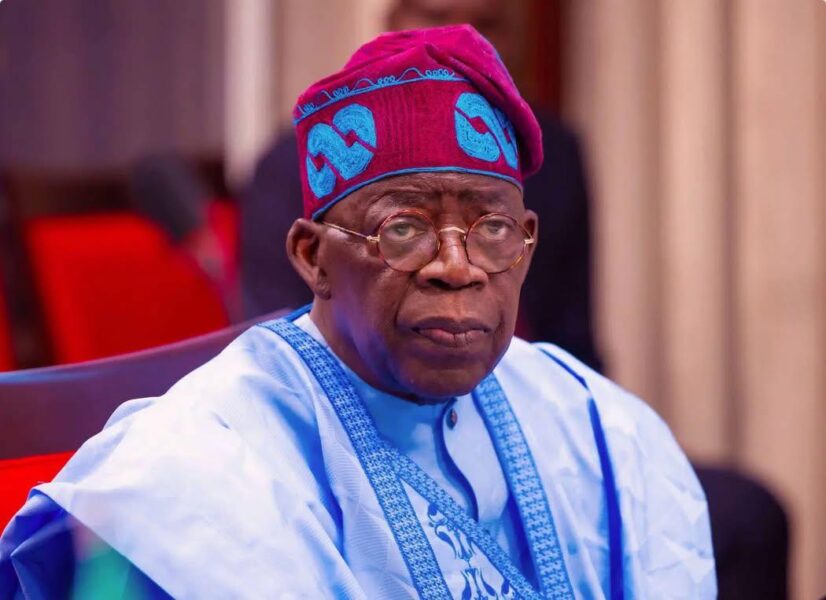
By declining to sign the Central Gaming Bill, President Tinubu confirms that lotteries, betting and online gaming remain under state regulation, providing certainty for operators.
Nigeria.- Nigeria’s gambling sector gained clarity after President Bola Ahmed Tinubu refused to sign the highly contested Central Gaming Bill, reaffirming that lotteries, betting and online gaming remain under state control. The decision ends months of uncertainty over federal regulation and gives operators confidence to plan expansion, digital growth and investments in 2026.
The Central Gaming Bill, passed by the Senate in December 2025, aimed to establish a federal framework for all online and remote gaming and to repeal the National Lottery Act of 2005 and its 2017 amendment.
The legislation was highly contested in parliament, with some lawmakers pushing for federal oversight, but state regulators and legal experts warned it conflicted with a 2024 Supreme Court ruling confirming that gaming falls under state legislative authority, except for federal matters such as cross-border operations. The bill then awaited President Tinubu’s assent.
Tinubu made his stance clear at an All Progressives Congress (APC) National Executive Committee meeting in Abuja. “What I want you to forget is a centralised lotto; go and read the constitution again. That remains a residual matter where my exclusive legislative capacity as the president starts and ends; such residual matters belong exclusively to the state,” he said, according to AffPapa.
Tinubu added: “Don’t tread near it. There’s no need for us to argue. I am a constitutional democrat. Lotteries, lottos, lotto laws, gaming, centralised or whatever it is you call it, I’m not going to sign such a bill into law.”
Decision delivers certainty for operators
The President’s decision was seen by state regulators as a victory, following months of fierce pushback against the proposed federal framework.
The Federation of State Gaming Regulators of Nigeria (FSGRN) described the bill as “an open affront on the supremacy of the Constitution and the authority of the Supreme Court of Nigeria”. Lagos State also warned that it violated the 2024 Supreme Court judgment, with one official calling it a “voyage of unconstitutionality”.
Legal challenges had been led by Lagos State. The Lagos State Attorney-General, through Chief Wole Olanipekun, Senior Advocate of Nigeria (SAN), formally urged President Tinubu not to assent to the bill, pointing out that the legislation “purports to repeal the National Lottery Act, as if same was an existing law that had not been nullified by the judgment of the Supreme Court”.
Analysts note that Tinubu’s refusal effectively ends efforts to federalise gaming regulation and aligns with the Supreme Court ruling. Meanwhile, Lagos State is reportedly exploring further legal action against the National Assembly, seeking permission to initiate contempt proceedings for pursuing the bill despite the court ruling, according to PM News Nigeria.
For operators, Tinubu’s decision provides regulatory certainty, making it clear that licensing, compliance and expansion must be coordinated with state regulators. Businesses can now plan investments, digital operations and local partnerships under a stable legal framework for 2026.