

New talent funding signal major leap for Nigerian gaming market


As these investments take root, Nigeria’s gaming ecosystem is shifting from consumption to creation.
Nigeria.- Nigeria’s gaming industry is quietly becoming one of the country’s brightest growth stories, and at the centre of this rise is a renewed focus on talent development. With millions of young players entering the digital space each year, the real challenge is no longer audience demand but cultivating the developers, designers and producers who can build world‑class games from Nigeria to the world. Talent development has become the top priority in this regard.
Nigeria has the audience and the smartphones, but local studios still struggle to compete globally without skilled developers, artists, designers and producers. Without a steady pipeline of trained professionals, most revenue continues to flow to foreign publishers. Building that home‑grown talent pool is now seen as the only way to capture more value, create sustainable jobs and turn African stories into games that sell worldwide.
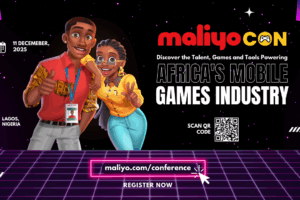
A coordinated set of measures has emerged in 2025 to close the skills gap. The Federal Ministry of Art, Culture, Tourism and the Creative Economy opened Phase 2 of the Creative Economy Development Fund in August, providing up to $100,000 (€92,000) in grants, loans and equity to studios, with a follow‑on iDICE creative fund planned for 2026. Private programmes include Gamathon’s $30,000 (€27,600) developer fund and $42,000 (€38,600) Ark Pitch awards in October. Maliyo Games, which has already trained more than 6,000 developers through its free GameUp Africa initiative, hosted MaliyoCON on December 11 in Lagos with ministry support.
Lagos State Governor Babajide Sanwo‑Olu noted at the Africa Gaming Expo that Lagos is designing strategies to make gaming a huge revenue earner and model for economic regeneration. Practical tools are also arriving: Xsolla added Paga wallet integration for local payments, and the 2025 Africa Games Industry Report, produced by Maliyo Games and KPMG Nigeria, now guides investors and policymakers.
Meanwhile, sports‑betting operators are playing a major role in talent pipelines outside digital gaming. BetPawa committed ₦494m (€290,000) to title‑sponsor the Nigeria National League and pays weekly Locker Room Bonuses to players. BetKing funded the Ifako‑Ijaiye Sports Complex in Lagos and expanded Ikorodu City FC’s academy to 150 youths. Bet9ja backs professional boxing and the Super Eagles, 1xBet’s 1xCup reached more than 5,000 grassroots players, and MSport secured African partnerships with Chelsea and Borussia Dortmund. The betting sector now finances more than 70 per cent of league operations continent‑wide, according to PwC.
The impact is already measurable: thousands of new jobs in coding, game art and coaching; studios exporting titles instead of just importing them; youth academies keeping promising athletes in the country; and a growing sense among developers and players that professional careers at home are realistic.
As these investments take root, Nigeria’s gaming ecosystem is shifting from consumption to creation. Developers are prototyping African‑rooted titles for export, esports facilities like the Nigerian Air Force VR arcade are honing competitive talent, and youth programmes are retaining promise at home, all while generating thousands of jobs in tech, art and coaching.
With the sector poised to surpass $1.3 bn continent‑wide by 2028, 2026 promises deeper partnerships and infrastructure, cementing Nigeria not just as Africa’s gaming giant, but a global exporter of digital innovation and sporting excellence.