

Namibia gambling reform talks unveil proposed monitoring and maintenance fees for operators
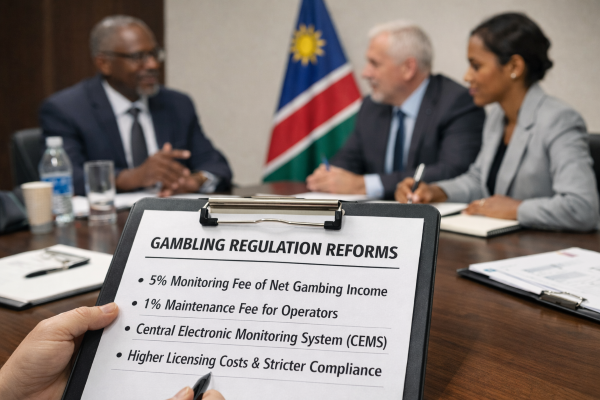
Draft regulations discussed during nationwide consultations also outline higher licence costs and stricter compliance checks as authorities move to tighten oversight of the sector.
Namibia.- Namibia’s ongoing consultations on gambling regulation reforms have revealed plans to introduce a 5 per cent monitoring fee on net monthly gambling income and a 1 per cent maintenance fee for operators, as authorities move to tighten oversight of the country’s rapidly growing gaming industry.
The proposed charges would apply to operators connected to a planned Central Electronic Monitoring System (CEMS) and form part of wider reforms that could also introduce higher licensing costs and stricter compliance requirements across the sector.
The proposals also outline a revised licensing structure that could significantly increase the cost of operating in the market, including an N$80,000 (€4,100) casino licence application fee, a N$15,000 (€770) gambling house licence application fee and an N$100,000 (€5,100) annual casino licence fee.
The regulatory overhaul comes as Namibia’s gambling sector continues to expand, generating around N$948m (€48.38m) in revenue in 2025, prompting authorities to strengthen oversight and modernise the country’s regulatory framework.
The developments emerge as Namibia gathers feedback on amendments to its gambling regulations through nationwide consultations launched by the Ministry of Environment, Forestry and Tourism, taking place from March 24 to April 9 across all 14 regions of the country.
A ministry statement said the review was necessary as the gambling sector continues to grow rapidly. “The gambling sector is expanding rapidly, prompting calls for regulatory reforms to balance innovation, growth and responsible gambling.”
Enhanced regulatory controls
Central to the reforms is the proposed CEMS, which would allow regulators to monitor gambling activity across licensed operators in real time. Authorities say the system would strengthen oversight of gambling operations while improving the ability to detect irregularities or unlicensed activity.
The draft reforms also introduce stricter licensing and compliance requirements for operators seeking approval to run gambling businesses.
Applicants may be required to submit detailed floor plans of gambling premises, including the dimensions of gaming areas, the location of machines and designated spaces where alcohol is served. Operators could also be required to provide tax compliance certificates, certificates of fitness for premises and additional documentation relating to business ownership and management.
Enhanced due diligence measures are also under consideration, including the submission of police conduct certificates and fingerprint records for background investigations, as regulators move to tighten vetting procedures for industry participants.
The proposals also address technical standards for gaming equipment. Testing agents responsible for verifying gaming systems may need to demonstrate accreditation with the Accreditation Board of Namibia, ensuring that gambling equipment meets recognised technical standards before being deployed.
Authorities will review feedback gathered during the consultation process before finalising amendments to Namibia’s gambling regulatory framework, which are intended to strengthen consumer protection, improve compliance and address the rapid expansion of the country’s gaming sector.