


5 Leaders – 1 Question: What can the rest of Africa learn from Nigeria, Kenya and South Africa?

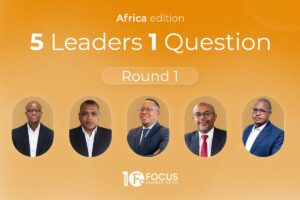
As Nigeria, Kenya and South Africa account for 70 per cent of Africa’s gaming revenue, four industry leaders outline what other markets can learn from their regulatory successes and failures.
Special report.- As Nigeria, Kenya and South Africa account for 70 per cent of Africa’s gaming revenue, their regulatory trajectories are increasingly seen as reference points for the rest of the continent. Yet while these three markets have achieved scale, their successes and failures also raise broader questions about sustainability, institutional design, enforcement and long-term market development.
In light of this situation, Focus Gaming News brought together four leading figures from Africa’s gaming industry for a new edition of “5 Leaders – 1 Question” and asked them the following: As Nigeria, Kenya and South Africa drive 70 per cent of Africa’s gaming revenue, what can other countries learn from their regulatory successes and failures?
The participants are Musa Mngadi, CEO of the African Lotteries and Gaming Association (ALGA); Robin Bennett, head of compliance at the Western Cape Gambling and Racing Board (WCGRB); Peter Emolemo Kesitilwe, CEO of the African iGaming Alliance; John Mutua, chief executive officer at the Association of Gaming Operators Kenya (AGOK); and Brian Ondieki, Managing Partner at Octa88 iGaming Advisory.
Growth is not success on its own
For Musa Mngadi, CEO of the ALGA, the starting point is to avoid judging regulatory performance by revenue figures alone.
He argues that the gambling sector involves a “huge and complex ecosystem of stakeholders” who are affected both directly and indirectly. In that context, “regulatory success is relative and one cannot look at an indicator like the gross gambling revenue (GGR) in isolation as a metric for success”.
Mngadi says that while the double-digit growth seen in these jurisdictions is encouraging, and helps explain why they represent 70 per cent of Africa’s gaming revenue, ALGA and its stakeholders are also concerned that this growth may be unsustainable. His point is that other African countries should be careful not to mistake rapid expansion for long-term regulatory health.
Clarity, consistency and enforcement
Robin Bennett, head of compliance at the WCGRB, believes other regulators should focus less on severity and more on effectiveness.
In his view, the key lesson from South Africa, Kenya and Nigeria is that regulation works best when it is built on “clarity, certainty and consistency”. Strong frameworks, he says, must be matched by practical implementation, with regulators actively engaging licence holders in a balanced and sustainable way.
Bennett also stresses that stakeholder engagement is critical. Operators need to understand what is expected of them, trust that sanctions will apply when rules are broken, and believe that those rules will be enforced consistently. He adds that responsible gambling measures must be mandatory and enforceable, while visible action against illegal operators is “non-negotiable”.
In the digital era, Bennett argues, “regulators cannot be effective without leveraging technology at a level comparable to operators, alongside strong collaboration with other enforcement stakeholders such as payment providers and financial intelligence units. Crucially, decisive and visible enforcement against illegal operators is non-negotiable—without it, even the strongest regulatory frameworks are undermined, and the integrity of the entire industry is put at risk.”
Balance, adaptability and cooperation
For Peter Emolemo Kesitilwe, CEO of the African iGaming Alliance, the main lessons can be reduced to three principles: balance, adaptability and collaboration.
First, he warns that over-taxation and layered tax structures tend to drive players offshore, whereas stable and proportionate frameworks improve channelisation. Second, he argues that regulation must be adaptive, because technology, payments and online behaviour evolve faster than legislation.
Third, Kesitilwe says that the most effective systems are those in which regulators, tax authorities and industry stakeholders work together instead of operating in silos. In his words, sustainable growth depends on “getting the fundamentals right: clarity, consistency, and cooperation”.
Build institutions before the market outruns them
John Mutua, chief executive officer at the AGOK, takes a country-by-country approach and identifies a distinct lesson in each of the three leading jurisdictions.
He argues that South Africa’s main failure is “structural lag”, because its provincial licensing model “was built for casinos and fixed-location bookmakers, and online betting has spent years operating around a framework never designed for it. The law didn’t anticipate the product, and that gap is now its hardest enforcement problem.”
By contrast, Mutua sees Nigeria’s success in sequencing. In his view, the country allowed the market to scale first and then built the NLRC around existing market realities, instead of imposing a framework that operators would simply work around. At the same time, he says: “The risk now is consolidation — folding 36 fragmented state regimes into one coherent national structure without losing the operators who came in good faith.”
For Kenya, Mutua argues that the long-standing problem was years of fragmented oversight: “GRA, KFCB, FRC, KRA, and the Communications Authority, each holding a piece of the puzzle with no single owner accountable for the whole. Licensing decisions, advertising standards, and content rules all sat in different hands, which meant nobody was actually in control. The Gambling Control Act 2025 is the correction — one regulator, one set of rules, one point of accountability,” he says.
For other African jurisdictions, Mutua’s conclusion is direct: “The lesson for everyone else isn’t which laws to copy. It’s this: build the institution before the market outgrows it, not after.”
Regulation should enable growth
For Brian Ondieki, managing partner at Octa88 iGaming Advisory, the main lesson is that regulation should support growth rather than hold it back.
He argues that Nigeria, Kenya and South Africa may account for nearly 70 per cent of Africa’s gaming revenue, but their real contribution lies in the regulatory lessons they offer to the rest of the continent. In his view, investors and operators perform best where licensing is transparent, compliance requirements are clear and policy changes are predictable.
Ondieki says that South Africa has benefited from regulatory stability, while Kenya’s evolving tax landscape and Nigeria’s multi-layered regulatory framework show how uncertainty can affect investment and long-term planning. He also notes that maximising tax rates does not always maximise tax revenue, since excessive taxation and inconsistent policies can push activity into the unregulated sector, reducing both player protection and government revenues.
He says: “Emerging African markets also have an opportunity to leapfrog traditional regulatory models by embracing technology. Digital licensing, real-time reporting, strong AML controls, and responsible gaming measures can strengthen oversight without slowing innovation.
“Ultimately, successful regulation is built on collaboration. Governments, regulators, operators, payment providers, and technology partners must work together to create frameworks that are transparent, adaptable, and investment-friendly. The countries that achieve this balance will be best positioned to lead the next phase of Africa’s gaming industry growth.”
By Focus Gaming News Editorial Team