

FSGRN sets new rules for Nigerian gaming operators

Changes mark one of the most significant regulatory shifts for Nigeria’s gaming sector in years. It builds on earlier steps by the FSGRN to standardise gaming regulations across all states of the country.
Nigeria.- The Federation of State Gaming Regulators of Nigeria (FSGRN) has unveiled comprehensive new tax and licensing rules that will reshape the gaming sector, effective January 2026. The changes follow a Supreme Court ruling in November 2024, which held that the regulation of lotteries and gaming falls exclusively under the authority of state governments, except in the Federal Capital Territory.
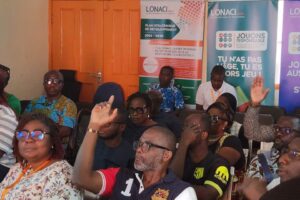
At a recent gathering in Lagos, gaming operators, including members of the Association of Nigerian Bookmakers (ANB), casino operators and lottery licence holders, were informed of several key reforms. Under the new rules, all gaming operators will pay a flat 11 per cent tax on Gross Gaming Revenue (GGR) designated for good causes—this will apply across all categories (lottery, sports betting, casino) from January 1, 2026.
Also effective from that date, licences will cost ₦100 million (€56,635) per year for each category of operator (lottery, sports betting, casinos). There will no longer be separate fees or rules for retail vs online operations—they will be treated the same.
States will now receive most payments and taxes directly. The FSGRN secretariat will collect what is called the “Universal Reciprocity Licence” (URL) fee, but every other tax or payment will go to the state where the gaming activity happens. To make this work, operators must implement geo‐fencing, geo‐tracking or collect location data during customer onboarding so payments are properly mapped and remitted each month.
All operators are expected to settle outstanding tax payments from November 2024, after the Supreme Court judgment, to the FSGRN. Until the new 11 per cent GGR tax begins in 2026, these arrears will be charged at the rate formerly used by the defunct National Lottery Regulatory Commission.
A point of contention is the withholding tax on winnings, but since this falls under the State Internal Revenue Service control, operators were advised to consult with their respective state offices.
Speaking at the meeting, Bashir Are, Chief Executive Officer of Lagos State Lotteries and Gaming Authority and chair of the FSGRN, said that though some operators raised concerns over high platform costs and difficult operating conditions, the 11 per cent rate is still lower than the European average of 19 per cent.
Operators asked for reconsideration of the tax, citing the costs associated with running their businesses. FSGRN leadership agreed to consider adjustments and promised to respond via its secretariat within seven days. Separately, they committed to issuing a payment plan by Friday, September 12, 2025, for the backlog of taxes owed from November 2024.
This set of reforms builds on earlier steps by the FSGRN to standardise gaming regulations across all states of the country. In May 2025, the member states of the association signed the Subnational Reciprocity Licensing Framework, agreeing to a unified licensing system that enables operators to obtain a single licence valid across all participating jurisdictions. As it stands, 22 states are members of FSGRN, but the leaders say they are pushing for more states to join.
These changes mark one of the most significant regulatory shifts for Nigeria’s gaming sector in years. Operators, state governments and consumers will be watching closely as implementation begins.