

DRC orders gambling operators to regularise licences by March 31 as government focuses on $1.6bn sector
Finance Ministry directive targets unlicensed operators as authorities seek to increase tax revenue and strengthen oversight of the gambling sector.
DRC.- The government of the Democratic Republic of the Congo (DRC) has ordered gambling operators to regularise their licences by March 31, as authorities move to formalise the country’s rapidly expanding betting sector, where activity exceeded $1.6bn in the last fiscal year.
In an official notice dated March 5, the Ministry of Finance instructed companies operating sports betting, lotteries, casinos and prediction games to bring their activities into compliance by registering with the Directorate of Financial Regulation or provincial finance divisions to obtain an official operating permit, with unlicensed operators required to register to secure authorisation.
Operators that fail to comply risk sanctions under existing legislation, including fines, tax adjustments, suspension of activities or forced closure, as well as potential criminal prosecution for unauthorised commercial activity or tax fraud.
The Ministry also reminded operators of their obligations to pay the operating licence tax and ad valorem tax on player winnings, taxes now collected directly by the Ministry of Finance under Article 46 of the 10 December 2023 Finance Law for the 2024 fiscal year.
The move comes as authorities seek to improve revenue collection from a rapidly expanding but largely informal gambling market.
Low tax contribution
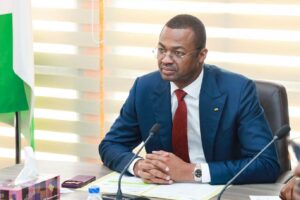
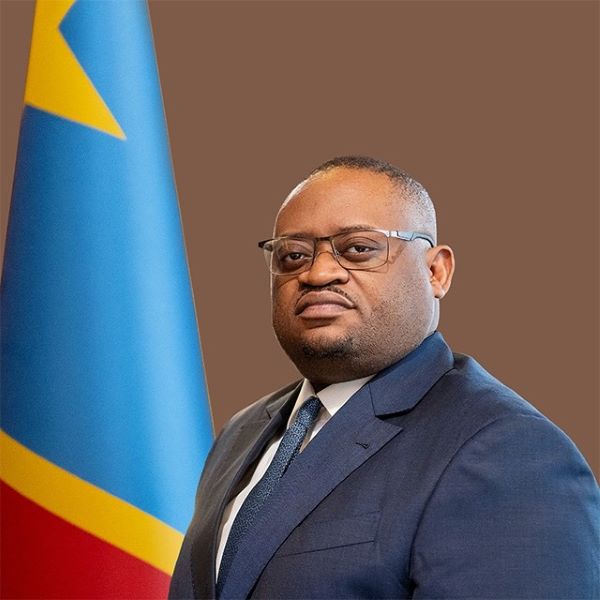
Finance Minister Doudou Fwamba said the sector’s contribution to state revenues remains limited despite the scale of activity. “The sector’s contribution to the public treasury remains relatively low,” said Fwamba, according to Ecofin Agency.
Government estimates show gambling activity in the country exceeded $1.6bn in the last fiscal year. The situation is partly attributed to the large number of unregulated operators, according to government.
In 2022, authorities identified 139 illegal operators, according to figures previously presented during a cabinet meeting by former Finance Minister Nicolas Kazadi. Despite the scale of activity, tax receipts from the sector in 2023 reached only CDF1bn ($400 000), far below its potential contribution to public finances.
Fwamba also acknowledged structural challenges in regulating the sector, saying the current framework remains outdated. “The sector already has a regulatory framework, but it is insufficiently modernised and inadequately digitised,” added Fwamba.
A government diagnostic also identified a fragmented and poorly coordinated regulatory framework and weak oversight, conditions that authorities say can facilitate money laundering and other illicit financial activities.
Officials are now preparing reforms aimed at tightening regulation and digitising oversight of the gambling industry, as part of efforts to formalise the sector and increase its contribution to the national treasury.