


5 Leaders, 1 Question: Should African regulators embrace crypto and informal payments, or treat them as a compliance risk?
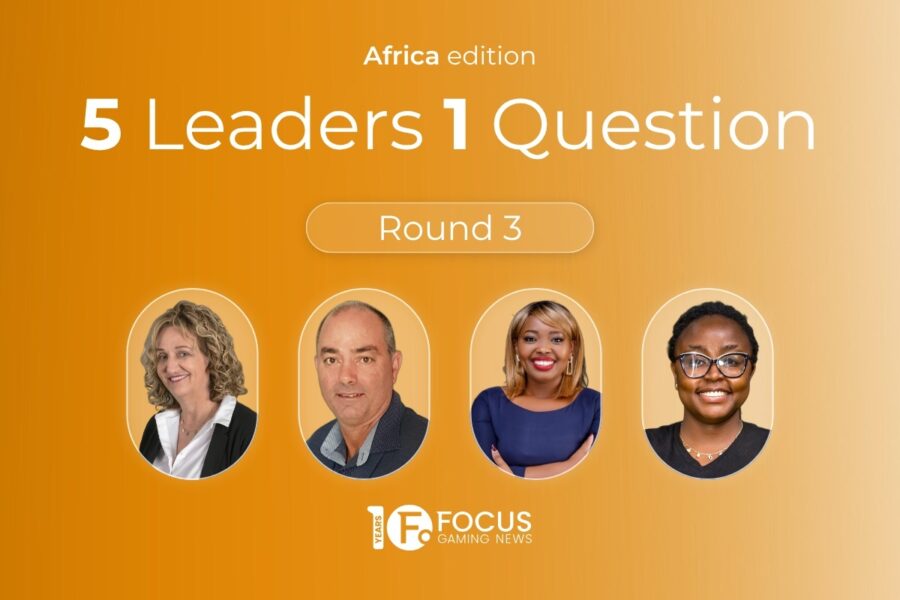

In the latest 5 Leaders, 1 Question, experts from ENSafrica, SABA, NJOGU and Associates Advocates and Kotani Pay argue for risk-based supervision of these channels rather than prohibition.
Key takeaways:
- Angela Itzikowitz, professor and director in ENSafrica’s Banking and Finance department, called for proportionate, risk-based regulation, saying financial inclusion cannot come at the expense of financial integrity.
- Sean Coleman, CEO of the South African Bookmakers Association, cited SABA research showing illegal platforms accounted for about 62 per cent of South Africa’s online gambling market as of November 2024.
- Coleman argued for “same risk, same regulation”, with any payment method used for gambling offering equivalent transparency, traceability, KYC and AML safeguards.
- Muthoni Njogu, managing partner at NJOGU and Associates Advocates, said “reach is not inclusion” and that the reason to regulate these channels is visibility.
- Lucy Manzi, E.A Forex Lead at Kotani Pay, said KYC, transaction monitoring and source-of-funds checks should apply at the on- and off-ramps where stablecoins are converted into local currency.
African regulators should supervise cryptocurrency and informal payment channels used for gaming rather than ban them, according to four industry leaders in the latest edition of 5 Leaders, 1 Question by Focus Gaming News. While they differ on whether these channels genuinely support financial inclusion, the participants agree that risk-based controls such as KYC and transaction monitoring offer more visibility than prohibition, which could push players towards illegal offshore platforms.
Special report.- Across parts of Africa, digital assets and alternative payment channels are increasingly used to fund gaming activity, particularly where traditional banking infrastructure is limited or expensive. That has created a policy dilemma: should these channels be embraced as tools for financial inclusion, or treated as a compliance risk?
In light of this debate, Focus Gaming News brought together four leading figures from Africa’s gaming and financial sectors for a new edition of “5 Leaders – 1 Question” and asked them the following: Cryptocurrency and informal payment systems are increasingly used for gaming across Africa. Should regulators embrace them as tools for financial inclusion or treat them as a compliance risk?
The participants are Angela Itzikowitz, professor and director in ENSafrica’s Banking and Finance department; Sean Coleman, CEO of the South African Bookmakers Association (SABA); Muthoni Njogu, managing partner at NJOGU and Associates Advocates; and Lucy Manzi, E.A Forex Lead at Kotani Pay.
Inclusion and integrity are not opposites
Angela Itzikowitz, professor and director in ENSafrica’s Banking and Finance department, argues that the issue should not be approached as a choice between financial inclusion and compliance.
She says that, in many African markets, “cryptocurrency and informal payment systems have developed precisely because traditional financial infrastructure does not always meet the needs of the people it is intended to serve. That potential for greater financial inclusion should not be dismissed.”
At the same time, she warns that, in the gaming environment, the associated risks of money laundering, illicit financial flows, consumer harm and regulatory arbitrage cannot be overlooked.
For Itzikowitz, the appropriate regulatory response is therefore “neither unconditional acceptance nor outright prohibition. It is proportionate, risk-based regulation.
She says: “The more useful question for regulators is not whether a payment method is traditional or digital, formal or informal, but whether the risks arising from its use can be properly identified, monitored and controlled. Where alternative payment systems can operate within appropriate customer identification, transaction monitoring, reporting and governance frameworks, innovation and effective regulation need not be competing objectives.”
Itzikowitz also cautions against rules that “inadvertently exclude the very people financial innovation can benefit.” But she is clear that “financial inclusion cannot come at the expense of financial integrity. The challenge for regulators is to achieve both.”
Same risk, same regulation
Sean Coleman, CEO of the South African Bookmakers Association, supports innovation, but says it must not come at the cost of regulatory integrity.
In his view, cryptocurrency and alternative payment systems “can contribute to financial inclusion where they operate within a properly regulated framework”. However, he argues that they should not become a mechanism through which illegal gambling operators circumvent licensing, KYC, AML or banking controls.
“This distinction is particularly important in South Africa. The FIC Act already brings crypto-asset service providers within the AML/CFT framework, with customer due diligence and Travel Rule obligations, while the implementation of the Crypto-Asset Reporting Framework is further increasing transparency around crypto transactions,” he says.
His central concern is the illegal offshore market. Citing SABA research, he says illegal platforms account for about 62 per cent of South Africa’s online gambling market as of November 2024, and argues that crypto can make it easier for such operators to reach consumers while avoiding traditional banking controls.
For Coleman, the answer is not prohibition, but “same risk, same regulation”: any payment mechanism used to facilitate gambling should offer equivalent transparency, traceability, KYC and AML safeguards. “Financial innovation should widen legitimate access—not create a parallel financial system for illegal gambling,” he says.
Reach is not inclusion
Muthoni Njogu, managing partner at NJOGU and Associates Advocates, takes a more sceptical view of the financial inclusion argument.
She acknowledges that betting vouchers, e-wallets and crypto bring the unbanked into the digital economy. But she argues that “reach is not inclusion”, which she defines as the ability to save, borrow, insure and absorb a financial shock.
In her view, a voucher bought with cash to fund a stake does none of that. She says: “A wager is entertainment spending, not a financial service. South Africa shows the result: wide payment access alongside mounting concern over household losses. So the reason to regulate these channels is not inclusion. It is visibility. The players are already there. A ban sends them to offshore platforms with no identity checks, no self-exclusion and no recourse, and the tax base follows.”
Her preferred approach is to supervise rather than prohibit. She says: “Africa knows how this is done. Mobile money began outside the rulebook and regulators chose to supervise rather than prohibit it. Do the same here: license the payment activity, make gaming and financial regulators supervise jointly, and protect player funds as customer money.
“Supervise it as a risk. If inclusion follows, let the evidence show it.”
Regulate the edges, not the rails
Lucy Manzi, E.A Forex Lead at Kotani Pay, describes the debate as a false choice.
She argues that, across Kenya, Nigeria and Ghana, gamers already use stablecoins and mobile money to buy in-game items, enter tournaments, and get paid. In her view, this is largely because international card rails often decline African transactions or make them too expensive.
Manzi warns that banning the activity would not stop it, but would push it into peer-to-peer channels where regulators have less visibility. Her focus is on the on- and off-ramp, the point at which stablecoins are converted into local currency and vice versa. “KYC, transaction monitoring, and source-of-funds checks belong at that boundary. That is also where licensed providers can give regulators visibility that informal channels never will,” she says.
She also calls for tiered, proportionate KYC, so that a casual player buying a skin isn’t treated like a corporate treasury, while large or unusually fast flows get enhanced scrutiny.
Manzi also draws a distinction between gaming payments and gambling, “because they carry different consumer-protection risks. And bring licensed VASPs into sandboxes with central banks instead of leaving the space to unregulated operators.”
Disclaimer: A fifth contribution may be added as this discussion continues.
Frequently asked questions (FAQs)
- Are crypto-asset providers regulated in South Africa? Yes. According to Coleman, South Africa’s FIC Act brings crypto-asset service providers within the AML/CFT framework, with customer due diligence and Travel Rule obligations. The implementation of the Crypto-Asset Reporting Framework is further increasing transparency around crypto transactions.
- Why do gamers in Africa use crypto and mobile money? Manzi said gamers in Kenya, Nigeria and Ghana use stablecoins and mobile money largely because international card rails often decline African transactions or make them too expensive. Itzikowitz added that these systems developed because traditional financial infrastructure does not always meet people’s needs.
- What is tiered KYC for gaming payments? Tiered KYC applies checks in proportion to risk, so a casual player buying a skin is not treated like a corporate treasury, while large or unusually fast flows receive enhanced scrutiny. Manzi also called for licensed VASPs to join central bank sandboxes.
- How could African regulators supervise informal gaming payments? Njogu pointed to mobile money, which began outside the rulebook before regulators chose to supervise it. She proposes licensing the payment activity, having gaming and financial regulators supervise jointly, and protecting player funds as customer money.