

GRAF 2026: African gambling laws are lagging behind AI


Werksmans Attorneys’ Wendy Rosenberg told regulators in Maputo that South Africa still has no AI-specific law, and pointed to the EU, UK and Malta for possible models.
Key takeaways:
- Wendy Rosenberg of Werksmans Attorneys told the 17th GRAF Annual Conference in Maputo on September 15 that AI is creating new regulatory challenges for African gambling authorities.
- AI is already used in gambling for player personalisation, fraud detection, marketing, product development, responsible gambling and regulatory oversight.
- Rosenberg warned that revenue-maximising AI systems could conflict with harm-minimisation goals, and that personalised marketing could intensify harmful gambling.
- South Africa’s gambling legislation was built largely for land-based gambling, and the country has no general AI-specific law.
- Rosenberg said African regulators could develop their own AI approaches rather than wait for existing gambling laws to catch up.
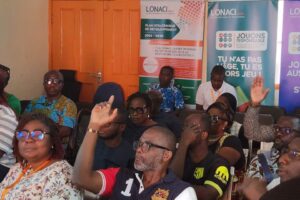
Mozambique.- Artificial intelligence is already embedded in African gambling and betting, but the region’s regulatory frameworks were not designed to deal with it, Werksmans Attorneys’ Wendy Rosenberg told the Gaming Regulators Africa Forum in Maputo. The same tools that help operators detect fraud and spot signs of gambling harm can also drive more aggressive personalised marketing. Because AI use often crosses borders, no single jurisdiction can close that gap on its own.
She said AI was no longer a future issue for gambling regulators, pointing to its use in player personalisation, fraud detection, marketing, product development, responsible gambling and regulatory oversight. The technology can also process live information, such as player injuries and weather conditions, alongside historical data, allowing operators to offer more betting markets and odds.
Rosenberg outlined its use in responsible gambling, noting that online operators can analyse data on bets, deposits, withdrawals, wins and losses to identify behavioural patterns associated with gambling harm.
However, she warned that AI could also increase gambling-related risks. Systems designed to maximise revenue could conflict with harm-minimisation objectives, while personalised marketing and recommendations could intensify harmful gambling behaviour. She also identified bias and inaccurate outputs as risks, noting that AI systems can reproduce biases in their training data, generate incorrect information and become less accurate as the data and conditions on which they operate change.
Rosenberg said the regulatory gap was particularly relevant in South Africa, where gambling legislation was developed largely for a land-based gambling environment. The country has laws covering data protection, consumer protection, competition and cybercrime, but does not yet have general AI-specific legislation. She added that AI presents a cross-border regulatory challenge because its use can extend beyond individual gambling jurisdictions.
Rosenberg pointed to the EU, UK and Malta as jurisdictions developing responses to AI. The EU AI Act uses a risk-based framework, while the UK has adopted principles covering safety, transparency, fairness, accountability and contestability. In Malta, the Malta Gaming Authority has developed an AI Gaming Charter covering the ethical and responsible use of AI in gaming.
She said African regulators could develop their own approaches to AI rather than wait for existing gambling laws to address the technology. Rosenberg concluded that the key issue for regulators is how AI is developed, deployed, used and regulated within gambling.