


Tech Race: Why AI makes systems matter more than software, according to SOFTSWISS
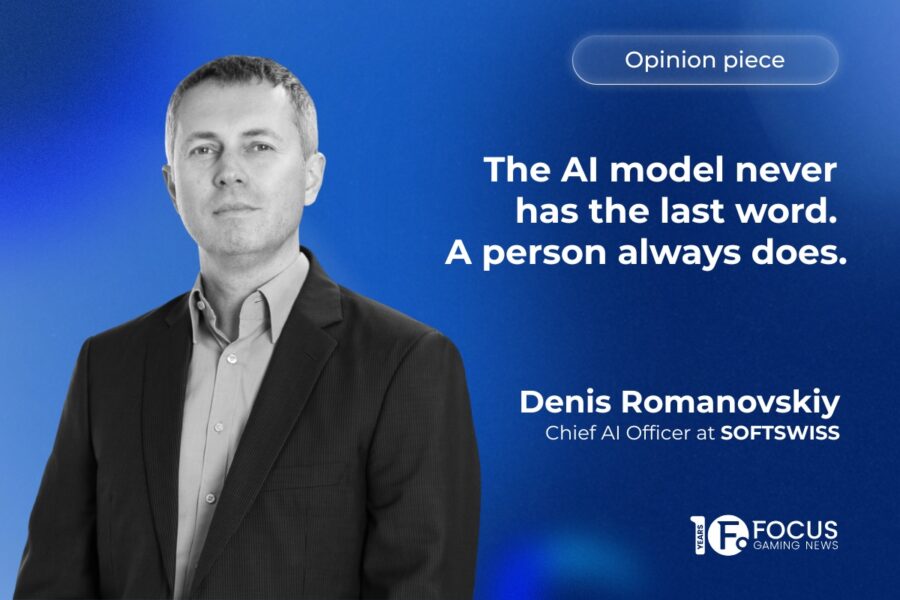
Ahead of the Tech Race Summit 2026, Denis Romanovskiy, Chief AI Officer at SOFTSWISS, outlines how genuine AI transformation requires systematic architectural redesign and strict operational accountability rather than simple tool deployment.
Opinion.- Most companies say they are ‘implementing AI’. What they usually mean is that some engineers have Copilot, the marketing and HR team use a chatbot, and someone in the C-suite has a slide about transformation. But that is tool deployment, not transformation. The difference shows up in the results.
Ahead of Tech Race Summit 2026, where 30+ speakers will explore how technology is changing industries and the way people work, Denis Romanovskiy, chief AI officer at SOFTSWISS, shares lessons from leading AI transformation inside a company of 2,000 people in one of the world’s most regulated sectors.
Below are the five things Romanovskiy says matter.
1. Misunderstanding AI creates operational risks
“Strong, large language models have only been widely available for a couple of years. Do we truly understand how to work with them? How to govern their use? How to build quality control systems around them? No, we don’t. We are all learning.”
Many companies start their AI journey the same way. Individual teams find useful tools and begin experimenting: developers use coding assistants, support teams test automated responses, marketing teams use LLMs to brainstorm creative campaign ideas and generate content.
The problem appears later. As different teams start using different tools, security standards begin to vary, and valuable knowledge gets scattered. The real-world drawback of AI adoption is the lack of a system around the technology.
In igaming, where AI increasingly supports player data management, compliance checks, financial operations, and fraud detection, inconsistent usage creates risks that go far beyond productivity losses.
Proper AI integration starts with literacy. It means teaching every person in the company what AI can do, where it breaks, and why their responsibility for outcomes does not disappear when a model automates the workflow.
2. AI Infrastructure matters more than the model
“A centralised architecture allows us to implement a ‘build once, use everywhere’ principle.”
Most conversations about AI focus on models. The bigger challenge is everything around them.
Chat assistants and code completion tools are where most people first encounter AI at work. They are useful but they work at the level of individual tasks, delivering roughly 20–30 per cent efficiency gains per person. AI embedded into planning, verification, and decision-making works at an entirely different level, accelerating processes by three to five times.
The two require different approaches: the first is a rollout, the second is a redesign. Companies that treat AI like another software deployment tend to underinvest in change management and overestimate how quickly people adapt.
As AI adoption grows, companies quickly discover that dozens of disconnected tools create new problems. Costs grow and become harder to track, while security risks increase. For igaming companies operating across multiple jurisdictions, every AI-powered process must also meet security and compliance requirements.
That is why moving towards centralised AI platforms matters. It results in a secure environment and shared standards, making AI adoption actually scalable.
3. AI rewards better questions, not faster answers
“With AI, execution can happen in minutes or hours. You can try something quickly, roll back, try something else, and iterate multiple times.”
In traditional workflows, testing a new idea could take weeks. AI shortens this cycle – ideas can be tested quickly and results are delivered faster. At first glance, this sounds like a pure upside. But it also removes the constraint that previously forced teams to think thoroughly before building anything.
Speed only pays off when teams know exactly what they are testing and why. As execution becomes cheaper, the bottleneck shifts to identifying the right problem and evaluating the outcome. The real value of AI is not automation itself but faster learning. The competitive advantage belongs to igaming teams that ask better questions and verify results better than everyone else.
4. AI changes jobs more than replaces them
“Developers will definitely write less code. They will think more about how to write better instructions for AI agents.”
One of the biggest misconceptions about AI is that it’s replacing humans. In reality, it’s more about redistributing duties and responsibilities.
Developers are spending less time on routine coding and more time defining requirements, establishing constraints, and validating AI-generated results. Experiments with automated code review already show that 60-80 per cent of this work can be performed by AI tools.
The same pattern extends beyond engineering. Support specialists are moving from repetitive requests to complex cases. Managers are switching from task tracking to outcome evaluation. As AI takes over tasks, human expertise is shifting towards planning, decision-making, and quality control.
5. With AI, personal accountability increases
“AI always works in conjunction with verified corporate knowledge. The final word and responsibility for critical decisions always remain with a human expert.”
AI can generate answers in seconds, but it does not actually “know” whether the answer is correct.
When something goes wrong, it is tempting to blame the model. However, in most cases, responsibility lies with the people who designed the process. Team leaders decide where checks are added, what standards apply, and how results are reviewed. AI changes how work gets done, but it does not remove accountability. Instead, it makes leadership decisions more important.
This is why governance has become a key part of AI implementation. Companies need clear review processes and accountability at every stage. That matters even more in igaming, where mistakes can lead to regulatory sanctions or direct financial losses. Every AI-driven decision must remain transparent and subject to human review.
The AI model never has the last word. A person always does.
Want to go deeper into the opportunities, risks, and practical realities of AI adoption? Join the conversation at Tech Race Summit 2026. Held by SOFTSWISS in Warsaw on September 10, 2026, the event brings together technology leaders to share architecture decisions, real-world case studies, and the frameworks that turn AI integration into measurable business results.
By Focus Gaming News Editorial Team