



RedCore: Technology leadership in regulated, high-load environments
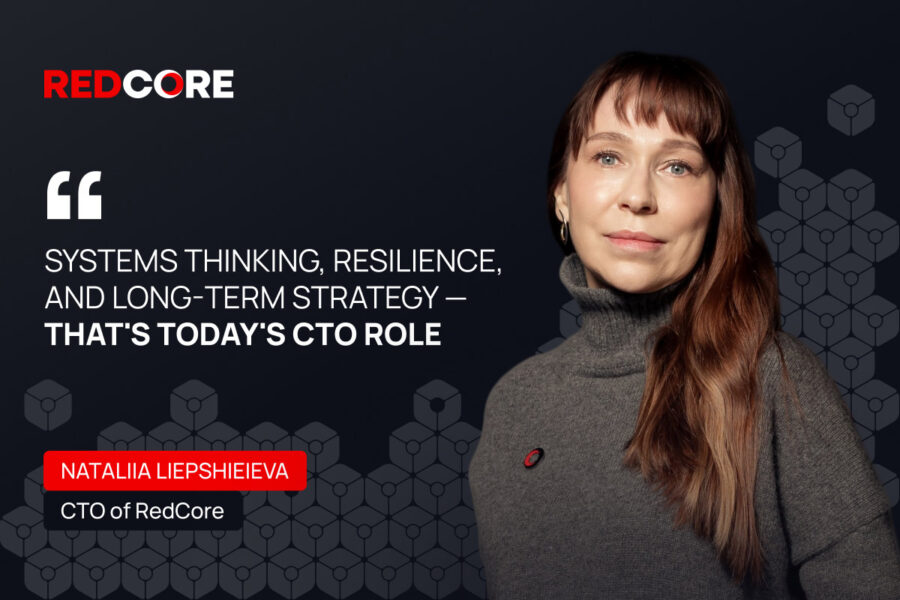

Nataliia Liepshieieva, CTO of RedCore, analyses why today’s CTOs need expertise in architecture, automation, and strategic decision-making.
Opinion.- Here’s what nobody tells you about being a CTO: you can’t avoid crises. You can’t slow down the pace of change. What you can do is build teams that handle challenges calmly, design systems that perform at high speed, and make technological decisions that move the business forward. This is what I focus on when building tech teams at RedCore. Here’s what that looks like in practice.
Platform architect, strategist, or crisis manager? All three
Working with large engineering teams like those at RedCore, it’s clear that the role of a CTO is becoming less hands-on and code-centric, and more about systems thinking, building resilience, and driving long-term strategy.
So what is a CTO, in fact? A platform architect, a technology strategist or a crisis manager? That’s an interesting question. In reality, a CTO has to be all three — and even more.
Let me make it clear: it’s true that the role is no longer about writing and reviewing code yourself. It’s about designing systems that can withstand constant change, high load, regulatory requirements, and market pressure.
In that sense, a CTO must be able to brainstorm even the craziest ideas, perform sanity checks and challenge solutions at the same time. A CTO is a technology strategist who decides what to innovate, where to automate and where not to chase hype. Those decisions directly affect speed, compliance, costs and margins.
And here’s the reality: a CTO inevitably acts as a crisis manager. Incidents and regulatory shifts are part of the operating model. You simply can’t avoid crises, but you can build teams that handle them calmly and recover quickly.
But there’s one part that’s often overlooked: never forget or underestimate people management — it is the hardest and the most rewarding part when you see your team members grow. In short, today’s CTO is less about specific technologies and more about systems thinking, resilience and long-term strategy.
From hype to reality: How AI actually runs the business
AI led the way last year. What’s coming next? Well, I can’t say for sure. But one thing is clear: AI will continue to drive significant change. It was there last year and it will stay with us for a long time.
The conversation has shifted. The focus is no longer on AI as a buzzword, but on its practical application as a business tool. At the moment, RedCore is also exploring tools to automate business processes and reduce manual labour.
We use AI tools to analyse large volumes of information, reduce analysis time and minimise the risk of biased decisions.
By Focus Gaming News Editorial Team