


Plínio Lemos Jorge, ANJL: “Regulating land-based casinos could bring significant gains for Brazil’s economy”
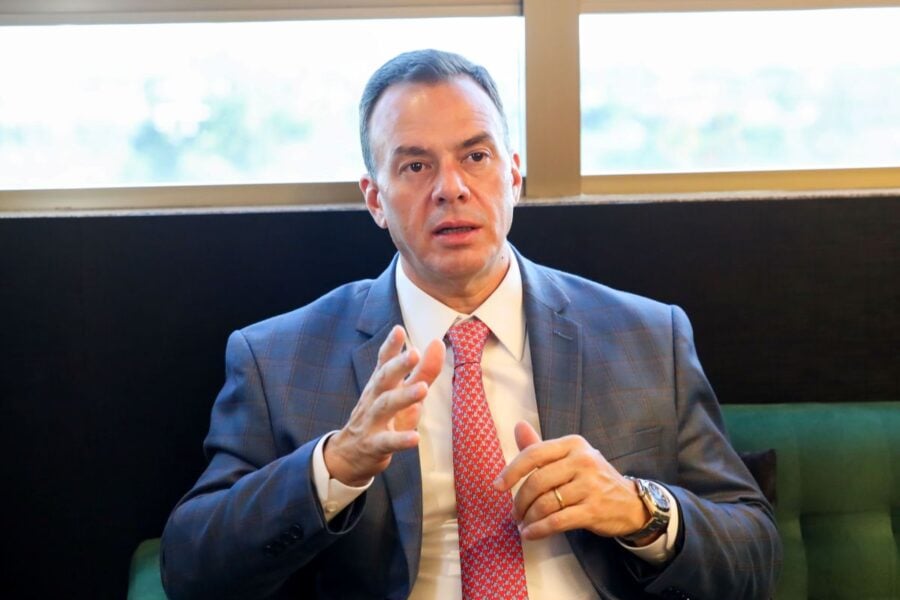

The President of the National Association of Games and Lotteries (ANJL) told Focus Gaming News that the regulation of casinos will boost tourism and generate more revenue for states and municipalities.
Exclusive interview.- In an exclusive interview with Focus Gaming News, Plínio Lemos Jorge, president of the National Association of Games and Lotteries (ANJL), emphasised that regulating the gambling sector would attract investment, create jobs, and establish Brazil as a popular tourist destination with entertainment offerings. He also said that legalisation would allow for greater government control and transparency in revenue collection, as well as enabling the implementation of effective responsible gaming measures.
It is expected that Bill 2.234/2022, which would legalise the gambling sector, will be voted on by the Federal Senate in the following months.
What financial and tourism benefits would legalising gambling bring? Based on the experiences of countries that have legalised physical gambling, how might this bill boost tourism in Brazil?
Legalising the sector could generate significant economic benefits for the country. The main benefit would be the promotion of the national tourism sector, particularly in regions with potential but lacking visibility. By regulating casinos, bingo halls, online games and animal games, the government can expand the range of economic activities and open up space for the development of cities through increased tax collection. Additionally, the country would become part of an international hub for tourists interested in gambling as a form of leisure and entertainment.
“By regulating casinos, bingo halls, online games and animal games, the government can expand the range of economic activities and open up space for the development of cities through increased tax collection.”
Plínio Lemos Jorge, President of the National Association of Games and Lotteries (ANJL).
Considering that these games are already played clandestinely in the country, what would be the benefit of making these activities legal?
Legalisation enables the government to control the activity through specific legislation. This makes operations more transparent, enables effective oversight, and allows society to monitor the allocation of tax revenues, as is already the case in the regulated sports betting market.
Are there signs that the Brazilian population favours this approval?
A survey by DataSenado, an institute that collects and analyses official statistics to support parliamentarians in their work, revealed that 60 per cent of respondents were in favour of regulation when it was conducted between February and March this year. A total of 5,039 Brazilians were interviewed at the time.
The results show that the population would prefer gambling to be legalised rather than remain underground. This is based on the idea that legalisation would lead to more job opportunities and improvements to public facilities, such as hospitals and schools, as well as increasing tax revenue and people’s sense of security.
How does the market view initiatives aimed at preventing gambling-related harm?
Firstly, gambling needs to be legalised. Once this important step has been taken, the process should follow a similar path to that of betting. Investment in an advertising approach based on raising awareness is necessary to reinforce the idea that betting should be seen as a form of entertainment, not an investment.
In the case of regulated betting, compliance is ensured with the advertising and publicity rules set out in Annex X of the Brazilian Advertising Regulation Code, enforced by the non-governmental organisation CONAR (Brazilian Advertising Self-Regulation Council), as well as with the responsible gaming provisions of the ordinance of the Secretariat of Prizes and Bets (SPA), which is an agency of the Ministry of Finance. The same approach should be adopted for other types of games.
Is the country experiencing losses as a result of the delay in legalisation?
Undoubtedly. This delay means a loss of revenue and the postponement of investments that could boost the economy.
What, in your opinion, is holding up the legalisation process? Do you think there is a risk that legalisation will not happen?
I am confident that it will be approved, especially since the government has already recognised the benefits of regulating betting. I think the postponement of the vote is only due to issues on the Senate’s agenda.
By Focus Gaming News Editorial Team