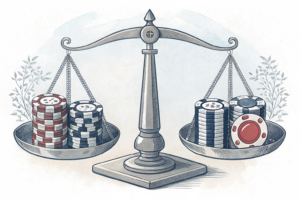


inPlaySoft: What is “return to player” in igaming?


The company has shared details about the importance and implications of RTP for players, game developers and operators.
Opinion.- In the increasingly competitive universe of igaming, understanding the most important metrics is essential for both players, who want to win as much as possible, and game developers and operators, which want to make the best possible platform to attract and retain clients. One of these metrics is a game’s Return to Player (RTP).
RTP is a percentage that indicates the expected return on a player’s total wagers over time. For example, if a slot game has an RTP of 96 per cent, it implies that, theoretically, players can expect to receive back $96 for every $100 wagered in the long run. RTP, however, is a statistical average, and individual outcomes can vary greatly.
As RTP can influence the design and popularity of games, and also play an important role in a players’ decision-making processes, in this article, inPlaySoft explores the intricacies of this metric, including the factors that influence it, its implications for both players and operators, and address some common misconceptions.
Which factors influence a game’s RTP?
RTP is derived from a game’s mathematical model and can be influenced by several factors, such as:
- Game Mechanics: each game has its own rules and payout structures. The frequency of winning combinations, the size of payouts for specific combinations and the overall design of the game are some of the factors that influence its RTP.
- Random Number Generators (RNG): online casinos use RNGs to ensure that game outcomes are random and fair. The RNG’s design plays an important role in establishing how often winning combinations appear, which, in turn, affects the RTP.
- Player Behaviour: betting patterns and player’s choices, such as opting for higher stakes, may yield different results and influence the game’s RTP.
- Mathematical Models: game developers use complex algorithms to calculate a game’s RTP. These models take into account thousands, if not millions, of spins to arrive at an accurate percentage.
Why is RTP important for players?
A game’s RTP is important for players for many reasons, which include:
- Informed Decision Making: if players know the RTPs of different games, they can compare them and choose the ones that offer better odds. A game with a 97 per cent RTP, for example, is generally more favorable than one with a 90 per cent RTP. Players, however, should also consider the type of gameplay they enjoy, as higher RTP games may not always provide the most entertaining experience.
- Understanding Volatility: it is important to discuss RTP alongside game volatility or variance. Games that have a high RTP may also have low volatility, which means that they provide smaller, but more frequent, payouts. Games with low RTP, on the other hand, might feature high volatility, which means they offer larger payouts, but less frequent wins.
- Bankroll Management: RTP can also be useful in effective bankroll management, as players can use this metric to make informed decisions about how much to wager and how long to play. Games with higher RTPs may enable players to enjoy longer gaming sessions while potentially minimising losses.
- Expectation Management: RTP helps players set realistic expectations as to how much they can win in a determined game. It’s important to remember that it provides a theoretical return in the long run, and that actual results can deviate significantly in the short term. Understanding this can help mitigate feelings of frustration during losing streaks.
Implications for game developers and operators
RTP is important not only to players, but also to game developers and igaming operators. This metric can influence on:
- Game design: developers must balance its game’s RTP with a viable business model. Games with an excessively high RTP might not be sustainable for operators, while games with a very low RTP might not attract and retain players. Therefore, they have to aim to create engaging experiences that also maintain profitability.
- Marketing strategies: RTP can be a powerful marketing tool, as games with higher RTPs can be highlighted in promotional materials to attract players seeking better odds.
- Regulatory compliance: many jurisdictions require game developers to disclose RTP figures to maintain transparency and fairness. This compliance not only builds trust with players, but also ensures adherence to gaming regulations.
- Player retention: games with attractive RTPs can enhance player satisfaction and loyalty, as they are more likely to return to games that they perceive as offering better odds and overall value.
Common misconceptions about RTP
As RTP is a complex metric that can be influenced by many factors, there are a number of misconceptions surrounding it. Some of them are:
- RTP Guarantees Wins: just because a game has a high RTP, it does not mean that it guarantees winnings. RTP represents an average calculated over an extensive number of spins and does not ensure that every player will win. Short-term results can vary widely due to the inherent randomness of games.
- RTP and Short-Term Play: results in the short term can significantly deviate from a game’s RTP, which can lead to substantial wins or losses that do not reflect the theoretical return.
- RTP Is Fixed: RTP is usually set during a game’s development, but it can be adjusted in certain circumstances. However, operators typically maintain stable RTP settings to ensure fairness and consistency for players. Players should check for any announcements or changes related to RTP before playing.
- All Games Are Equal: not all games with similar RTPs offer the same player experience. Features such as graphics, themes, gameplay mechanics and bonus rounds can vary significantly and impact player enjoyment. RTP should be one of many factors considered when choosing a game, but not the only one.
In conclusion, according to inPlaySoft, RTP is one of the most important metrics in the igaming industry. For the players, it means finding games in which the return to their bets can be the best ones possible. For operators and game developers, it can be a marketing strategy to attract and retain clients. Knowing and understanding RTP, therefore, is important for a more enjoyable and potentially rewarding experience.
By Focus Gaming News Editorial Team