The future of online gambling remains open in Brazil after Lula’s re-election
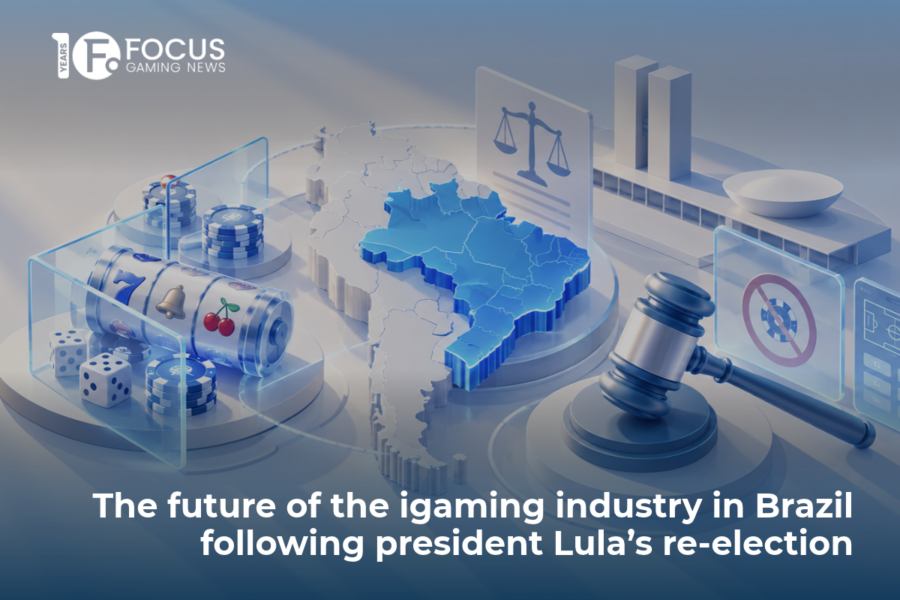
The STF may suspend the ban, and Congress is studying around 100 amendments to modify it. Sports betting and sponsorship contracts are among the main points of dispute.
Key takeaways:
- Lula was re-elected with almost 52 per cent of the vote and maintains his stance against online gambling.
- The STF must review the direct actions of unconstitutionality against Provisional Measure 1,394/2026.
- The sector estimates losses of R$1,200m (US$240m) in revenue and more than R$400m (US$80m) in taxes following the suspension of operations.
- Around 100 amendments propose alternatives such as keeping sports betting and protecting existing sponsorship contracts.
- Congress may modify, reject or let the measure lapse, while an STF injunction could suspend its effects.
Brazil.- The Superior Electoral Court has confirmed the re-election of Luiz Inácio Lula da Silva with almost 52 per cent of the vote against just over 48 per cent for Flávio Bolsonaro. The narrow margin of just over 4.3 million votes highlights the country’s polarisation and, at the same time, strengthens the president’s position regarding the online gambling sector.
During the campaign, Lula’s team presented the election as a plebiscite for or against betting platforms. The president himself insisted in recent days that the temporary suspension he imposed on September 25 is irreversible and that the country must “put an end to this plague,” arguing that he is protecting indebted families. With the result in his favour, he is expected to maintain a critical tone, although the final decision does not depend solely on his will.
Amilton Noble, advisory partner at Betshield Responsible Gaming and a consultant in the igaming and lottery sectors with 30 years of experience, told Focus Gaming News: “The Brazilian people have chosen the re-election of President Lula to lead the country for another four years. Given that he championed the end of betting as the banner of his campaign, it will be very difficult for the sector to continue operating.”
The STF as the first line of defence
The first battle will be fought in the Federal Supreme Court. Several direct actions of unconstitutionality, filed by industry bodies such as the National Association of Games and Lotteries (ANJL) and the Brazilian Institute of Responsible Gaming (IBJR), as well as football clubs, challenge Provisional Measure 1,394/2026. Justice Luiz Fux, rapporteur of the cases, had said he would rule once the electoral process concluded.
The central arguments point to the violation of legal certainty, the breach of contracts, the risk of mass layoffs and the likely migration of players to the illegal market. Operators had paid R$30m (US$6m) for each five-year authorisation and set aside additional reserves. The interruption of more than 20 days generated estimated losses of R$1,200m (US$240m) in revenue, while the State stopped collecting more than R$400m (US$80m) in direct and indirect taxes.
If the STF grants an injunction suspending the effects of the measure, licences could regain validity and operations could partially resume. A decision along those lines would have an immediate impact on the country’s credibility as an investment destination.
Congress and the amendments
The second front is the National Congress. The corresponding joint committee has 13 senators and 13 deputies designated as full members, plus alternates, although it has not yet been formally installed or elected a chair and rapporteur. The ordinary deadline to review the measure expires on November 23; from November 9, the parliamentary agenda is blocked until the text is voted on. There is a possibility of an additional 60-day extension.
Around 100 amendments have been submitted. Several of them propose the continuation of sports betting, without online casino gaming, while preserving sponsorship contracts already signed with football clubs and establishing transition periods. One of the most frequently mentioned initiatives seeks to allow the use of brands on uniforms and in stadiums linked to prior agreements for 24 months. Another proposes honouring the authorisations until their original terms expire, with no possibility of renewal.
In the last legislative period, Lula had room to pass initiatives of interest to him through negotiations with the leaders of both chambers. Now, with the opposition Liberal Party as the largest bloc in the Chamber of Deputies and the Senate, the scenario is more complex. Even if the Executive manages to maintain the ban, it is unlikely that the text will be approved in its original terms before the deadline expires.
Udo Seckelmann, partner in the gambling and cryptocurrency area at Bichara e Motta Advogados, told Focus Gaming News: “I believe the betting sector will continue to grow in Brazil, although important challenges still lie ahead. Lula’s re-election does not necessarily mean a change of course for the industry, and the composition of Congress should play a relevant role in the debate on new measures. The sector must closely follow this landscape, but without losing sight of the potential of a market that has just gone through a regulatory process and still has a lot of maturing to do.”
Impact on clubs and operators
Serie A clubs in the Brasileirão received more than R$1,000m (US$200m) in sponsorships linked to the gambling sector in 2025. Teams such as Flamengo, São Paulo and Fluminense have used space on their shirts to challenge Lula’s ban under slogans such as “Banning is not protecting.” Flamengo has also joined the legal actions before the STF, and its president maintained an open dialogue with and showed support for the defeated candidate, Flávio Bolsonaro.
For operators, there is additional uncertainty in the question of whether the possibile eventual return of a regulated sector will require new applications for authorisations. The legislative debate points, in the most likely scenario, to a partial reopening limited to sports betting and with stricter advertising and responsible gambling restrictions.
Noble said: “It is up to the associations to promote a constructive dialogue, showing the impacts on legal certainty, on employment and on the rise of illegal gambling. In any scenario, the situation is quite challenging.”
Seckelmann, for his part, explained that it is positive that Brazil already has an established regulatory structure: “Now, we must move forward with its consolidation, with clear rules, legal certainty and an environment that encourages investment. It is natural for there to be divergences about the ideal model, but I believe there is room to build solutions that reconcile consumer protection with the development of the activity.”
The lawyer added: “I am optimistic about the future of the sector. Betting is already part of the economic and entertainment reality of Brazilians, and the most efficient path is to improve regulation, strengthen the fight against the illegal market and guarantee the conditions for authorised operators to operate sustainably. The challenge is to turn the political debate into concrete progress for the regulated market.”
Frequently asked questions (FAQs)
- Can the STF suspend the online gambling ban in Brazil? Yes. The Supreme Court can grant an injunction suspending the effects of Provisional Measure 1,394/2026, allowing licences to regain validity and operations to partially resume.
- What changes is the Brazilian Congress proposing to the online betting ban? Among the proposals are keeping sports betting, establishing transition periods and preserving for 24 months the use of brands on uniforms and in stadiums under prior contracts.
- How much did the online gambling industry lose in Brazil because of the ban? The estimates cited in the article put lost revenue for operators at R$1,200m (US$240m) and uncollected direct and indirect taxes at more than R$400m (US$80m).
- When does the deadline to review the betting ban in Brazil expire? The ordinary deadline to review the measure expires on November 25. The joint committee must debate the amendments and may face an additional 60-day extension.