Charlotte Lecomte, Alea: “We listen to operators, analyse the data, and keep an eye on market trends”
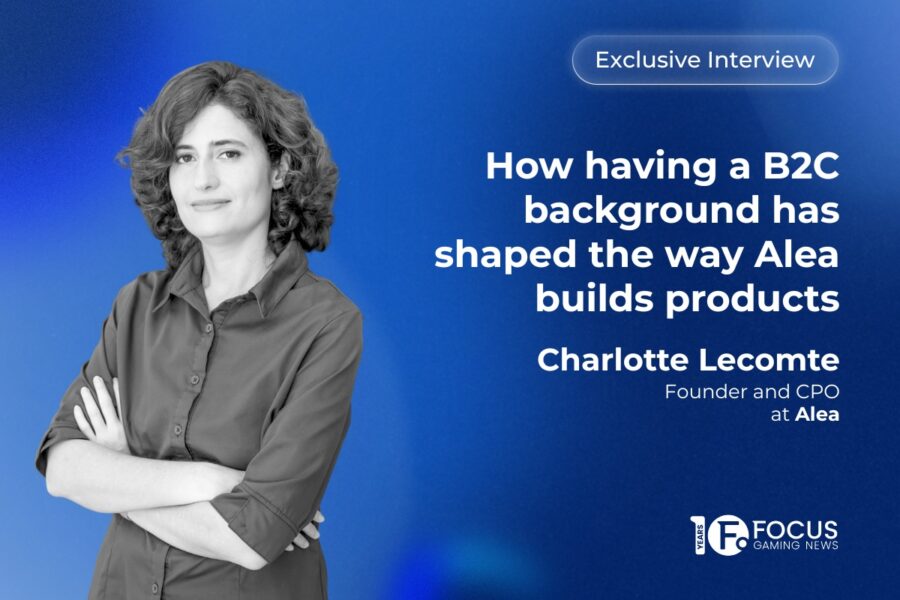
Charlotte Lecomte, Founder and CPO at Alea, spoke to Focus Gaming News about product development, B2C operator experience, the Alea Jackpot, and the potential impact of AI in the igaming industry.
Exclusive interview.- Alea’s product strategy is shaped by a perspective that not every B2B technology provider can claim: its leadership has first-hand experience running an online casino. That operator background has influenced how the company approaches the practical challenges of building tools that give other operators greater flexibility and control.
In this exclusive interview with Focus Gaming News, Charlotte Lecomte, founder and CPO at Alea, discusses how those experiences have shaped products including the Alea Jackpot, RTP management tools and the new Free Spin Management solution. She explains why Alea chose to develop its jackpot technology in-house, the challenges of combining deep customisation with a simple user experience, and how unexpected demand from North America and the sweepstakes sector has influenced the product’s trajectory.
How has your experience as an operator shaped the way you approach product development today, particularly when building solutions for other operators?
When you’re managing an operator, so much of your energy goes into handling backend friction, like game integrations, API stability, and making sure everything works properly when real money is involved. We built our aggregator for our own B2C casino first because we wanted to solve those problems for ourselves.
But once you’ve dealt with those backend risks and you own the technology, the whole dynamic changes, because that’s when you start to see what you can do with it. You have the freedom to take an idea and bring it to life, experiment with different concepts, and create a player experience that genuinely stands out.
So yes, having that B2C background shapes everything we do today. We know where the daily pain points are, but we also know how important it is to give operators the freedom to work in their own way and be more creative with what they build. That thinking naturally carries into the products we develop.
“When you’re managing an operator, so much of your energy goes into handling backend friction, like game integrations, API stability, and making sure everything works properly when real money is involved.”
Charlotte Lecomte, founder and CPO at Alea.
With our RTP project, for example, operators can automate RTP adjustments, run round checks, and manage their margins in the way that works for them. With the Alea Jackpot, the idea was to give operators much more freedom in how they build a campaign. A lot of jackpot products still come with fairly fixed structures, so we wanted to make the setup much more adaptable. Operators can then shape a campaign around the objective, whether that’s a major period like Christmas or the World Cup, or something more focused on ongoing retention.
We’re taking the same approach with our new Free Spin Management tool. Marketing teams can create their own templates, decide how and when free spins are distributed, and have a clearer view of campaign costs. That gives them more room to build campaigns in different ways, depending on the audience, the moment, or the idea they want to test.
When we were running our own B2C casino, that was what we wanted most: the freedom to test ambitious ideas, differentiate, and genuinely enjoy building the player experience. That mindset is still very present in the way we think about products today.
“A lot of jackpot products still come with fairly fixed structures, so we wanted to make the setup much more adaptable.”
Charlotte Lecomte, founder and CPO at Alea.
The Alea Jackpot was launched earlier this year. What challenges or unmet needs in the market led Alea to develop this solution in-house?
When we looked at the market, we saw a clear split. On one hand, there were well-established jackpot solutions that provided a good level of customisation, but they were expensive and mainly served as marketing tools. On the other, there were more accessible options that could generate revenue, but they gave operators very little control over campaign setup or player segmentation.
None of the products available combined the level of flexibility we were looking for with a model that could also generate revenue. That’s why we decided to build it in-house instead of using a white label solution.
When developing a new product from the ground up, how do you decide which ideas are worth pursuing and which ones should remain just ideas?
There isn’t a single answer to that. We listen to operators, analyse the data, and keep an eye on market trends. Sometimes everything points in the same direction. Other times, it doesn’t, and that’s when we have to decide how to move forward.
The Jackpot is a good example. During its development, many operators were asking for traditional jackpot mechanics, but we believed they would benefit more from a modern and gamified product that gave them greater flexibility and control. It was one of those cases where we chose a different direction.
That example also shows why benchmarking alone can’t decide for you. When we launched the Jackpot, we expected a lot of attention from Europe, which we got, but we could never have predicted the huge wave of interest we’re seeing from North America and the sweepstakes market.
So at some point, you just have to back your conviction, make the call, and be ready to adapt once the product hits the real market.
Looking back at the development of the Alea Jackpot, what was the biggest challenge you encountered, and what was the most valuable lesson you took from the process?
The biggest challenge was designing a UX that could support a highly customisable product while remaining simple to use. From our experience as an operator, we knew that marketing teams won’t feel comfortable using a tool unless they trust it. If the interface feels unclear or leaves room for doubt, they’ll naturally hesitate to use it, especially when a mistake could cost them money.
This shaped the entire development process. We redesigned the UX three times, added guardrails throughout the setup flow, and built a simulator so operators could see how a campaign would behave before launching it.
Looking ahead, what unmet need do you believe the next major igaming product will have to address?
I’d say AI, particularly in the way it could change the products operators rely on every day. The Player Account Management (PAM) platform is a good example. It’s at the core of every casino business, and operators choose the platform that best fits their needs. Like any product built to serve many different companies, there’s a natural limit to how much it can be customised.
I think AI has the potential to change that, making it much easier for operators to tailor those core platforms around the way they run their business. Once AI reaches that point, the entire B2B dynamic changes. Eventually, you will need fewer generic B2B providers if you have a personalised AI building and shaping your products directly.
By Focus Gaming News Editorial Team