


BGC AGM focuses on black market gambling threat to UK market
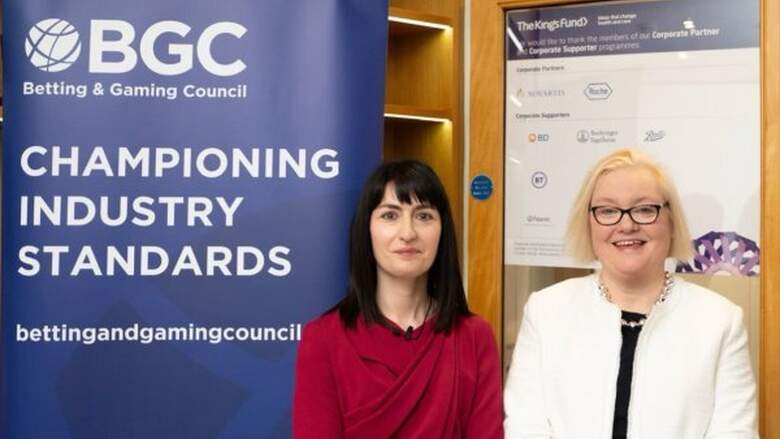
Gambling Minister Fiona Twycross confirmed plans to create an Illegal Gambling Taskforce.
UK.- The Betting and Gaming Council’s (BGC) Annual General Meeting this year had a clear theme. Concern about the black market was a recurring topic as speakers repeatedly highlighted research suggesting that 1.5 million people in Britain are gambling on unlicensed sites and staking around £10bn a year.
Members of the lobby group fear that it may only get worse as the government considers further regulatory changes, such as Financial Risk Assessments (FRAs), which would require customers to provide detailed financial information such as bank statements.
Chaired by broadcasters Gloria de Piero and Liam Halligan, the event began with a keynote from the UK Gambling Minister Fiona Twycross, followed by a discussion with BGC Chief Executive Grainne Hurst. A panel on the illegal market and the Gambling Commission’s assessment of the challenge followed, alongside research, polling and personal testimony from across the industry.
New funding for the Gambling Commission
Twycross addressed the tensions in current policy and acknowledged that gambling duty changes announced in November’s Budget will be “extremely challenging for the sector, particularly for online operators.” However, she defended the government’s position, arguing the changes were necessary to support public finances.
She announced an additional £26m for the Gambling Commission over the next three years and confirmed the establishment of an Illegal Gambling Taskforce. This will bring together major companies including Google, Mastercard, TikTok and Visa alongside law enforcement and advertising bodies with a focus on illegal payments, advertising and cross-agency collaboration.
She also confirmed that the government will consult on a proposal to ban unlicensed sport sponsorships, including in the Premier League.
A “drop in the ocean”
However, there were mixed responses to how much to expect from these initiatives. It was a topic that came up in the panel discussion. Titled Getting the Balance Right: Tax, Regulation and the Growth of the Illegal Market, it featured Chris Sanger of EY, Ian Angus of the Gambling Commission, Simon Zinger of Entain, David Williams of Rank Group, and Jordan Lea, CEO of Deal Me Out.
Zinger warned the extra £26m for the Gambling Commission was “a drop in the ocean” against illegal operators with “massive spending power,” while Sanger pointed to Poland, where every one percentage point tax increase led to a 1.74 per cent reduction in the regulated market. “We’re about to go through a 19 per cent change. That is a huge shift.”
Lea pointed to research from Yield Sec which suggests that the black market may now account for 10 to 12 per cent of all gambling activity in Britain – up from just 0.5 per cent five years ago. “I’m extremely concerned that the tax is not a migration – it’s a flood,” he said. He also commented on his personal experience of being targeted by illegal sites after signing up to GamStop “time after time”.
Williams argued the black market is a symptom of policy going wrong. With the annualised effect of the increase to 40 per cent Remote Gaming Duty adding £46m to Rank’s cost base – against a digital operating profit of £33m. “No business can withstand that without significant changes. And those changes involve people,” he warned.
Angus recognised that “The threat of the illegal market is higher than it was previously.”
“We do expect illegal gambling to grow as a result of the Budget,” he admitted. “Irrespective of how much money is thrown at us, we can’t do it alone. The tech firms have to do more.”
A five-pillar strategy
In her speech, Hurst warned that more than one in five adults aged 18 to 24 who bet are using unsafe, unregulated sites, including via secure messaging apps, and said that illegal operators aggressively target those who have self-excluded from the regulated market. She said new polling by Anacta found that 52 per cent of people who bet believe higher taxes will make punters more likely to use unlicensed sites. 66 per cent say the increases will make betting and gaming less enjoyable, and 57 per cent already think UK gambling is too heavily regulated.
She raised concerns over the ease of access to illegal sites. “My eight-year-old son could go onto Google and type in ‘non-GamStop casino’ and pages and pages of it would come up – which it shouldn’t,” she said. “Most of these sites look professional and trustworthy, just like any of our members’ sites. It’s hard to tell the difference.”
The BGC recently launched its Spot The Black Market interactive game, designed to help identify which sites are legitimate and which are unlicensed.
Hurst criticised the government’s budget documentation, which she said admitted its policies would drive an additional £500m into the black market. “I find it incredulous that the government actually admitted their policies will drive another £500m into the black market – but that seems to be a price worth paying. What world are we living in where that is a sensible, coherent policy?” The regulated sector, she argued, has reached a critical point: “It’s a bit like a Jenga tower – you build it up, build it up, and at some point it’s not going to last.”
The BGC’s response is a five-pillar strategy: strengthening the evidence base, deepening understanding of illegal networks, exposing the organisations behind illegal sites, supporting enforcement and raising public awareness.
For his part, Tim Miller, Executive Director of Research and Policy at the Gambling Commission, delivered a speech in which he called for action on both supply and demand: “If we are to really have an impact on the illegal market, we also need to look at the demand side,” he said. “What actually encourages people to move to the illegal market, and what can be done to keep them in the licensed market.”
He confirmed that the Gambling Commission would begin exploring regulated crypto assets as a consumer payment option for licensed gambling, responding to evidence that cryptocurrency is one of the primary routes driving gamblers to illegal sites, and called for a period of regulatory stability: “Getting into a position where we are on an endless treadmill with reform will not take us any further forward.”