


Racing NSW urges Australia to block illegal offshore betting payouts, not just deposits


General counsel Pete Sweney argues that stopping customers from collecting winnings into local bank accounts would deter unlicensed wagering ahead of new payment rules taking effect on January 1, 2027.
Key takeaways:
- Racing New South Wales has urged the Australian government to block payments from illegal offshore betting operators into local bank accounts.
- General counsel Pete Sweney stated in the November 2026 International Federation of Horseracing Authorities (IFHA) bulletin that blocking incoming winnings would be more effective than restricting outbound transfers.
- Australia’s August 2026 gambling reforms require banks to block outbound transfers to illegal operators from January 1, 2027, but omit restrictions on incoming payouts.
- Sweney called for a consistent national prohibition across states and territories, alongside coordinated enforcement, intelligence sharing and safeguards against blocking legitimate transactions.
- Research by H2 Gambling Capital estimated Australia’s offshore gambling market at AUD3.9bn (US$2.54bn) in 2025, projecting it could reach AUD5bn (US$3.3bn) within four years.
Racing New South Wales (Racing NSW) has called on the Australian government to block incoming payments from illegal offshore betting operators into local bank accounts, arguing that preventing customers from collecting winnings would discourage unlicensed wagering. General counsel Pete Sweney outlined the proposal in the November 2026 bulletin of the International Federation of Horseracing Authorities (IFHA), noting that while federal reforms passed in August 2026 target outbound deposits from January 1, 2027, they omitted restrictions on payouts from offshore bookmakers.
Australia.- Racing New South Wales (Racing NSW) has called on the Australian government to block payments from illegal offshore betting operators into local bank accounts. It warns that preventing customers from collecting their winnings could discourage them from using unlicensed services.
Pete Sweney, general counsel at Racing NSW, made the proposal in the November 2026 bulletin of the International Federation of Horseracing Authorities (IFHA). He argued that restricting incoming payments could be more effective than blocking transfers from Australian accounts to illegal operators.
Gambling reforms passed in August 2026 require banks and payment-system participants to take reasonably practicable steps to prevent transfers from Australian accounts to illegal online gambling services. These requirements are due to take effect on January 1, 2027.
Sweney also highlighted differences between state and territory gambling laws, calling for a consistent national prohibition on betting with unlicensed operators. New South Wales already prohibits customers from placing bets with unlicensed wagering operators. According to Sweney, a coordinated federal approach is needed to prevent offshore companies from taking advantage of differences between jurisdictions.
He urged governments to coordinate enforcement responsibilities, funding and intelligence sharing. He also called for banks, payment providers and digital platforms to agree on how quickly they should act once an illegal operator has been identified.
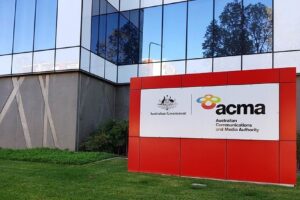
Australia’s 2026 gambling reforms also expand the powers of the Australian Communications and Media Authority (ACMA) to address services that help illegal operators reach local customers. The measures cover advertising, search links, applications and hosting services. Internet providers, domain name providers, app stores and search engines will be required to take reasonably practicable steps to prevent their services from facilitating illegal gambling.
The legislation also allows ACMA to share information with banks and payment companies to support restrictions on transactions involving illegal operators. Sweney said any extension of payment restrictions to incoming funds should include clear identification rules, review procedures and safeguards to prevent legitimate transactions from being blocked by mistake.
Research by H2 Gambling Capital, commissioned by Responsible Wagering Australia, estimated the country’s offshore gambling market at AUD3.9bn (US$2.54bn) in 2025. The study projected that the market could reach AUD5bn (US3.3bn) within four years.
Frequently asked questions (FAQs)
- What is Racing NSW asking the Australian government to do? Racing NSW is urging the federal government to extend its payment blocking rules to prevent illegal offshore betting operators from transferring winnings into Australian bank accounts, alongside establishing a consistent national prohibition across all states and territories.
- When do Australia’s new gambling payment restrictions take effect? Australia’s gambling reforms passed in August 2026 require banks and payment-system participants to block outbound transfers from Australian accounts to illegal online gambling services starting on January 1, 2027.
- How big is the illegal offshore gambling market in Australia? Research by H2 Gambling Capital, commissioned by Responsible Wagering Australia, estimated the country’s offshore gambling market at AUD3.9bn (US$2.54bn) in 2025 and projected it could grow to AUD5bn (US$3.3bn) within four years.
- What new powers does ACMA have under the 2026 gambling reforms? The legislation expands the Australian Communications and Media Authority’s powers to curb services facilitating illegal operators—covering search links, apps, hosting and advertising—and allows it to share information with banks to restrict illegal transactions.