Anastasiia Shcherbyna, MelBet Partners: “Africa plays a key role in our global strategy for the upcoming years”
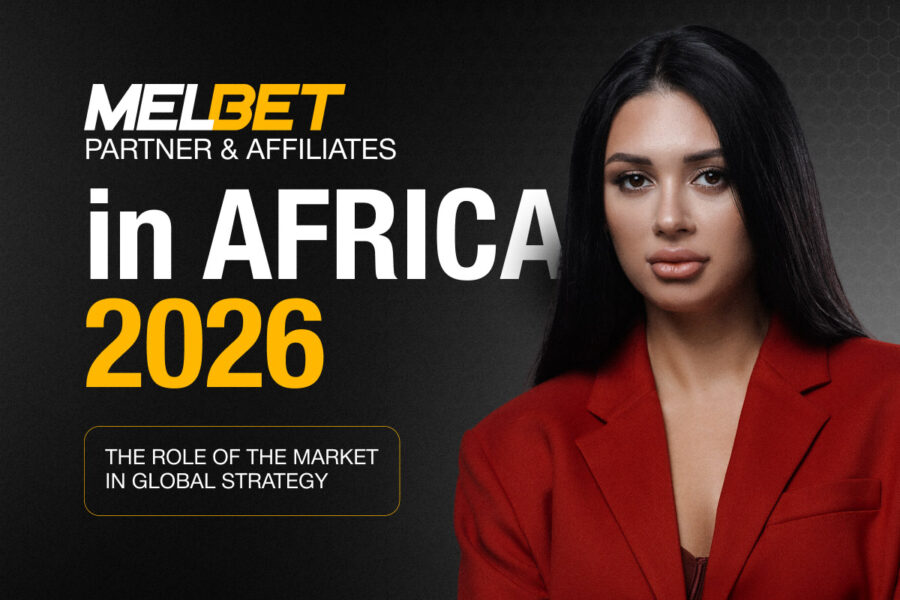
Anastasiia Shcherbyna, CMO of MelBet Partners, has shared the role the African market plays in the company’s global strategy.
Exclusive interview.- Celebrating its 15th anniversary, the MelBet Partners & Affiliates programme has grown and evolved. In an interview with Focus Gaming News, CMO Anastasiia Shcherbyna has shared how the company has expanded, focusing on the role the African market plays in the global strategy.
She also explained details about different partnership initiatives and projects, and shared marketing challenges and opportunities in the African region for 2026.
MelBet Partners is celebrating 15 years in the industry, which is a tremendous achievement. How has the company’s vision evolved over this time, and what role does the African market play in your global strategy for the next few years?
Over the past 15 years, the MelBet Partners & Affiliates programme has grown significantly and evolved not only in scale but also in our understanding of what a modern international brand should be. While previously our key development vectors were growth, product, and geographic expansion, today we take a much broader view of our role in each region.
Africa plays a key role in our global strategy for the upcoming years. As we got to know the continent better, we saw that it’s a strong, vibrant, and rapidly developing region with enormous growth potential in both the igaming and affiliate segments. However, a one-size-fits-all approach is impossible – Africa comprises numerous countries, each unique. What’s needed is local expertise, respect for each market’s special characteristics, and a willingness to invest in a long-term presence.
This is our “base.” We’re not just talking about licenses in Côte d’Ivoire, Senegal, and Cameroon, but also about deeper engagement with local audiences. Partnership initiatives and projects that go beyond standard advertising communications, such as MELBET BEYOND LIMITS and MELBET NECTAR, which launched in February, play a key role here.
MELBET NECTAR is an initiative that combines support for rural communities, the development of beekeeping, and the conservation of regional biodiversity. The project is a comprehensive system for training residents in apiculture and the basics of business management.
It’s important to us that the brand in Africa is perceived not as an external player, but as a company truly engaged in the region’s life. Our ambassador, Kamaru Usman, is a great asset in this regard. His African heritage and recognizability make this connection with the audience even more organic and powerful.
The global competition has already begun and is generating a lot of excitement. What are the main goals of this initiative, and what has been the response from your partners and affiliates so far?
For us, MELBET BEYOND LIMITS is a way to celebrate this important milestone with those who have been part of this journey and continue to grow with us. MelBet Partners has always been built around a strong affiliate community, so it was crucial for us to come up with something that would give collaborators not only a competitive thrill but also a sense of belonging and inclusion in the brand’s larger story.
The main goal of the contest is to increase engagement and provide additional motivation for existing partners. At the same time, it also aims to show new collaborators that MelBet Partners & Affiliates is a unique ecosystem with a strong internal dynamic, ambition, and a focus on people. For us, this isn’t just about prizes, but also about energy, passion, communication, and a sense of scale. And at the end, the winners will receive a unique, once-in-a-lifetime experience that cannot be exchanged for anything material.
Based on what I’m seeing and the feedback I’m receiving, the reaction from partners is currently very strong. We observe high interest, active engagement with the mechanics, and a generally strong emotional response to the anniversary campaign. This is felt not only in online conversations but also in person.
The party we held as part of our anniversary activities and the training session with Kamaru Usman and his friends, Rashad Evans and Henry Cejudo, which was also widely discussed in the community, became part of this overall concept. These formats work especially well because they bring the brand closer to its partners and the community, and the communication becomes more personal, open, and unique.
“What’s needed is local expertise, respect for each market’s special characteristics, and a willingness to invest in a long-term presence.”
Anastasiia Shcherbyna, CMO of MelBet Partners.
Africa is a diverse and complex continent. Regarding your current licenses there, how do these regulations help MelBet build trust with local players and affiliates compared to other markets?
Yes, Africa truly cannot be viewed as a single market. Each country on this continent is unique in its own way. This is influenced by many factors, from historical to social. Each country has its own atmosphere, cultural codes, audience habits, regulatory context, and level of industry maturity. That’s why licensing is so important to us.
As I mentioned earlier, MelBet is licensed in Côte d’Ivoire, Senegal, and Cameroon. This is an important foundation for our long-term operations in the region. When a brand operates within the local regulatory framework, it immediately impacts the level of trust among players. People want to understand who they’re dealing with, how transparent the processes are, and how seriously the company takes its market presence and local legislation.
Of course, this is also a crucial point for affiliates. A brand’s license provides a sense of stability and predictability. When a partner sees that the brand isn’t simply entering the industry through marketing but is establishing a systematic presence, it strengthens trust in both the product and the partnership. In complex and rapidly growing sectors, these are often decisive factors. And given that regulatory processes are still in their infancy in many African countries, this aspect cannot be ignored.
But licenses are only part of success. Building trust requires a comprehensive approach. Remember that Africa is all about mobile traffic. Websites must have a high-quality, optimised mobile phone version, a responsive design, and be uncluttered. The product must be accessible to people, so language localisation is crucial. A single country can have dozens of languages, but the undisputed leaders are, of course, Swahili and Afrikaans.
A simple example: in Kenya, Swahili is important. In Senegal, we see a trend of increasing popularity for local languages, despite the strong position of French, and the importance of Wolof is growing. But in Nigeria, there are so many dialects that it’s better to simply use English. We’ve taken all this into account, so our product is adapted not only to English and French but also to a number of African tongues, which also positively impacts trust.
It’s also crucial to note the importance of local ambassadors. In the case of branded traffic, they can be used in creatives and promotions.
Our partnership with Juventus FC is developing very well in Africa and MENA, and we recently signed another sponsorship contract with UFC fighter Kamaru Usman. This has helped us generate interest in the brand not only in his home country of Nigeria, but also in other African countries. Excitingly, Africans trust individuals more than they believe in brands or companies. So, a strong label here can’t be built on visibility alone; you need to create real foundations for trust.
From a CMO perspective, what do you see as the biggest marketing challenges and opportunities for MelBet Partners & Affiliates in the African region by the end of 2026?
Africa’s main challenge lies in its diversity. It’s impossible to perceive the continent’s inhabitants as a single audience. Markets, speeds of digital development, content consumption patterns, languages, levels of trust in brands, and product interaction mechanics are all very different. Therefore, the biggest risk for any international brand here is trying to speak to everyone in the same way. By the end of 2026, those companies that focus on localisation will win.
The second major challenge is competition for attention. Audiences are becoming increasingly sensitive to the quality of communication, its relevance, and the extent to which a brand truly understands the local context. The days of hyping up a brand out of thin air are over. You need to be relevant in your message, your ambassadors, your activation format, and your overall presence in the region.
At the same time, Africa offers tremendous opportunities. We see potential in the growth of the mobile audience, the strength of sports culture, the influence of local communities, and the further development of the affinity model. It’s important to us that not only performance tools but also deeper presence formats are effective in this region: ambassadors, offline events, partnerships, and local stories that bring the brand closer to people. And they, in turn, see this, appreciate it, and begin to trust it.
“By the end of 2026, those companies that focus on localisation will win.”
Anastasiia Shcherbyna, CMO of MelBet Partners
By Focus Gaming News Editorial Team