

South Africa lottery funding slowed by verification checks, NLC warns


The NLC reported that approved funding has reached about R1.199bn.
South Africa.- South Africa’s National Lotteries Commission (NLC) says stricter compliance checks and a surge in incomplete applications are slowing the allocation of lottery funding, even as it processes billions of rand earmarked for social projects.
In a media update issued on May 4, the regulator confirmed that its 2024/2025 funding cycle, the first fully managed through the Thuthuka digital grant system, received more than 3,100 compliant applications nationwide. Over 1,200 have been adjudicated so far, representing roughly 28.6 per cent of submissions, with additional decisions expected into the next financial year.
The NLC reported that approved funding has reached about R1.199bn (€60m), covering sectors such as charities, arts and culture, and sport. Of this, R804,533,451 (€40.2m) was allocated to charities, R170,336,714 (€8.5m) to arts, culture, and national heritage, and R224,584,918 (€11.2m) to sport and recreation. The funding model remains a core part of South Africa’s regulated gambling framework, which channels lottery proceeds into public-benefit initiatives.
However, the Commission linked processing delays to extensive verification procedures introduced to strengthen oversight. These checks include validating applicant organisations, confirming project details, verifying physical addresses, and assessing governance and financial capacity. Non-compliant applications are referred for further review or investigation.
According to NLC Commissioner Jodi Scholtz, applications that meet all requirements are largely processed within statutory timelines, with 92 per cent finalised within the 150-day legal window. Delays are concentrated among submissions requiring additional validation.
The regulator said compliance challenges remain widespread across the non-profit sector. Data from the application cycle show that thousands of organisations failed to meet basic registration or reporting standards, limiting their eligibility for funding.
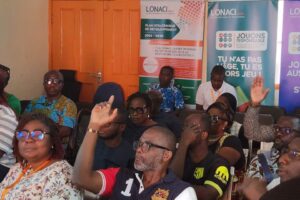
To address this, the NLC is working with agencies, including the Companies and Intellectual Property Commission and the South African Revenue Service, to resolve documentation issues and improve verification processes. It has also introduced workshops, helpdesks, and awareness programmes aimed at improving governance and reporting among applicants.
The Commission maintains that the tighter controls are necessary to protect lottery funds and restore public confidence in the system, following past scrutiny of grant allocations. It added that outstanding applications are expected to be finalised by October 2026, subject to budget availability.
The update underscores a broader shift within South Africa’s gambling-linked funding ecosystem, where digital systems and stricter compliance enforcement are reshaping how lottery revenues are distributed to public-interest projects.